Recovery After Balloon Sinuplasty in Jacksonville FL
One of the questions patients frequently ask me when considering balloon sinuplasty is how much time they will need to recover. Because balloon sinuplasty is performed by gently dilating narrowed sinus drainage pathways without removing tissue or bone, recovery is often relatively short compared with more extensive sinus surgery. However, every patient and sinus condition is different, so I want my patients to understand what they may experience rather than expecting a specific recovery timeline.
During recovery after balloon sinuplasty in Jacksonville, temporary congestion, pressure, drainage, or mild discomfort can occur while the nasal and sinus tissues settle after the procedure. Some patients begin noticing improvement fairly quickly, while others need additional time for swelling and inflammation to decrease. Recovery can also be different if balloon dilation is performed along with another nasal or sinus procedure.
I provide each patient with postoperative instructions based on the procedure performed and their individual medical needs. These instructions may address nasal care, medications, activity, returning to work, exercise, and follow-up. In the sections below, I will explain what patients can generally expect during recovery after balloon sinuplasty in Jacksonville, including the first few days after treatment, returning to normal activities, and the symptoms that should prompt a call to my office.
- What to Expect Immediately After Balloon Sinuplasty
- The First 24 to 48 Hours After Balloon Sinuplasty
- How Much Pain Should I Expect?
- Nasal Congestion and Drainage During Recovery
- Using Saline Rinses After Balloon Sinuplasty
- Medications After Balloon Sinuplasty
- When Can I Return to Work After Balloon Sinuplasty?
- Exercise and Physical Activity After Balloon Sinuplasty
- Sleeping After Balloon Sinuplasty
- When Will I Breathe Better After Balloon Sinuplasty?
- Follow-Up Care After Balloon Sinuplasty
- What Symptoms Are Normal and When Should I Call My ENT?
- Does Balloon Sinuplasty Require Less Recovery Than Sinus Surgery?
- Meet Dr. Robert Todd Snowden
- What Our Patients Are Saying
- Contact Us!
Recovery After Balloon Sinuplasty in Jacksonville FL
One of the questions patients frequently ask me when considering balloon sinuplasty is how much time they will need to recover. Because balloon sinuplasty is performed by gently dilating narrowed sinus drainage pathways without removing tissue or bone, recovery is often relatively short compared with more extensive sinus surgery. However, every patient and sinus condition is different, so I want my patients to understand what they may experience rather than expecting a specific recovery timeline.
During recovery after balloon sinuplasty in Jacksonville, temporary congestion, pressure, drainage, or mild discomfort can occur while the nasal and sinus tissues settle after the procedure. Some patients begin noticing improvement fairly quickly, while others need additional time for swelling and inflammation to decrease. Recovery can also be different if balloon dilation is performed along with another nasal or sinus procedure.
I provide each patient with postoperative instructions based on the procedure performed and their individual medical needs. These instructions may address nasal care, medications, activity, returning to work, exercise, and follow-up. In the sections below, I will explain what patients can generally expect during recovery after balloon sinuplasty in Jacksonville, including the first few days after treatment, returning to normal activities, and the symptoms that should prompt a call to my office.
- What to Expect Immediately After Balloon Sinuplasty
- The First 24 to 48 Hours After Balloon Sinuplasty
- How Much Pain Should I Expect?
- Nasal Congestion and Drainage During Recovery
- Using Saline Rinses After Balloon Sinuplasty
- Medications After Balloon Sinuplasty
- When Can I Return to Work After Balloon Sinuplasty?
- Exercise and Physical Activity After Balloon Sinuplasty
- Sleeping After Balloon Sinuplasty
- When Will I Breathe Better After Balloon Sinuplasty?
- Follow-Up Care After Balloon Sinuplasty
- What Symptoms Are Normal and When Should I Call My ENT?
- Does Balloon Sinuplasty Require Less Recovery Than Sinus Surgery?
- Meet Dr. Robert Todd Snowden
- What Our Patients Are Saying
- Contact Us!

What to Expect Immediately After Balloon Sinuplasty
Immediately after balloon sinuplasty, it is normal for your nose and sinuses to feel somewhat different than you expected. Although the procedure opens narrowed sinus drainage pathways, temporary swelling and irritation can make you feel congested at first. You may also notice mild pressure, drainage, or a small amount of blood-tinged nasal discharge. These early symptoms do not necessarily mean the procedure has been unsuccessful; the tissues need time to settle after treatment.
Balloon sinuplasty is typically an outpatient procedure, so patients generally return home the same day. Before you leave, I will review the postoperative instructions that apply to your procedure, including nasal care, medications when appropriate, activity limitations, and when I want to see you again. If sedation or certain medications were used, you may also need someone to drive you home and should follow the specific restrictions you are given.
An important part of recovery after balloon sinuplasty in Jacksonville is allowing your sinuses time to heal before judging the final result. I do not expect every patient to walk out of the office or surgical setting immediately breathing perfectly. As temporary swelling and congestion decrease and sinus drainage improves, the benefits of the procedure can become more apparent.
What to Expect Immediately After Balloon Sinuplasty
Immediately after balloon sinuplasty, it is normal for your nose and sinuses to feel somewhat different than you expected. Although the procedure opens narrowed sinus drainage pathways, temporary swelling and irritation can make you feel congested at first. You may also notice mild pressure, drainage, or a small amount of blood-tinged nasal discharge. These early symptoms do not necessarily mean the procedure has been unsuccessful; the tissues need time to settle after treatment.
Balloon sinuplasty is typically an outpatient procedure, so patients generally return home the same day. Before you leave, I will review the postoperative instructions that apply to your procedure, including nasal care, medications when appropriate, activity limitations, and when I want to see you again. If sedation or certain medications were used, you may also need someone to drive you home and should follow the specific restrictions you are given.
An important part of recovery after balloon sinuplasty in Jacksonville is allowing your sinuses time to heal before judging the final result. I do not expect every patient to walk out of the office or surgical setting immediately breathing perfectly. As temporary swelling and congestion decrease and sinus drainage improves, the benefits of the procedure can become more apparent.
The First 24 to 48 Hours After Balloon Sinuplasty
The first 24 to 48 hours are usually when patients are most aware that something has been done inside their nose and sinuses. You may experience temporary congestion, a feeling of pressure or fullness, mild discomfort, and some nasal drainage. A small amount of blood-tinged drainage may also occur. The degree of these symptoms varies, particularly if balloon sinuplasty was performed along with another nasal or sinus procedure.
During the early stages of recovery after balloon sinuplasty in Jacksonville, I generally want patients to take it relatively easy and carefully follow the postoperative instructions I provide. Nasal care, medications when prescribed, and temporary activity restrictions can all be important during this period. I also explain whether and when saline irrigation should be started because postoperative instructions can differ depending on exactly what was performed.
Many patients are able to resume routine activities relatively quickly, but feeling well enough to be active does not mean the tissues have completely recovered. Temporary swelling and inflammation can continue even when discomfort is minimal. I encourage patients to give their nose and sinuses adequate time to heal rather than trying to accelerate the recovery process.
The first couple of days also provide a useful baseline for monitoring your progress. Symptoms should generally move in the direction of improvement as healing continues. If you develop symptoms that seem unusually severe, rapidly worsen, or differ significantly from the expectations we discussed, I want you to contact my office rather than assuming they are simply a normal part of recovery.
The First 24 to 48 Hours After Balloon Sinuplasty
The first 24 to 48 hours are usually when patients are most aware that something has been done inside their nose and sinuses. You may experience temporary congestion, a feeling of pressure or fullness, mild discomfort, and some nasal drainage. A small amount of blood-tinged drainage may also occur. The degree of these symptoms varies, particularly if balloon sinuplasty was performed along with another nasal or sinus procedure.
During the early stages of recovery after balloon sinuplasty in Jacksonville, I generally want patients to take it relatively easy and carefully follow the postoperative instructions I provide. Nasal care, medications when prescribed, and temporary activity restrictions can all be important during this period. I also explain whether and when saline irrigation should be started because postoperative instructions can differ depending on exactly what was performed.
Many patients are able to resume routine activities relatively quickly, but feeling well enough to be active does not mean the tissues have completely recovered. Temporary swelling and inflammation can continue even when discomfort is minimal. I encourage patients to give their nose and sinuses adequate time to heal rather than trying to accelerate the recovery process.
The first couple of days also provide a useful baseline for monitoring your progress. Symptoms should generally move in the direction of improvement as healing continues. If you develop symptoms that seem unusually severe, rapidly worsen, or differ significantly from the expectations we discussed, I want you to contact my office rather than assuming they are simply a normal part of recovery.
How Much Pain Should I Expect?
One of the advantages of balloon sinuplasty is that the procedure enlarges narrowed sinus openings without requiring the removal of bone or tissue. As a result, many patients experience pressure, tenderness, or mild discomfort rather than the level of pain they may associate with more extensive sinus surgery. However, every patient responds differently, and discomfort can also depend on whether another nasal or sinus procedure was performed at the same time.
During recovery after balloon sinuplasty in Jacksonville, some patients describe a temporary feeling of pressure or fullness in the nose, face, or sinus areas. Congestion and swelling can contribute to this sensation during the first few days. If medication is appropriate, I will explain what you should take and how to use it. I do not recommend assuming that a particular pain medication is necessary because postoperative needs vary from patient to patient.
Discomfort should generally become more manageable as the tissues heal. Significant or increasing pain, particularly when accompanied by other concerning symptoms, deserves medical attention rather than simply being attributed to normal healing. Before you leave after your procedure, I will explain what I expect during your recovery and when I want you to contact my office. This gives you a clearer way to distinguish expected postoperative discomfort from symptoms that should be evaluated.
How Much Pain Should I Expect?
One of the advantages of balloon sinuplasty is that the procedure enlarges narrowed sinus openings without requiring the removal of significant amounts of bone or tissue. As a result, many patients experience pressure, tenderness, or mild discomfort rather than the level of pain they may associate with more extensive sinus surgery. However, every patient responds differently, and discomfort can also depend on whether another nasal or sinus procedure was performed at the same time.
During recovery after balloon sinuplasty in Jacksonville, some patients describe a temporary feeling of pressure or fullness in the nose, face, or sinus areas. Congestion and swelling can contribute to this sensation during the first few days. If medication is appropriate, I will explain what you should take and how to use it. I do not recommend assuming that a particular pain medication is necessary because postoperative needs vary from patient to patient.
Discomfort should generally become more manageable as the tissues heal. Significant or increasing pain, particularly when accompanied by other concerning symptoms, deserves medical attention rather than simply being attributed to normal healing. Before you leave after your procedure, I will explain what I expect during your recovery and when I want you to contact my office. This gives you a clearer way to distinguish expected postoperative discomfort from symptoms that should be evaluated.
Nasal Congestion and Drainage During Recovery
It can seem surprising to experience nasal congestion after a procedure intended to improve sinus drainage, but temporary stuffiness is not unusual during the early healing period. Balloon dilation opens a narrowed sinus drainage pathway, while the surrounding nasal and sinus tissues may remain swollen or irritated for a period afterward. Because of this, I caution patients against judging the success of the procedure by how freely they can breathe immediately after treatment.
Nasal drainage can also occur during recovery after balloon sinuplasty in Jacksonville. You may notice mucus, watery drainage, or a small amount of blood-tinged discharge, particularly early in the recovery period. The amount and duration can vary from one patient to another and may be different when balloon sinuplasty is combined with another nasal or sinus procedure.
As swelling decreases and the sinuses begin draining more effectively, congestion and drainage should generally improve. I provide specific instructions about nasal care and what I consider appropriate for each patient after the procedure. If congestion becomes significantly worse rather than gradually improving, bleeding is more than expected, or you develop other concerning symptoms, I want you to contact my office so I can determine whether additional evaluation is necessary.
Nasal Congestion and Drainage During Recovery
It can seem surprising to experience nasal congestion after a procedure intended to improve sinus drainage, but temporary stuffiness is not unusual during the early healing period. Balloon dilation opens a narrowed sinus drainage pathway, while the surrounding nasal and sinus tissues may remain swollen or irritated for a period afterward. Because of this, I caution patients against judging the success of the procedure by how freely they can breathe immediately after treatment.
Nasal drainage can also occur during recovery after balloon sinuplasty in Jacksonville. You may notice mucus, watery drainage, or a small amount of blood-tinged discharge, particularly early in the recovery period. The amount and duration can vary from one patient to another and may be different when balloon sinuplasty is combined with another nasal or sinus procedure.
As swelling decreases and the sinuses begin draining more effectively, congestion and drainage should generally improve. I provide specific instructions about nasal care and what I consider appropriate for each patient after the procedure. If congestion becomes significantly worse rather than gradually improving, bleeding is more than expected, or you develop other concerning symptoms, I want you to contact my office so I can determine whether additional evaluation is necessary.
Using Saline Rinses After Balloon Sinuplasty
Saline rinses can be an important part of recovery after balloon sinuplasty in Jacksonville because they can help clear mucus, dried blood, and other material from the nasal passages while keeping the tissues moist during healing. Depending on the procedure performed and the individual patient, I may recommend beginning saline irrigation at a particular point after treatment and provide instructions about how often it should be used.
When I recommend nasal irrigation, I also explain how to perform it safely and comfortably. Patients should use the type of saline solution and irrigation method I recommend and use distilled, sterile, or previously boiled and cooled water when preparing a rinse rather than untreated tap water. Saline irrigation is intended to support healing and ongoing sinus care; it does not replace prescribed medications or follow-up. If rinsing causes significant pain, unexpected bleeding, or another concerning symptom, I want the patient to stop and contact my office for guidance.
Using Saline Rinses After Balloon Sinuplasty
Saline rinses can be an important part of recovery after balloon sinuplasty in Jacksonville because they can help clear mucus, dried blood, and other material from the nasal passages while keeping the tissues moist during healing. Depending on the procedure performed and the individual patient, I may recommend beginning saline irrigation at a particular point after treatment and provide instructions about how often it should be used.
When I recommend nasal irrigation, I also explain how to perform it safely and comfortably. Patients should use the type of saline solution and irrigation method I recommend and use distilled, sterile, or previously boiled and cooled water when preparing a rinse rather than untreated tap water. Saline irrigation is intended to support healing and ongoing sinus care; it does not replace prescribed medications or follow-up. If rinsing causes significant pain, unexpected bleeding, or another concerning symptom, I want the patient to stop and contact my office for guidance.
Medications After Balloon Sinuplasty
Medication needs during recovery after balloon sinuplasty in Jacksonville depend on the individual patient, the extent of the sinus disease, and whether balloon dilation was performed alone or together with another procedure. I provide specific postoperative instructions rather than assuming every patient needs the same medications. Depending on the circumstances, these instructions may address pain relief, nasal medications, or other treatment intended to support healing and control the underlying sinus inflammation.
Some patients assume that antibiotics or oral corticosteroids are routinely required after balloon sinuplasty, but these medications are not automatically appropriate for everyone. When I prescribe medication, I consider the patient’s symptoms, medical history, procedure, and clinical findings. I also review existing medications because they can influence postoperative recommendations.
It is important to take prescribed medications exactly as directed and not add or discontinue medications without discussing the change with me or the appropriate prescribing physician. Balloon sinuplasty can improve sinus drainage, but patients with chronic sinus inflammation, allergies, or other contributing conditions may still require ongoing medical management after the immediate recovery period. The procedure and the long-term treatment of the underlying sinus condition are related, but they are not necessarily the same thing.
Medications After Balloon Sinuplasty
Medication needs during recovery after balloon sinuplasty in Jacksonville depend on the individual patient, the extent of the sinus disease, and whether balloon dilation was performed alone or together with another procedure. I provide specific postoperative instructions rather than assuming every patient needs the same medications. Depending on the circumstances, these instructions may address pain relief, nasal medications, or other treatment intended to support healing and control the underlying sinus inflammation.
Some patients assume that antibiotics or oral corticosteroids are routinely required after balloon sinuplasty, but these medications are not automatically appropriate for everyone. When I prescribe medication, I consider the patient’s symptoms, medical history, procedure, and clinical findings. I also review existing medications because they can influence postoperative recommendations.
It is important to take prescribed medications exactly as directed and not add or discontinue medications without discussing the change with me or the appropriate prescribing physician. Balloon sinuplasty can improve sinus drainage, but patients with chronic sinus inflammation, allergies, or other contributing conditions may still require ongoing medical management after the immediate recovery period. The procedure and the long-term treatment of the underlying sinus condition are related, but they are not necessarily the same thing.
When Can I Return to Work After Balloon Sinuplasty?
Many patients considering balloon sinuplasty want to know how quickly they can return to work. Because the procedure does not typically require the tissue and bone removal associated with more extensive sinus surgery, many patients can return to routine activities relatively quickly. However, I do not give every patient the same return-to-work timetable. How you feel, the type of work you perform, the extent of your procedure, and whether additional nasal or sinus procedures were performed all matter.
Someone with a desk job or other relatively sedentary occupation may be able to return sooner than a patient whose work requires heavy lifting, frequent bending, strenuous physical activity, or exposure to dust and other irritants. During recovery after balloon sinuplasty in Jacksonville, I want patients to give the nasal and sinus tissues adequate time to heal even if they begin feeling better soon after the procedure.
Before you return to work, I will provide instructions based on your particular circumstances and let you know about any temporary restrictions that should continue. I would rather have a patient allow appropriate healing time than return to strenuous activity too quickly simply because balloon sinuplasty is considered minimally invasive. Following individualized postoperative guidance can help make the transition back to your normal routine safer and more comfortable.
When Can I Return to Work After Balloon Sinuplasty?
Many patients considering balloon sinuplasty want to know how quickly they can return to work. Because the procedure does not typically require the tissue and bone removal associated with more extensive sinus surgery, many patients can return to routine activities relatively quickly. However, I do not give every patient the same return-to-work timetable. How you feel, the type of work you perform, the extent of your procedure, and whether additional nasal or sinus procedures were performed all matter.
Someone with a desk job or other relatively sedentary occupation may be able to return sooner than a patient whose work requires heavy lifting, frequent bending, strenuous physical activity, or exposure to dust and other irritants. During recovery after balloon sinuplasty in Jacksonville, I want patients to give the nasal and sinus tissues adequate time to heal even if they begin feeling better soon after the procedure.
Before you return to work, I will provide instructions based on your particular circumstances and let you know about any temporary restrictions that should continue. I would rather have a patient allow appropriate healing time than return to strenuous activity too quickly simply because balloon sinuplasty is considered minimally invasive. Following individualized postoperative guidance can help make the transition back to your normal routine safer and more comfortable.
Exercise and Physical Activity After Balloon Sinuplasty
Although many patients feel capable of being active relatively soon after the procedure, I generally recommend being cautious about strenuous exercise during the early stages of recovery after balloon sinuplasty in Jacksonville. Activities that significantly increase your heart rate or blood pressure, as well as heavy lifting and repeated bending, may increase nasal pressure or contribute to bleeding while the treated tissues are still healing. The appropriate restrictions depend on the procedure performed and the individual patient’s recovery.
Light activity, such as walking, may be appropriate relatively early for many patients, but returning to running, weight training, strenuous cardiovascular exercise, or physically demanding recreational activities should be gradual. Feeling better does not necessarily mean that the nasal and sinus tissues have completely healed, which is why I provide individualized instructions about when patients can safely increase their activity level.
If balloon sinuplasty was performed along with another nasal or sinus procedure, activity restrictions may need to remain in place longer. I encourage patients to follow the postoperative plan I provide rather than using a predetermined number of days as a universal rule. As healing progresses, I can advise you when it is appropriate to resume more strenuous exercise and return fully to your normal activities.
Exercise and Physical Activity After Balloon Sinuplasty
Although many patients feel capable of being active relatively soon after the procedure, I generally recommend being cautious about strenuous exercise during the early stages of recovery after balloon sinuplasty in Jacksonville. Activities that significantly increase your heart rate or blood pressure, as well as heavy lifting and repeated bending, may increase nasal pressure or contribute to bleeding while the treated tissues are still healing. The appropriate restrictions depend on the procedure performed and the individual patient’s recovery.
Light activity, such as walking, may be appropriate relatively early for many patients, but returning to running, weight training, strenuous cardiovascular exercise, or physically demanding recreational activities should be gradual. Feeling better does not necessarily mean that the nasal and sinus tissues have completely healed, which is why I provide individualized instructions about when patients can safely increase their activity level.
If balloon sinuplasty was performed along with another nasal or sinus procedure, activity restrictions may need to remain in place longer. I encourage patients to follow the postoperative plan I provide rather than using a predetermined number of days as a universal rule. As healing progresses, I can advise you when it is appropriate to resume more strenuous exercise and return fully to your normal activities.
Sleeping After Balloon Sinuplasty
Getting comfortable at night can be challenging during the first few days of recovery after balloon sinuplasty in Jacksonville, particularly if you are experiencing temporary congestion, drainage, or sinus pressure. Depending on the procedure performed and your individual circumstances, I may recommend sleeping with your head elevated for a period after treatment. Elevation can also make it easier to manage drainage and may help some patients feel more comfortable while the nasal and sinus tissues are healing.
Temporary congestion may make nasal breathing more difficult at night even though the purpose of balloon sinuplasty is to improve sinus drainage. This should not automatically be interpreted as a poor result. Swelling and irritation need time to subside, and patients may notice that nighttime breathing gradually becomes more comfortable as recovery progresses.
I encourage patients to follow the sleeping and positioning instructions I provide rather than relying on a universal recovery schedule. If nighttime symptoms become unusually severe, interfere significantly with breathing, or are accompanied by substantial bleeding or other concerning changes, I want the patient to contact my office. Rest is an important part of recovery, and my goal is to help patients remain as comfortable as possible while their sinuses heal.
Sleeping After Balloon Sinuplasty
Getting comfortable at night can be challenging during the first few days of recovery after balloon sinuplasty in Jacksonville, particularly if you are experiencing temporary congestion, drainage, or sinus pressure. Depending on the procedure performed and your individual circumstances, I may recommend sleeping with your head elevated for a period after treatment. Elevation can also make it easier to manage drainage and may help some patients feel more comfortable while the nasal and sinus tissues are healing.
Temporary congestion may make nasal breathing more difficult at night even though the purpose of balloon sinuplasty is to improve sinus drainage. This should not automatically be interpreted as a poor result. Swelling and irritation need time to subside, and patients may notice that nighttime breathing gradually becomes more comfortable as recovery progresses.
I encourage patients to follow the sleeping and positioning instructions I provide rather than relying on a universal recovery schedule. If nighttime symptoms become unusually severe, interfere significantly with breathing, or are accompanied by substantial bleeding or other concerning changes, I want the patient to contact my office. Rest is an important part of recovery, and my goal is to help patients remain as comfortable as possible while their sinuses heal.
When Will I Breathe Better After Balloon Sinuplasty?
Some patients notice improvement in their sinus symptoms relatively soon after balloon sinuplasty, while others need more time for swelling and inflammation to decrease. Although the procedure is designed to enlarge narrowed sinus drainage pathways, temporary congestion can occur during the early healing period. For that reason, I encourage patients not to judge the outcome of the procedure based on how they feel during the first few days.
As recovery after balloon sinuplasty in Jacksonville progresses, improved sinus drainage may help reduce symptoms such as pressure, congestion, and recurrent sinus problems in appropriately selected patients. The timing and degree of improvement vary because balloon sinuplasty does not treat every possible cause of nasal congestion. Allergies, a deviated septum, nasal polyps, or other inflammatory and structural conditions can continue to produce symptoms even when the treated sinus pathway has been successfully opened.
My goal is to evaluate improvement over time rather than promise that every patient will experience an immediate or identical result. Follow-up allows me to assess healing, discuss changes in symptoms, and determine whether ongoing medical treatment is needed to manage other factors contributing to the patient’s nasal and sinus health.
When Will I Breathe Better After Balloon Sinuplasty?
Some patients notice improvement in their sinus symptoms relatively soon after balloon sinuplasty, while others need more time for swelling and inflammation to decrease. Although the procedure is designed to enlarge narrowed sinus drainage pathways, temporary congestion can occur during the early healing period. For that reason, I encourage patients not to judge the outcome of the procedure based on how they feel during the first few days.
As recovery after balloon sinuplasty in Jacksonville progresses, improved sinus drainage may help reduce symptoms such as pressure, congestion, and recurrent sinus problems in appropriately selected patients. The timing and degree of improvement vary because balloon sinuplasty does not treat every possible cause of nasal congestion. Allergies, a deviated septum, nasal polyps, or other inflammatory and structural conditions can continue to produce symptoms even when the treated sinus pathway has been successfully opened.
My goal is to evaluate improvement over time rather than promise that every patient will experience an immediate or identical result. Follow-up allows me to assess healing, discuss changes in symptoms, and determine whether ongoing medical treatment is needed to manage other factors contributing to the patient’s nasal and sinus health.
Follow-Up Care After Balloon Sinuplasty
Follow-up is an important part of recovery after balloon sinuplasty in Jacksonville because it gives me an opportunity to evaluate how you are healing and how your sinus symptoms are changing. Balloon sinuplasty opens narrowed sinus drainage pathways, but the underlying inflammation or other conditions that contributed to your sinus problems may still require medical management. I do not consider treatment complete simply because the procedure itself is finished.
During follow-up, I may evaluate the nasal passages and discuss changes in congestion, pressure, drainage, infections, and other symptoms that led to treatment. Depending on your condition and the procedure performed, I can also determine whether nasal care or medications should be continued, adjusted, or discontinued. If another nasal or sinus procedure was performed along with balloon sinuplasty, follow-up may involve additional considerations.
These visits also give patients an opportunity to ask questions about returning to normal activities and any symptoms they are experiencing. My objective is not only to confirm that the immediate recovery is progressing appropriately, but also to determine whether balloon sinuplasty is providing the improvement we expected and whether additional treatment is needed to support long-term sinus health.
Follow-Up Care After Balloon Sinuplasty
Follow-up is an important part of recovery after balloon sinuplasty in Jacksonville because it gives me an opportunity to evaluate how you are healing and how your sinus symptoms are changing. Balloon sinuplasty opens narrowed sinus drainage pathways, but the underlying inflammation or other conditions that contributed to your sinus problems may still require medical management. I do not consider treatment complete simply because the procedure itself is finished.
During follow-up, I may evaluate the nasal passages and discuss changes in congestion, pressure, drainage, infections, and other symptoms that led to treatment. Depending on your condition and the procedure performed, I can also determine whether nasal care or medications should be continued, adjusted, or discontinued. If another nasal or sinus procedure was performed along with balloon sinuplasty, follow-up may involve additional considerations.
These visits also give patients an opportunity to ask questions about returning to normal activities and any symptoms they are experiencing. My objective is not only to confirm that the immediate recovery is progressing appropriately, but also to determine whether balloon sinuplasty is providing the improvement we expected and whether additional treatment is needed to support long-term sinus health.
What Symptoms Are Normal and When Should I Call My ENT?
Temporary congestion, sinus pressure, mild discomfort, fatigue, and a small amount of blood-tinged nasal drainage can occur during recovery after balloon sinuplasty in Jacksonville. These symptoms should generally become more manageable as healing progresses. Because every patient’s procedure and medical history are different, I explain what I expect after treatment and provide postoperative instructions specific to your care.
I want patients to contact my office if symptoms are substantially more severe than expected, worsen rather than improve, or simply cause concern. Significant or persistent bleeding, severe or increasing pain, high fever, changes in vision, swelling around the eyes, severe headache, neck stiffness, confusion, or unusual persistent clear watery drainage should receive prompt medical attention. Although serious complications are uncommon, they should not be ignored. If you are uncertain whether a symptom is part of normal healing, I would rather you contact my office so we can determine whether additional evaluation is necessary.
What Symptoms Are Normal and When Should I Call My ENT?
Temporary congestion, sinus pressure, mild discomfort, fatigue, and a small amount of blood-tinged nasal drainage can occur during recovery after balloon sinuplasty in Jacksonville. These symptoms should generally become more manageable as healing progresses. Because every patient’s procedure and medical history are different, I explain what I expect after treatment and provide postoperative instructions specific to your care.
I want patients to contact my office if symptoms are substantially more severe than expected, worsen rather than improve, or simply cause concern. Significant or persistent bleeding, severe or increasing pain, high fever, changes in vision, swelling around the eyes, severe headache, neck stiffness, confusion, or unusual persistent clear watery drainage should receive prompt medical attention. Although serious complications are uncommon, they should not be ignored. If you are uncertain whether a symptom is part of normal healing, I would rather you contact my office so we can determine whether additional evaluation is necessary.
Does Balloon Sinuplasty Require Less Recovery Than Sinus Surgery?
Balloon sinuplasty generally involves less tissue disruption than traditional endoscopic sinus surgery because the procedure uses a small balloon to widen selected sinus drainage pathways rather than routinely removing bone or tissue. For appropriately selected patients, this can mean less postoperative discomfort and a relatively quick return to normal activities. This is one reason recovery after balloon sinuplasty in Jacksonville can be appealing to patients who are candidates for the procedure.
However, I do not recommend balloon sinuplasty simply because the recovery may be easier. Traditional endoscopic sinus surgery can treat disease that balloon dilation alone cannot adequately address, including certain structural problems, extensive nasal polyps, or more complicated sinus disease. The appropriate procedure should be determined by what needs to be treated, not by recovery time alone.
Recovery also depends on the extent of the procedure. A patient undergoing balloon dilation alone may have a different experience from someone having balloon sinuplasty combined with another nasal or sinus procedure. Likewise, traditional sinus surgery can vary considerably in scope, so there is no single recovery timeline that applies to every operation.
When I discuss treatment options, I consider the patient’s symptoms, examination, imaging when appropriate, previous treatment, and the location and extent of sinus disease. My goal is to recommend the least invasive approach that can appropriately address the problem while giving the patient realistic expectations about recovery and long-term sinus care.
Does Balloon Sinuplasty Require Less Recovery Than Sinus Surgery?
Balloon sinuplasty generally involves less tissue disruption than traditional endoscopic sinus surgery because the procedure uses a small balloon to widen selected sinus drainage pathways rather than routinely removing bone or tissue. For appropriately selected patients, this can mean less postoperative discomfort and a relatively quick return to normal activities. This is one reason recovery after balloon sinuplasty in Jacksonville can be appealing to patients who are candidates for the procedure.
However, I do not recommend balloon sinuplasty simply because the recovery may be easier. Traditional endoscopic sinus surgery can treat disease that balloon dilation alone cannot adequately address, including certain structural problems, extensive nasal polyps, or more complicated sinus disease. The appropriate procedure should be determined by what needs to be treated, not by recovery time alone.
Recovery also depends on the extent of the procedure. A patient undergoing balloon dilation alone may have a different experience from someone having balloon sinuplasty combined with another nasal or sinus procedure. Likewise, traditional sinus surgery can vary considerably in scope, so there is no single recovery timeline that applies to every operation.
When I discuss treatment options, I consider the patient’s symptoms, examination, imaging when appropriate, previous treatment, and the location and extent of sinus disease. My goal is to recommend the least invasive approach that can appropriately address the problem while giving the patient realistic expectations about recovery and long-term sinus care.
Learn More About Balloon Sinuplasty in Jacksonville At Snowden ENT
It is important to remember that different people recover in different ways and over different periods of time. Throughout my years treating patients, I have found that understanding these differences can help patients make more informed decisions about their care.
These pages provide more detailed information about potential candidates for balloon sinuplasty, recovery after and long-term results. If you are exploring treatment options, these pages are can help you better understand balloon sinuplasty and the factors I consider when developing an individualized treatment plan for my patients.
Learn More About Balloon Sinuplasty in Jacksonville at Snowden ENT
It is important to remember that different people recover in different ways and over different periods of time. Throughout my years treating patients, I have found that understanding these differences can help patients make more informed decisions about their care.
These pages provide more detailed information about potential candidates for balloon sinuplasty, recovery after and long-term results. If you are exploring treatment options, these pages are can help you better understand balloon sinuplasty and the factors I consider when developing an individualized treatment plan for my patients.
Meet Dr. Robert Todd Snowden
Choosing an ENT specialist is an important decision, particularly when surgery may be part of your treatment plan. Robert Todd Snowden, MD, FACS is a board-certified otolaryngologist who has been diagnosing and treating complex disorders of the ears, nose, and throat since 2001. With more than 20 years of experience caring for patients throughout Northeast Florida, Dr. Snowden is known for combining careful diagnostic evaluation with evidence-based treatment recommendations that are tailored to each patient’s individual needs. His commitment is to help every patient achieve the best possible outcome through compassionate, ethical, and patient-centered care.
As a Fellow of the American College of Surgeons (FACS) and the American Academy of Otolaryngology–Head and Neck Surgery, Dr. Snowden maintains the highest professional standards within his specialty. He is also an active member of the Florida Medical Association and the Duval County Medical Society and has previously held memberships in the American Rhinologic Society and the American Association of Otolaryngic Allergy. Throughout his career, he has remained committed to advancing his knowledge and providing patients with care that reflects current evidence and accepted best practices.
In addition to his clinical experience, Dr. Snowden has served in numerous leadership roles within the Jacksonville medical community. During more than 25 years on the Baptist Health medical staff, he served as Chief of Surgery and Chief of Staff at Baptist Medical Center South and was a member of the Baptist Physician Partners Board of Directors. Whether treating chronic nasal obstruction, performing advanced sinus and nasal surgery, or managing complex throat and voice disorders, Dr. Snowden has earned the trust of patients and referring physicians alike through his experience, sound clinical judgment, and dedication to delivering exceptional ENT care.
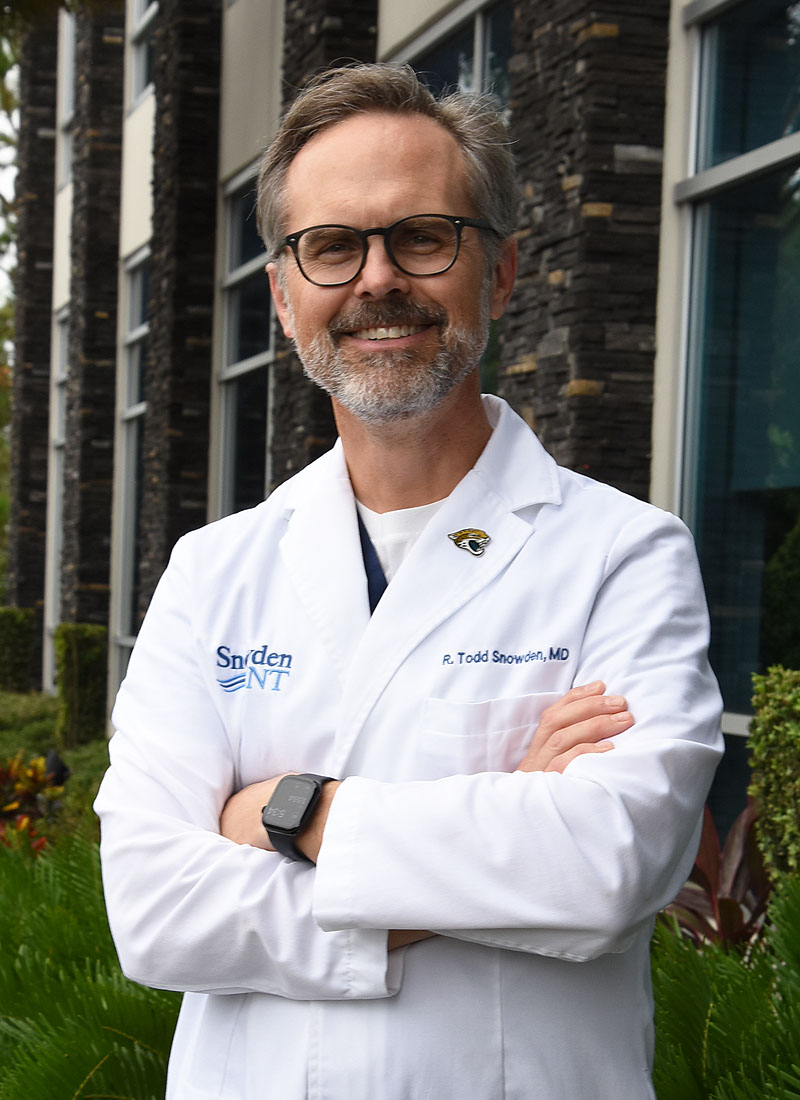
Meet Dr. Robert Todd Snowden
Choosing an ENT specialist is an important decision, particularly when surgery may be part of your treatment plan. Robert Todd Snowden, MD, FACS is a board-certified otolaryngologist who has been diagnosing and treating complex disorders of the ears, nose, and throat since 2001. With more than 20 years of experience caring for patients throughout Northeast Florida, Dr. Snowden is known for combining careful diagnostic evaluation with evidence-based treatment recommendations that are tailored to each patient’s individual needs. His commitment is to help every patient achieve the best possible outcome through compassionate, ethical, and patient-centered care.
As a Fellow of the American College of Surgeons (FACS) and the American Academy of Otolaryngology–Head and Neck Surgery, Dr. Snowden maintains the highest professional standards within his specialty. He is also an active member of the Florida Medical Association and the Duval County Medical Society and has previously held memberships in the American Rhinologic Society and the American Association of Otolaryngic Allergy. Throughout his career, he has remained committed to advancing his knowledge and providing patients with care that reflects current evidence and accepted best practices.
In addition to his clinical experience, Dr. Snowden has served in numerous leadership roles within the Jacksonville medical community. During more than 25 years on the Baptist Health medical staff, he served as Chief of Surgery and Chief of Staff at Baptist Medical Center South and was a member of the Baptist Physician Partners Board of Directors. Whether treating chronic nasal obstruction, performing advanced sinus and nasal surgery, or managing complex throat and voice disorders, Dr. Snowden has earned the trust of patients and referring physicians alike through his experience, sound clinical judgment, and dedication to delivering exceptional ENT care.
What Our Patients Are Saying




Contact Us!
(904) 268-5366
Or, if it is more convenient, use our contact form and we’ll get back to you as soon as possible.
Contact Us!
(904) 268-5366
Or, if it is more convenient, use our contact form and we’ll get back to you as soon as possible.

Snowden ENT is proud to be a select ENT Provider of the Baptist Physician Partners network. The mission of Baptist Physician Partners is to shape the future of health care in our community through an integrated partnership of providers and Baptist Health hospitals working collaboratively toward common goals for improving quality, safety, efficiency and outcomes for our patients.

12574 Flagler Center Boulevard
Suite 201
Jacksonville, FL 32258
(904) 268-5366
Monday – Thursday 8:30 AM to 4:30 PM
Friday 8:30 AM to 3:45 PM
Snowden ENT is proud to be a select ENT Provider of the Baptist Physician Partners network. The mission of Baptist Physician Partners is to shape the future of health care in our community through an integrated partnership of providers and Baptist Health hospitals working collaboratively toward common goals for improving quality, safety, efficiency and outcomes for our patients.
12574 Flagler Center Blvd
Suite 201
Jacksonville, FL 32258
(904) 268-5366
Monday – Thursday 8:30 AM to 4:30 PM
Friday 8:30 AM to 3:45 PM
Copyright | Snowden ENT | All Rights Reserved | Created and Optimized by BoomClient