Septoplasty in Jacksonville FL
Breath More Comfortably, Sleep Better, and Improve Your Overall Quality of Life
Difficulty breathing through your nose can affect far more than your comfort. Chronic nasal obstruction often contributes to poor sleep, snoring, mouth breathing, reduced exercise tolerance, recurrent sinus infections, headaches, and persistent congestion. While allergies and inflammation are common causes of nasal symptoms, many patients are surprised to learn that a deviated septum is the underlying structural problem limiting their ability to breathe normally.
Septoplasty in Jacksonville FL is a surgical procedure designed to straighten the nasal septum, the wall of cartilage and bone that separates the two nasal passages. When the septum is significantly deviated, it can restrict airflow, interfere with normal sinus drainage, and make one or both sides of the nose feel constantly blocked. Correcting this structural obstruction can improve nasal breathing, enhance sleep quality, reduce mouth breathing, and support healthier sinus function.
When patients come to me to discuss Septoplasty in Jacksonville FL, I begin with a comprehensive evaluation to determine the exact cause of their nasal obstruction. This includes a detailed medical history, a physical examination, and, when appropriate, nasal endoscopy to assess the internal anatomy of the nose. My goal is to identify the source of your symptoms and recommend the least invasive treatment that will provide meaningful, long-term improvement. If a deviated septum is preventing you from breathing comfortably, septoplasty may be an effective solution to restore normal nasal airflow and improve your overall quality of life.
- What Is Septoplasty?
- What Is a Deviated Septum?
- Common Symptoms of a Deviated Septum
- Conditions Septoplasty May Help Correct
- Who Is a Candidate for Septoplasty in Jacksonville FL?
- How Septoplasty Is Performed?
- Septoplasty and Turbinate Reduction
- Septoplasty and Sinus Surgery
- Septoplasty Recovery Timeline
- Is Septoplasty Painful?
- Septoplasty vs Rhinoplasty
- Septoplasty vs Turbinate Reduction
- Septoplasty vs Balloon Sinuplasty
- Frequently Asked Questions About Septoplasty
- Learn More About Septoplasty
- Meet Dr. Robert Todd Snowden
- What Our Patients Are Saying
- Contact Us!
Septoplasty in Jacksonville FL
Breath More Comfortably, Sleep Better, and Improve Your Overall Quality of Life
Difficulty breathing through your nose can affect far more than your comfort. Chronic nasal obstruction often contributes to poor sleep, snoring, mouth breathing, reduced exercise tolerance, recurrent sinus infections, headaches, and persistent congestion. While allergies and inflammation are common causes of nasal symptoms, many patients are surprised to learn that a deviated septum is the underlying structural problem limiting their ability to breathe normally.
Septoplasty in Jacksonville FL is a surgical procedure designed to straighten the nasal septum, the wall of cartilage and bone that separates the two nasal passages. When the septum is significantly deviated, it can restrict airflow, interfere with normal sinus drainage, and make one or both sides of the nose feel constantly blocked. Correcting this structural obstruction can improve nasal breathing, enhance sleep quality, reduce mouth breathing, and support healthier sinus function.
When patients come to me to discuss Septoplasty in Jacksonville FL, I begin with a comprehensive evaluation to determine the exact cause of their nasal obstruction. This includes a detailed medical history, a physical examination, and, when appropriate, nasal endoscopy to assess the internal anatomy of the nose. My goal is to identify the source of your symptoms and recommend the least invasive treatment that will provide meaningful, long-term improvement. If a deviated septum is preventing you from breathing comfortably, septoplasty may be an effective solution to restore normal nasal airflow and improve your overall quality of life.
- What Is Septoplasty?
- What Is a Deviated Septum?
- Common Symptoms of a Deviated Septum
- Conditions Septoplasty May Help Correct
- Who Is a Candidate for Septoplasty in Jacksonville FL?
- How Septoplasty Is Performed?
- Septoplasty and Turbinate Reduction
- Septoplasty and Sinus Surgery
- Septoplasty Recovery Timeline
- Is Septoplasty Painful?
- Septoplasty vs Rhinoplasty
- Septoplasty vs Turbinate Reduction
- Septoplasty vs Balloon Sinuplasty
- Frequently Asked Questions About Septoplasty
- Learn More About Septoplasty
- Meet Dr. Robert Todd Snowden
- What Our Patients Are Saying
- Contact Us!

What Is Septoplasty?
A deviated septum is one of the most common structural causes of chronic nasal obstruction. The nasal septum is the wall of cartilage and bone that separates the right and left nasal passages. Ideally, it is positioned near the center of the nose to allow balanced airflow on both sides. When the septum is significantly crooked, displaced, or misshapen, it can restrict airflow, contribute to chronic congestion, interfere with sinus drainage, and make breathing through the nose difficult.
Septoplasty in Jacksonville FL is a surgical procedure that corrects this structural problem by reshaping or repositioning the deviated portions of the septum while preserving as much healthy tissue as possible. Unlike cosmetic nasal surgery, septoplasty is performed to improve nasal function rather than change the external appearance of the nose. The procedure is completed entirely through the nostrils, leaving no visible external incisions or scars.
For many patients, Septoplasty in Jacksonville FL provides lasting improvement in nasal airflow and breathing. In addition to relieving chronic nasal obstruction, restoring normal airflow may improve sleep quality, reduce mouth breathing and snoring, enhance exercise tolerance, and decrease recurring sinus infections caused by impaired sinus ventilation. During your consultation, I will determine whether a deviated septum is responsible for your symptoms and whether septoplasty is the most appropriate treatment for your condition.
What Is Septoplasty?
A deviated septum is one of the most common structural causes of chronic nasal obstruction. The nasal septum is the wall of cartilage and bone that separates the right and left nasal passages. Ideally, it is positioned near the center of the nose to allow balanced airflow on both sides. When the septum is significantly crooked, displaced, or misshapen, it can restrict airflow, contribute to chronic congestion, interfere with sinus drainage, and make breathing through the nose difficult.
Septoplasty in Jacksonville FL is a surgical procedure that corrects this structural problem by reshaping or repositioning the deviated portions of the septum while preserving as much healthy tissue as possible. Unlike cosmetic nasal surgery, septoplasty is performed to improve nasal function rather than change the external appearance of the nose. The procedure is completed entirely through the nostrils, leaving no visible external incisions or scars.
For many patients, Septoplasty in Jacksonville FL provides lasting improvement in nasal airflow and breathing. In addition to relieving chronic nasal obstruction, restoring normal airflow may improve sleep quality, reduce mouth breathing and snoring, enhance exercise tolerance, and decrease recurring sinus infections caused by impaired sinus ventilation. During your consultation, I will determine whether a deviated septum is responsible for your symptoms and whether septoplasty is the most appropriate treatment for your condition.
What Is a Deviated Septum?
A deviated septum occurs when the wall of cartilage and bone separating the nasal passages is displaced away from the center of the nose. Some individuals are born with this condition, while others develop it following a facial injury or trauma. Mild septal deviations are extremely common and often cause few, if any, symptoms. More significant deviations, however, can restrict airflow through one or both sides of the nose, interfere with normal sinus drainage, and contribute to chronic nasal obstruction. In many cases, inflammation from allergies, enlarged turbinates, or chronic sinus disease can further narrow the nasal passages and make breathing even more difficult.
Many patients who come to me for Septoplasty in Jacksonville FL have lived with nasal congestion, mouth breathing, poor sleep, or recurrent sinus infections for years without realizing that a structural blockage is the underlying cause. During your evaluation, I perform a thorough examination and, when appropriate, nasal endoscopy to determine whether a deviated septum is responsible for your symptoms. Identifying the source of the obstruction allows me to recommend the most appropriate treatment, whether that involves medical therapy, septoplasty, or a combination of procedures to restore normal nasal airflow.
What Is a Deviated Septum?
A deviated septum occurs when the wall of cartilage and bone separating the nasal passages is displaced away from the center of the nose. Some individuals are born with this condition, while others develop it following a facial injury or trauma. Mild septal deviations are extremely common and often cause few, if any, symptoms. More significant deviations, however, can restrict airflow through one or both sides of the nose, interfere with normal sinus drainage, and contribute to chronic nasal obstruction. In many cases, inflammation from allergies, enlarged turbinates, or chronic sinus disease can further narrow the nasal passages and make breathing even more difficult.
Many patients who come to me for Septoplasty in Jacksonville FL have lived with nasal congestion, mouth breathing, poor sleep, or recurrent sinus infections for years without realizing that a structural blockage is the underlying cause. During your evaluation, I perform a thorough examination and, when appropriate, nasal endoscopy to determine whether a deviated septum is responsible for your symptoms. Identifying the source of the obstruction allows me to recommend the most appropriate treatment, whether that involves medical therapy, septoplasty, or a combination of procedures to restore normal nasal airflow.
Common Symptoms of a Deviated Septum
The symptoms of a deviated septum can vary considerably from one patient to another. Some people experience obvious nasal blockage, while others gradually develop symptoms over many years as chronic inflammation, allergies, or enlarged turbinates further reduce airflow through the nasal passages. It is also common for symptoms to become more noticeable at night, during exercise, or throughout allergy season when swelling inside the nose increases.
When these symptoms are caused primarily by a deviated septum rather than allergies or temporary inflammation, Septoplasty in Jacksonville FL can often provide lasting improvement by correcting the underlying structural obstruction. During your evaluation, I will determine whether your symptoms are related to a deviated septum and discuss the treatment options that are most appropriate for your individual condition.
Common Symptoms Include:
- Chronic nasal congestion
- Difficulty breathing through the nose
- One-sided nasal blockage
- Frequent sinus infections
- Snoring
- Poor sleep quality
- Mouth breathing
- Facial pressure
- Postnasal drip
- Nosebleeds
- Headaches
- Reduced exercise tolerance
- Dry mouth from nighttime mouth breathing
Common Symptoms of a Deviated Septum
The symptoms of a deviated septum can vary considerably from one patient to another. Some people experience obvious nasal blockage, while others gradually develop symptoms over many years as chronic inflammation, allergies, or enlarged turbinates further reduce airflow through the nasal passages. It is also common for symptoms to become more noticeable at night, during exercise, or throughout allergy season when swelling inside the nose increases.
When these symptoms are caused primarily by a deviated septum rather than allergies or temporary inflammation, Septoplasty in Jacksonville FL can often provide lasting improvement by correcting the underlying structural obstruction. During your evaluation, I will determine whether your symptoms are related to a deviated septum and discuss the treatment options that are most appropriate for your individual condition.
Common Symptoms Include:
- Chronic nasal congestion
- Difficulty breathing through the nose
- One-sided nasal blockage
- Frequent sinus infections
- Snoring
- Poor sleep quality
- Mouth breathing
- Facial pressure
- Postnasal drip
- Nosebleeds
- Headaches
- Reduced exercise tolerance
- Dry mouth from nighttime mouth breathing
Conditions Septoplasty May Help Correct
While Septoplasty in Jacksonville FL is performed to correct a deviated septum, the benefits often extend beyond improving nasal airflow. A significant septal deviation can interfere with normal breathing, disrupt sinus drainage, and contribute to a variety of chronic symptoms that affect sleep, daily activities, and overall quality of life. During your evaluation, I determine whether your symptoms are directly related to a structural nasal obstruction or whether another condition may be contributing to your nasal complaints.
Chronic Nasal Obstruction
Persistent nasal congestion that does not respond to medications is one of the most common reasons patients consider Septoplasty in Jacksonville FL. When the nasal passages are narrowed by a deviated septum, airflow may remain restricted regardless of allergy treatment or nasal sprays. Correcting the obstruction can significantly improve nasal breathing.
Recurrent Sinus Infections
A deviated septum can impair normal sinus ventilation and mucus drainage, creating an environment where bacteria and inflammation persist. By restoring more normal airflow and drainage, septoplasty may help reduce the frequency of recurring sinus infections. Some patients with chronic sinus disease may also benefit from additional procedures if other anatomical problems are present.
Snoring, Sleep Disturbance, and Mouth Breathing
Restricted nasal breathing often forces patients to breathe through their mouth, particularly while sleeping. This can contribute to snoring, dry mouth, fragmented sleep, sore throats, and daytime fatigue. Although septoplasty is not a treatment for obstructive sleep apnea, improving nasal airflow frequently makes breathing during sleep more comfortable and may reduce symptoms related to chronic nasal obstruction.
Chronic Headaches and Facial Pressure
Some patients experience persistent facial pressure, headaches, or a sensation of nasal fullness because restricted airflow and poor sinus ventilation contribute to chronic inflammation. When these symptoms are related to a deviated septum, Septoplasty in Jacksonville FL may provide meaningful relief by restoring more normal nasal airflow and improving sinus function.
Conditions Septoplasty May Help Correct
While Septoplasty in Jacksonville FL is performed to correct a deviated septum, the benefits often extend beyond improving nasal airflow. A significant septal deviation can interfere with normal breathing, disrupt sinus drainage, and contribute to a variety of chronic symptoms that affect sleep, daily activities, and overall quality of life. During your evaluation, I determine whether your symptoms are directly related to a structural nasal obstruction or whether another condition may be contributing to your nasal complaints.
Chronic Nasal Obstruction
Persistent nasal congestion that does not respond to medications is one of the most common reasons patients consider Septoplasty in Jacksonville FL. When the nasal passages are narrowed by a deviated septum, airflow may remain restricted regardless of allergy treatment or nasal sprays. Correcting the obstruction can significantly improve nasal breathing.
Recurrent Sinus Infections
A deviated septum can impair normal sinus ventilation and mucus drainage, creating an environment where bacteria and inflammation persist. By restoring more normal airflow and drainage, septoplasty may help reduce the frequency of recurring sinus infections. Some patients with chronic sinus disease may also benefit from additional procedures if other anatomical problems are present.
Snoring, Sleep Disturbance, and Mouth Breathing
Restricted nasal breathing often forces patients to breathe through their mouth, particularly while sleeping. This can contribute to snoring, dry mouth, fragmented sleep, sore throats, and daytime fatigue. Although septoplasty is not a treatment for obstructive sleep apnea, improving nasal airflow frequently makes breathing during sleep more comfortable and may reduce symptoms related to chronic nasal obstruction.
Chronic Headaches and Facial Pressure
Some patients experience persistent facial pressure, headaches, or a sensation of nasal fullness because restricted airflow and poor sinus ventilation contribute to chronic inflammation. When these symptoms are related to a deviated septum, Septoplasty in Jacksonville FL may provide meaningful relief by restoring more normal nasal airflow and improving sinus function.
Who Is a Candidate for Septoplasty in Jacksonville FL?
The best candidates for Septoplasty in Jacksonville FL are individuals whose symptoms are primarily caused by a structural blockage within the nose rather than temporary inflammation alone. While medications such as nasal steroid sprays, antihistamines, decongestants, and allergy treatments can often reduce swelling, they cannot straighten a deviated septum. When chronic nasal obstruction persists despite appropriate medical therapy, septoplasty may be the most effective long-term treatment.
You may be a good candidate for Septoplasty in Jacksonville FL if you experience:
- Chronic nasal blockage or congestion that does not improve with medication.
- Difficulty breathing through one or both sides of your nose.
- A diagnosed deviated septum causing persistent symptoms.
- Recurrent sinus infections related to impaired sinus drainage.
- Snoring or sleep disruption associated with chronic nasal obstruction.
- Chronic mouth breathing, particularly during sleep.
- Nasal obstruction that developed after a facial injury or trauma.
- Ongoing symptoms that interfere with your daily activities or quality of life.
Not every patient with nasal congestion requires surgery. Allergies, chronic sinusitis, nasal polyps, enlarged turbinates, and other conditions can produce symptoms similar to those of a deviated septum. During your consultation, I perform a comprehensive evaluation that may include nasal endoscopy to determine the true source of your nasal obstruction. If a deviated septum is the primary cause of your symptoms, I will discuss whether Septoplasty in Jacksonville FL is the most appropriate treatment and whether any additional procedures would improve your overall result.
Who Is a Candidate for Septoplasty in Jacksonville FL?
The best candidates for Septoplasty in Jacksonville FL are individuals whose symptoms are primarily caused by a structural blockage within the nose rather than temporary inflammation alone. While medications such as nasal steroid sprays, antihistamines, decongestants, and allergy treatments can often reduce swelling, they cannot straighten a deviated septum. When chronic nasal obstruction persists despite appropriate medical therapy, septoplasty may be the most effective long-term treatment.
You may be a good candidate for Septoplasty in Jacksonville FL if you experience:
- Chronic nasal blockage or congestion that does not improve with medication.
- Difficulty breathing through one or both sides of your nose.
- A diagnosed deviated septum causing persistent symptoms.
- Recurrent sinus infections related to impaired sinus drainage.
- Snoring or sleep disruption associated with chronic nasal obstruction.
- Chronic mouth breathing, particularly during sleep.
- Nasal obstruction that developed after a facial injury or trauma.
- Ongoing symptoms that interfere with your daily activities or quality of life.
Not every patient with nasal congestion requires surgery. Allergies, chronic sinusitis, nasal polyps, enlarged turbinates, and other conditions can produce symptoms similar to those of a deviated septum. During your consultation, I perform a comprehensive evaluation that may include nasal endoscopy to determine the true source of your nasal obstruction. If a deviated septum is the primary cause of your symptoms, I will discuss whether Septoplasty in Jacksonville FL is the most appropriate treatment and whether any additional procedures would improve your overall result.
How Septoplasty Is Performed?
Septoplasty in Jacksonville FL is typically performed as an outpatient procedure under general anesthesia, allowing most patients to return home the same day. The operation is completed entirely through the nostrils, so there are no external incisions or visible scars. Before surgery, I carefully evaluate the anatomy of your nasal passages to determine which portions of the septum are contributing to your obstruction and to plan the most effective surgical approach.
During the procedure, I gently elevate the protective lining that covers the septum to expose the underlying cartilage and bone. The deviated portions are then carefully reshaped, repositioned, or selectively removed to create a more open nasal airway while preserving the structural support necessary to maintain the shape and stability of the nose. My goal is to correct the obstruction while conserving as much healthy tissue as possible.
Once the septum has been properly aligned, the nasal lining is returned to its normal position and secured to promote healing. Depending on your anatomy and the extent of correction required, Septoplasty in Jacksonville FL generally takes between one and two hours to complete. If enlarged turbinates, chronic sinus disease, or other anatomical issues are also contributing to your symptoms, septoplasty may be performed in combination with additional procedures to provide the best possible improvement in nasal breathing and sinus function.
How Septoplasty Is Performed?
Septoplasty in Jacksonville FL is typically performed as an outpatient procedure under general anesthesia, allowing most patients to return home the same day. The operation is completed entirely through the nostrils, so there are no external incisions or visible scars. Before surgery, I carefully evaluate the anatomy of your nasal passages to determine which portions of the septum are contributing to your obstruction and to plan the most effective surgical approach.
During the procedure, I gently elevate the protective lining that covers the septum to expose the underlying cartilage and bone. The deviated portions are then carefully reshaped, repositioned, or selectively removed to create a more open nasal airway while preserving the structural support necessary to maintain the shape and stability of the nose. My goal is to correct the obstruction while conserving as much healthy tissue as possible.
Once the septum has been properly aligned, the nasal lining is returned to its normal position and secured to promote healing. Depending on your anatomy and the extent of correction required, Septoplasty in Jacksonville FL generally takes between one and two hours to complete. If enlarged turbinates, chronic sinus disease, or other anatomical issues are also contributing to your symptoms, septoplasty may be performed in combination with additional procedures to provide the best possible improvement in nasal breathing and sinus function.
Septoplasty and Turbinate Reduction
Many patients who are considering Septoplasty in Jacksonville FL also have enlarged inferior turbinates that contribute to chronic nasal obstruction. The turbinates are normal structures inside the nose that warm, humidify, and filter the air you breathe. However, chronic allergies, inflammation, or long-standing irritation can cause them to become enlarged, further narrowing the nasal passages even after a deviated septum is corrected. During your evaluation, I determine whether turbinate enlargement is contributing to your breathing difficulties in addition to a deviated septum.
When both conditions are present, I frequently recommend combining Septoplasty in Jacksonville FL with turbinate reduction during the same procedure. Correcting the deviated septum restores the structural airway, while reducing the size of the enlarged turbinates creates additional space for improved airflow. Addressing both sources of obstruction at the same time often produces better long-term breathing, reduces persistent nasal congestion, and decreases the likelihood that patients will continue experiencing symptoms after surgery.
Septoplasty and Turbinate Reduction
Many patients who are considering Septoplasty in Jacksonville FL also have enlarged inferior turbinates that contribute to chronic nasal obstruction. The turbinates are normal structures inside the nose that warm, humidify, and filter the air you breathe. However, chronic allergies, inflammation, or long-standing irritation can cause them to become enlarged, further narrowing the nasal passages even after a deviated septum is corrected. During your evaluation, I determine whether turbinate enlargement is contributing to your breathing difficulties in addition to a deviated septum.
When both conditions are present, I frequently recommend combining Septoplasty in Jacksonville FL with turbinate reduction during the same procedure. Correcting the deviated septum restores the structural airway, while reducing the size of the enlarged turbinates creates additional space for improved airflow. Addressing both sources of obstruction at the same time often produces better long-term breathing, reduces persistent nasal congestion, and decreases the likelihood that patients will continue experiencing symptoms after surgery.
Septoplasty and Sinus Surgery
A deviated septum and chronic sinus disease frequently occur together, and each condition can contribute to ongoing nasal congestion, facial pressure, and recurrent sinus infections. When both problems are present, correcting only one may not provide the best long-term outcome. During your evaluation, I use your medical history, nasal endoscopy, and, when appropriate, CT imaging to determine whether both the septum and the sinuses are contributing to your symptoms.
When indicated, I may recommend combining Septoplasty in Jacksonville FL with endoscopic sinus surgery during the same operation. Straightening the septum not only improves nasal airflow but also provides better access to the sinus openings, allowing me to more effectively treat chronic sinus inflammation, nasal polyps, or blocked sinus drainage pathways. Addressing both conditions in a single procedure often restores healthier nasal function, improves sinus ventilation, and reduces the likelihood of persistent or recurring symptoms.
Septoplasty and Sinus Surgery
A deviated septum and chronic sinus disease frequently occur together, and each condition can contribute to ongoing nasal congestion, facial pressure, and recurrent sinus infections. When both problems are present, correcting only one may not provide the best long-term outcome. During your evaluation, I use your medical history, nasal endoscopy, and, when appropriate, CT imaging to determine whether both the septum and the sinuses are contributing to your symptoms.
When indicated, I may recommend combining Septoplasty in Jacksonville FL with endoscopic sinus surgery during the same operation. Straightening the septum not only improves nasal airflow but also provides better access to the sinus openings, allowing me to more effectively treat chronic sinus inflammation, nasal polyps, or blocked sinus drainage pathways. Addressing both conditions in a single procedure often restores healthier nasal function, improves sinus ventilation, and reduces the likelihood of persistent or recurring symptoms.
Septoplasty Recovery Timeline
Recovery after Septoplasty in Jacksonville FL is generally straightforward, although every patient’s healing process is unique. Most people experience gradual improvement in nasal breathing over several weeks as swelling subsides and the tissues inside the nose heal. While the recovery timeline varies depending on the extent of the procedure and whether additional surgeries were performed, understanding what to expect can help you prepare for a smoother recovery.
First 24 to 48 Hours
During the first two days after surgery, it is normal to experience nasal congestion, mild bloody drainage, a feeling of pressure, swelling, and fatigue. Most patients describe the sensation as severe congestion rather than significant pain. Any discomfort is usually well controlled with prescribed or over-the-counter pain medication, and keeping your head elevated while resting can help minimize swelling.
First Week After Surgery
Congestion and internal swelling are typically most noticeable during the first week. If nasal splints have been placed to support healing, breathing through the nose may temporarily feel more restricted before gradually improving. I provide detailed postoperative instructions to promote proper healing, and many patients are able to return to light work or normal daily activities within several days to one week, depending on the physical demands of their occupation.
Weeks Two Through Four
As internal swelling continues to decrease, most patients begin to notice a significant improvement in nasal airflow. Breathing often becomes easier, sleep quality improves, and many individuals are able to resume exercise and other normal activities as directed. Follow-up visits allow me to monitor your healing, remove any splints or crusting when necessary, and ensure your recovery is progressing as expected.
Long-Term Healing
Although many patients experience noticeable improvement within the first few weeks, complete internal healing continues for several months. As the tissues mature and residual swelling resolves, the full benefits of Septoplasty in Jacksonville FL become increasingly apparent. For most patients, the result is a lasting improvement in nasal breathing, greater comfort during daily activities, and a better overall quality of life.
Septoplasty Recovery Timeline
Recovery after Septoplasty in Jacksonville FL is generally straightforward, although every patient’s healing process is unique. Most people experience gradual improvement in nasal breathing over several weeks as swelling subsides and the tissues inside the nose heal. While the recovery timeline varies depending on the extent of the procedure and whether additional surgeries were performed, understanding what to expect can help you prepare for a smoother recovery.
First 24 to 48 Hours
During the first two days after surgery, it is normal to experience nasal congestion, mild bloody drainage, a feeling of pressure, swelling, and fatigue. Most patients describe the sensation as severe congestion rather than significant pain. Any discomfort is usually well controlled with prescribed or over-the-counter pain medication, and keeping your head elevated while resting can help minimize swelling.
First Week After Surgery
Congestion and internal swelling are typically most noticeable during the first week. If nasal splints have been placed to support healing, breathing through the nose may temporarily feel more restricted before gradually improving. I provide detailed postoperative instructions to promote proper healing, and many patients are able to return to light work or normal daily activities within several days to one week, depending on the physical demands of their occupation.
Weeks Two Through Four
As internal swelling continues to decrease, most patients begin to notice a significant improvement in nasal airflow. Breathing often becomes easier, sleep quality improves, and many individuals are able to resume exercise and other normal activities as directed. Follow-up visits allow me to monitor your healing, remove any splints or crusting when necessary, and ensure your recovery is progressing as expected.
Long-Term Healing
Although many patients experience noticeable improvement within the first few weeks, complete internal healing continues for several months. As the tissues mature and residual swelling resolves, the full benefits of Septoplasty in Jacksonville FL become increasingly apparent. For most patients, the result is a lasting improvement in nasal breathing, greater comfort during daily activities, and a better overall quality of life.
Is Septoplasty Painful?
One of the most common concerns I hear from patients considering Septoplasty in Jacksonville FL is whether the recovery will be painful. Fortunately, most patients find that recovery is much more comfortable than they expected. Rather than experiencing significant pain, patients typically describe a feeling of nasal congestion, pressure, mild soreness, and temporary swelling similar to having a severe head cold. The most challenging part of recovery is usually the sensation of a blocked nose while the internal tissues heal, not pain itself. I prescribe appropriate medications and provide detailed postoperative instructions to help keep you as comfortable as possible throughout your recovery.
Following your postoperative instructions carefully is one of the best ways to promote healing and minimize discomfort after Septoplasty in Jacksonville FL. I generally recommend that patients:
- Sleep with the head elevated to help reduce swelling.
- Avoid strenuous exercise and heavy lifting during the initial healing period.
- Do not blow your nose until instructed that it is safe to do so.
- Use saline irrigations or nasal sprays as directed to keep the nasal passages moist and promote healing.
- Stay well hydrated to support the recovery process.
- Avoid smoking and exposure to tobacco products, which can delay healing.
- Attend all scheduled follow-up appointments so I can monitor your progress and ensure your nose is healing properly.
Most patients notice steady improvement each week following surgery, with nasal breathing continuing to improve as swelling gradually resolves. My goal is to make your recovery as comfortable as possible while helping you achieve lasting improvement in nasal airflow and overall quality of life.
Is Septoplasty Painful?
One of the most common concerns I hear from patients considering Septoplasty in Jacksonville FL is whether the recovery will be painful. Fortunately, most patients find that recovery is much more comfortable than they expected. Rather than experiencing significant pain, patients typically describe a feeling of nasal congestion, pressure, mild soreness, and temporary swelling similar to having a severe head cold. The most challenging part of recovery is usually the sensation of a blocked nose while the internal tissues heal, not pain itself. I prescribe appropriate medications and provide detailed postoperative instructions to help keep you as comfortable as possible throughout your recovery.
Following your postoperative instructions carefully is one of the best ways to promote healing and minimize discomfort after Septoplasty in Jacksonville FL. I generally recommend that patients:
- Sleep with the head elevated to help reduce swelling.
- Avoid strenuous exercise and heavy lifting during the initial healing period.
- Do not blow your nose until instructed that it is safe to do so.
- Use saline irrigations or nasal sprays as directed to keep the nasal passages moist and promote healing.
- Stay well hydrated to support the recovery process.
- Avoid smoking and exposure to tobacco products, which can delay healing.
- Attend all scheduled follow-up appointments so I can monitor your progress and ensure your nose is healing properly.
Most patients notice steady improvement each week following surgery, with nasal breathing continuing to improve as swelling gradually resolves. My goal is to make your recovery as comfortable as possible while helping you achieve lasting improvement in nasal airflow and overall quality of life.
Septoplasty vs Rhinoplasty
Because both procedures involve the nose, many patients assume that septoplasty and rhinoplasty are the same operation. In reality, they serve very different purposes. Septoplasty in Jacksonville FL is a functional procedure performed to improve nasal breathing by correcting a deviated septum, the wall of cartilage and bone that separates the nasal passages. When the septum is significantly displaced, it can obstruct airflow, contribute to chronic nasal congestion, interfere with sinus drainage, and affect sleep and overall quality of life. The goal of septoplasty is to restore normal nasal function, not to change the appearance of the nose.
Rhinoplasty, commonly referred to as a “nose job,” is a cosmetic procedure that reshapes the external nose to improve its size, contour, symmetry, bridge, or tip. While rhinoplasty can include functional corrections when necessary, its primary purpose is aesthetic enhancement. Plastic surgeons often perform rhinoplasty for patients who wish to improve the appearance of their nose, although the procedure may also be combined with functional repairs when appropriate.
For patients whose primary concern is difficulty breathing through the nose, Septoplasty in Jacksonville FL is often the most appropriate treatment. Because the procedure is performed entirely inside the nose, it generally does not produce a noticeable change in your facial appearance. During your consultation, I will determine whether your symptoms are caused by a deviated septum, another condition affecting the nasal airway, or a combination of factors. If both functional breathing problems and cosmetic concerns are present, I will discuss the available treatment options and, when appropriate, coordinate your care with a qualified facial plastic surgeon so that both objectives can be addressed safely and effectively.
Septoplasty vs Rhinoplasty
Because both procedures involve the nose, many patients assume that septoplasty and rhinoplasty are the same operation. In reality, they serve very different purposes. Septoplasty in Jacksonville FL is a functional procedure performed to improve nasal breathing by correcting a deviated septum, the wall of cartilage and bone that separates the nasal passages. When the septum is significantly displaced, it can obstruct airflow, contribute to chronic nasal congestion, interfere with sinus drainage, and affect sleep and overall quality of life. The goal of septoplasty is to restore normal nasal function, not to change the appearance of the nose.
Rhinoplasty, commonly referred to as a “nose job,” is a cosmetic procedure that reshapes the external nose to improve its size, contour, symmetry, bridge, or tip. While rhinoplasty can include functional corrections when necessary, its primary purpose is aesthetic enhancement. Plastic surgeons often perform rhinoplasty for patients who wish to improve the appearance of their nose, although the procedure may also be combined with functional repairs when appropriate.
For patients whose primary concern is difficulty breathing through the nose, Septoplasty in Jacksonville FL is often the most appropriate treatment. Because the procedure is performed entirely inside the nose, it generally does not produce a noticeable change in your facial appearance. During your consultation, I will determine whether your symptoms are caused by a deviated septum, another condition affecting the nasal airway, or a combination of factors. If both functional breathing problems and cosmetic concerns are present, I will discuss the available treatment options and, when appropriate, coordinate your care with a qualified facial plastic surgeon so that both objectives can be addressed safely and effectively.
Septoplasty vs Turbinate Reduction
Although Septoplasty in Jacksonville FL and turbinate reduction both improve nasal breathing, they correct different causes of nasal obstruction. Turbinate reduction, addresses enlarged inferior turbinates, normal structures inside the nose that warm, humidify, and filter the air you breathe. Chronic allergies, inflammation, sinus disease, or long-standing irritation can cause the turbinates to enlarge, reducing the amount of space available for airflow and leading to persistent congestion, snoring, mouth breathing, and poor sleep quality.
A deviated septum and enlarged turbinates frequently occur together. In fact, the body often compensates for a crooked septum by enlarging the turbinate on the opposite side of the nose, which can further restrict airflow. For this reason, treating only one source of obstruction may not provide the best long-term improvement. During your evaluation, I determine whether your symptoms are caused by a deviated septum, turbinate enlargement, or a combination of both conditions.
When I recommended turbinate reduction, I use techniques that reduce the size of the turbinates while preserving their important role in filtering, warming, and humidifying the air you breathe. The objective is to create additional space for airflow without unnecessarily removing tissue or compromising normal nasal function. My approach is always conservative and focused on maintaining the natural physiology of the nose.
For many patients, combining Septoplasty in Jacksonville FL with turbinate reduction produces the most complete and lasting improvement in nasal breathing. Correcting both structural problems during a single procedure often results in better airflow, less chronic congestion, improved sleep quality, reduced mouth breathing, fewer sinus symptoms, and greater comfort during daily activities and exercise than treating either condition alone.
Septoplasty vs Turbinate Reduction
Although Septoplasty in Jacksonville FL and turbinate reduction both improve nasal breathing, they correct different causes of nasal obstruction. Turbinate reduction, addresses enlarged inferior turbinates, normal structures inside the nose that warm, humidify, and filter the air you breathe. Chronic allergies, inflammation, sinus disease, or long-standing irritation can cause the turbinates to enlarge, reducing the amount of space available for airflow and leading to persistent congestion, snoring, mouth breathing, and poor sleep quality.
A deviated septum and enlarged turbinates frequently occur together. In fact, the body often compensates for a crooked septum by enlarging the turbinate on the opposite side of the nose, which can further restrict airflow. For this reason, treating only one source of obstruction may not provide the best long-term improvement. During your evaluation, I determine whether your symptoms are caused by a deviated septum, turbinate enlargement, or a combination of both conditions.
When I recommended turbinate reduction, I use techniques that reduce the size of the turbinates while preserving their important role in filtering, warming, and humidifying the air you breathe. The objective is to create additional space for airflow without unnecessarily removing tissue or compromising normal nasal function. My approach is always conservative and focused on maintaining the natural physiology of the nose.
For many patients, combining Septoplasty in Jacksonville FL with turbinate reduction produces the most complete and lasting improvement in nasal breathing. Correcting both structural problems during a single procedure often results in better airflow, less chronic congestion, improved sleep quality, reduced mouth breathing, fewer sinus symptoms, and greater comfort during daily activities and exercise than treating either condition alone.
Septoplasty vs Balloon Sinuplasty
Although Septoplasty in Jacksonville FL and balloon sinuplasty can both improve nasal breathing and reduce chronic symptoms, they are designed to treat different conditions. Balloon sinuplasty treats blocked sinus openings that prevent normal mucus drainage and contribute to chronic sinusitis. Choosing the appropriate procedure depends on accurately identifying the underlying cause of your symptoms.
Balloon sinuplasty is most often recommended for patients with chronic sinusitis, recurrent sinus infections, facial pressure, headaches, or persistent sinus congestion that has not responded to medical treatment. During the procedure, a small balloon catheter is used to gently widen the natural sinus openings, improving drainage while preserving the surrounding tissue. Because the procedure does not typically require tissue removal, recovery is generally quick, and many patients are treated in the office.
It is not uncommon for patients to have both a deviated septum and chronic sinus disease. In these situations, nasal obstruction, enlarged turbinates, and inflamed or blocked sinuses may all contribute to ongoing symptoms. During your evaluation, I perform a comprehensive examination that may include nasal endoscopy and, when appropriate, CT imaging to assess your nasal anatomy and sinus health. This allows me to determine whether Septoplasty in Jacksonville FL, balloon sinuplasty, turbinate reduction, or a combination of procedures will provide the most effective long-term improvement in your breathing and sinus function.
Septoplasty vs Balloon Sinuplasty
Although Septoplasty in Jacksonville FL and balloon sinuplasty can both improve nasal breathing and reduce chronic symptoms, they are designed to treat different conditions. Balloon sinuplasty treats blocked sinus openings that prevent normal mucus drainage and contribute to chronic sinusitis. Choosing the appropriate procedure depends on accurately identifying the underlying cause of your symptoms.
Balloon sinuplasty is most often recommended for patients with chronic sinusitis, recurrent sinus infections, facial pressure, headaches, or persistent sinus congestion that has not responded to medical treatment. During the procedure, a small balloon catheter is used to gently widen the natural sinus openings, improving drainage while preserving the surrounding tissue. Because the procedure does not typically require tissue removal, recovery is generally quick, and many patients are treated in the office.
It is not uncommon for patients to have both a deviated septum and chronic sinus disease. In these situations, nasal obstruction, enlarged turbinates, and inflamed or blocked sinuses may all contribute to ongoing symptoms. During your evaluation, I perform a comprehensive examination that may include nasal endoscopy and, when appropriate, CT imaging to assess your nasal anatomy and sinus health. This allows me to determine whether Septoplasty in Jacksonville FL, balloon sinuplasty, turbinate reduction, or a combination of procedures will provide the most effective long-term improvement in your breathing and sinus function.
Frequently Asked Questions About Septoplasty
How long does septoplasty recovery take? Most patients recover significantly within one to two weeks, although complete internal healing can continue for several months.
Will septoplasty improve breathing immediately? Breathing may initially feel worse due to swelling. Improvement usually becomes more noticeable as healing progresses.
Is septoplasty covered by insurance? Because septoplasty is considered a functional procedure, insurance often provides coverage when medically necessary. Coverage varies by plan so be sure to check with your insurance provider.
Does septoplasty leave scars? Septoplasty is typically performed entirely inside the nose, so visible external scars are uncommon.
Can a deviated septum get worse over time? Yes. Aging changes, inflammation, or additional trauma can sometimes worsen symptoms over time.
Can septoplasty help snoring? Improving nasal airflow may reduce snoring in some patients, especially when nasal obstruction is a major contributing factor.
How do I know if I need septoplasty? Patients with chronic nasal obstruction, difficulty breathing through the nose, recurrent sinus infections, or persistent congestion should consider evaluation by Dr. Snowden at Snowden ENT in Jacksonville FL.
Frequently Asked Questions About Septoplasty
How long does septoplasty recovery take? Most patients recover significantly within one to two weeks, although complete internal healing can continue for several months.
Will septoplasty improve breathing immediately? Breathing may initially feel worse due to swelling. Improvement usually becomes more noticeable as healing progresses.
Is septoplasty covered by insurance? Because septoplasty is considered a functional procedure, insurance often provides coverage when medically necessary. Coverage varies by plan so be sure to check with your insurance provider.
Does septoplasty leave scars? Septoplasty is typically performed entirely inside the nose, so visible external scars are uncommon.
Can a deviated septum get worse over time? Yes. Aging changes, inflammation, or additional trauma can sometimes worsen symptoms over time.
Can septoplasty help snoring? Improving nasal airflow may reduce snoring in some patients, especially when nasal obstruction is a major contributing factor.
How do I know if I need septoplasty? Patients with chronic nasal obstruction, difficulty breathing through the nose, recurrent sinus infections, or persistent congestion should consider evaluation by Dr. Snowden at Snowden ENT in Jacksonville FL.
Learn More About Septoplasty
If you are considering Septoplasty in Jacksonville FL, I encourage you to explore the additional educational resources I have created to help you better understand the causes of chronic nasal obstruction, the available treatment options, and what to expect before and after surgery. Learning more about your condition can help you make informed decisions and better understand which treatment is most appropriate for your individual needs.
You can learn more by visiting my pages on deviated septum treatment in Jacksonville, sinus surgery in Jacksonville, and recovery after septoplasty in Jacksonville. These resources explain how a deviated septum is diagnosed, when surgery may be recommended, how septoplasty compares with other treatment options, and what you can expect throughout the recovery process. My goal is to provide clear, evidence-based information that helps you breathe more comfortably, improve your quality of life, and feel confident about your treatment plan.
Learn More About Septoplasty
If you are considering Septoplasty in Jacksonville FL, I encourage you to explore the additional educational resources I have created to help you better understand the causes of chronic nasal obstruction, the available treatment options, and what to expect before and after surgery. Learning more about your condition can help you make informed decisions and better understand which treatment is most appropriate for your individual needs.
You can learn more by visiting my pages on deviated septum treatment in Jacksonville, sinus surgery in Jacksonville, and recovery after septoplasty in Jacksonville. These resources explain how a deviated septum is diagnosed, when surgery may be recommended, how septoplasty compares with other treatment options, and what you can expect throughout the recovery process. My goal is to provide clear, evidence-based information that helps you breathe more comfortably, improve your quality of life, and feel confident about your treatment plan.
Meet Dr. Robert Todd Snowden
Choosing an ENT specialist is an important decision, particularly when surgery may be part of your treatment plan. Robert Todd Snowden, MD, FACS is a board-certified otolaryngologist who has been diagnosing and treating complex disorders of the ears, nose, and throat since 2001. With more than 20 years of experience caring for patients throughout Northeast Florida, Dr. Snowden is known for combining careful diagnostic evaluation with evidence-based treatment recommendations that are tailored to each patient’s individual needs. His commitment is to help every patient achieve the best possible outcome through compassionate, ethical, and patient-centered care.
As a Fellow of the American College of Surgeons (FACS) and the American Academy of Otolaryngology–Head and Neck Surgery, Dr. Snowden maintains the highest professional standards within his specialty. He is also an active member of the Florida Medical Association and the Duval County Medical Society and has previously held memberships in the American Rhinologic Society and the American Association of Otolaryngic Allergy. Throughout his career, he has remained committed to advancing his knowledge and providing patients with care that reflects current evidence and accepted best practices.
In addition to his clinical experience, Dr. Snowden has served in numerous leadership roles within the Jacksonville medical community. During more than 25 years on the Baptist Health medical staff, he served as Chief of Surgery and Chief of Staff at Baptist Medical Center South and was a member of the Baptist Physician Partners Board of Directors. Whether treating chronic nasal obstruction, performing advanced sinus and nasal surgery, or managing complex throat and voice disorders, Dr. Snowden has earned the trust of patients and referring physicians alike through his experience, sound clinical judgment, and dedication to delivering exceptional ENT care.
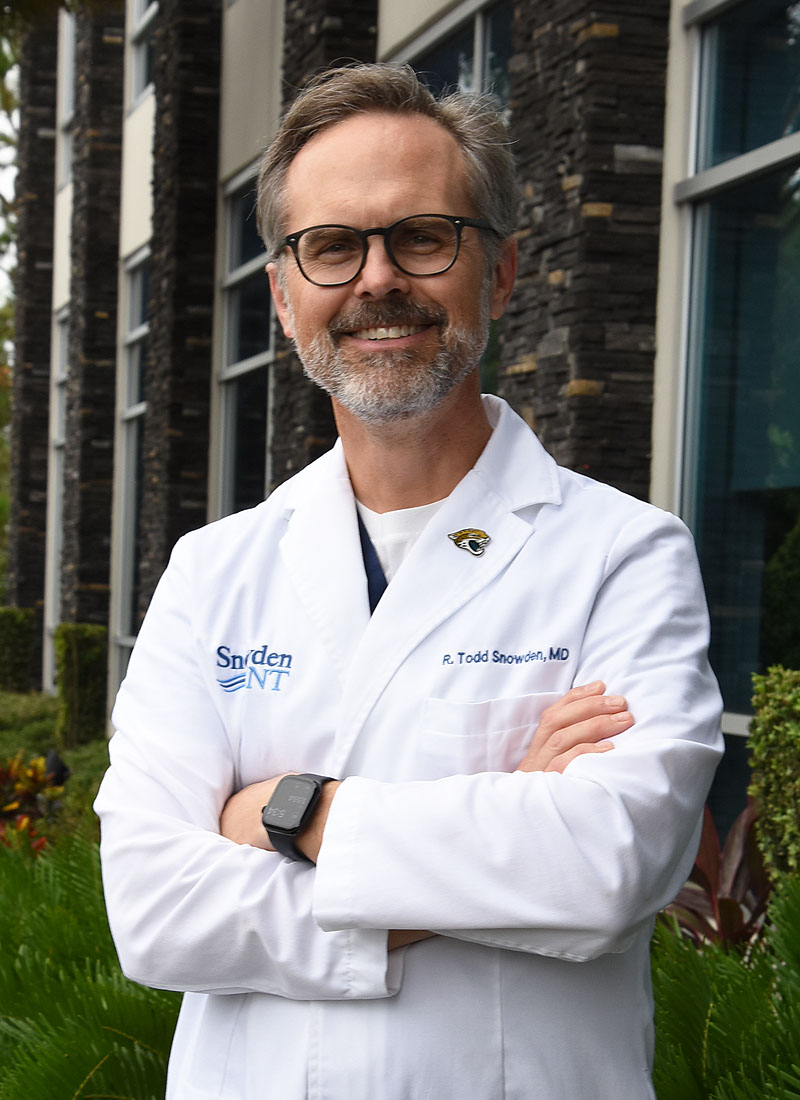
Meet Dr. Robert Todd Snowden
Choosing an ENT specialist is an important decision, particularly when surgery may be part of your treatment plan. Robert Todd Snowden, MD, FACS is a board-certified otolaryngologist who has been diagnosing and treating complex disorders of the ears, nose, and throat since 2001. With more than 20 years of experience caring for patients throughout Northeast Florida, Dr. Snowden is known for combining careful diagnostic evaluation with evidence-based treatment recommendations that are tailored to each patient’s individual needs. His commitment is to help every patient achieve the best possible outcome through compassionate, ethical, and patient-centered care.
As a Fellow of the American College of Surgeons (FACS) and the American Academy of Otolaryngology–Head and Neck Surgery, Dr. Snowden maintains the highest professional standards within his specialty. He is also an active member of the Florida Medical Association and the Duval County Medical Society and has previously held memberships in the American Rhinologic Society and the American Association of Otolaryngic Allergy. Throughout his career, he has remained committed to advancing his knowledge and providing patients with care that reflects current evidence and accepted best practices.
In addition to his clinical experience, Dr. Snowden has served in numerous leadership roles within the Jacksonville medical community. During more than 25 years on the Baptist Health medical staff, he served as Chief of Surgery and Chief of Staff at Baptist Medical Center South and was a member of the Baptist Physician Partners Board of Directors. Whether treating chronic nasal obstruction, performing advanced sinus and nasal surgery, or managing complex throat and voice disorders, Dr. Snowden has earned the trust of patients and referring physicians alike through his experience, sound clinical judgment, and dedication to delivering exceptional ENT care.
What Our Patients Are Saying




Contact Us!
(904) 268-5366
Or, if it is more convenient, use our contact form and we’ll get back to you as soon as possible.
Contact Us!
(904) 268-5366
Or, if it is more convenient, use our contact form and we’ll get back to you as soon as possible.

Snowden ENT is proud to be a select ENT Provider of the Baptist Physician Partners network. The mission of Baptist Physician Partners is to shape the future of health care in our community through an integrated partnership of providers and Baptist Health hospitals working collaboratively toward common goals for improving quality, safety, efficiency and outcomes for our patients.

12574 Flagler Center Boulevard
Suite 201
Jacksonville, FL 32258
(904) 268-5366
Monday – Thursday 8:30 AM to 4:30 PM
Friday 8:30 AM to 3:45 PM
Snowden ENT is proud to be a select ENT Provider of the Baptist Physician Partners network. The mission of Baptist Physician Partners is to shape the future of health care in our community through an integrated partnership of providers and Baptist Health hospitals working collaboratively toward common goals for improving quality, safety, efficiency and outcomes for our patients.
12574 Flagler Center Blvd
Suite 201
Jacksonville, FL 32258
(904) 268-5366
Monday – Thursday 8:30 AM to 4:30 PM
Friday 8:30 AM to 3:45 PM
Copyright | Snowden ENT | All Rights Reserved | Created and Optimized by BoomClient