Septoplasty vs Other Nasal Procedures and Sinus Surgery in Jacksonville
Understanding Which Procedure Treats the Source of Your Nasal or Sinus Symptoms
Patients who come to see me because they cannot breathe comfortably through their nose or continue to experience sinus problems are sometimes surprised by how many different conditions can produce similar symptoms. Persistent congestion, nasal obstruction, facial pressure, recurring sinus infections, and difficulty breathing may involve the nasal septum, turbinates, sinus drainage pathways, chronic inflammation, or more than one of these problems at the same time.
That distinction matters because septoplasty, turbinate reduction, balloon sinuplasty, rhinoplasty, and endoscopic sinus surgery are not interchangeable procedures. Each is designed to address a different anatomical or medical problem. Septoplasty corrects obstruction caused by a deviated septum, while sinus procedures are intended to treat specific problems affecting the sinuses and their drainage pathways. Turbinate reduction addresses another potential source of nasal obstruction, and rhinoplasty serves a different purpose involving the external structure and appearance of the nose.
For patients considering sinus surgery in Jacksonville, I believe the most important question is not which procedure sounds like the best option, but what is actually causing the symptoms. Before discussing surgery, I want to understand what you are experiencing and determine where the problem originates. That may involve examining the nasal airway, evaluating the septum and turbinates, looking for evidence of inflammation or sinus disease, and using additional diagnostic testing when it is medically appropriate.
Once the underlying problem is identified, I can explain which treatment is designed to address it and what that treatment can realistically be expected to accomplish. Sometimes one procedure is appropriate. Other patients have multiple conditions that need to be considered together, while some may benefit from medical treatment rather than surgery. Throughout this page, I will explain the important differences between septoplasty and other nasal procedures and sinus surgery in Jacksonville so you can better understand why the diagnosis should determine the treatment.
- Why the Cause of Your Symptoms Determines the Procedure
- Septoplasty: Correcting a Structural Problem Inside the Nose
- Septoplasty vs Rhinoplasty
- Septoplasty vs Turbinate Reduction
- Why Septoplasty and Turbinate Reduction Are Sometimes Performed Together
- Septoplasty vs Endoscopic Sinus Surgery
- How I Determine Whether Sinus Surgery Is Necessary
- When Medical Treatment May Be a Better First Step
- Can Septoplasty Improve Sinus Problems Without Sinus Surgery?
- When More Than One Problem Is Causing Your Symptoms
- Meet Dr. Robert Todd Snowden
- What Our Patients Are Saying
- Contact Us!
Septoplasty vs Other Nasal Procedures and Sinus Surgery in Jacksonville
Understanding Which Procedure Treats the Source of Your Nasal or Sinus Symptoms
Patients who come to see me because they cannot breathe comfortably through their nose or continue to experience sinus problems are sometimes surprised by how many different conditions can produce similar symptoms. Persistent congestion, nasal obstruction, facial pressure, recurring sinus infections, and difficulty breathing may involve the nasal septum, turbinates, sinus drainage pathways, chronic inflammation, or more than one of these problems at the same time.
That distinction matters because septoplasty, turbinate reduction, balloon sinuplasty, rhinoplasty, and endoscopic sinus surgery are not interchangeable procedures. Each is designed to address a different anatomical or medical problem. Septoplasty corrects obstruction caused by a deviated septum, while sinus procedures are intended to treat specific problems affecting the sinuses and their drainage pathways. Turbinate reduction addresses another potential source of nasal obstruction, and rhinoplasty serves a different purpose involving the external structure and appearance of the nose.
For patients considering sinus surgery in Jacksonville, I believe the most important question is not which procedure sounds like the best option, but what is actually causing the symptoms. Before discussing surgery, I want to understand what you are experiencing and determine where the problem originates. That may involve examining the nasal airway, evaluating the septum and turbinates, looking for evidence of inflammation or sinus disease, and using additional diagnostic testing when it is medically appropriate.
Once the underlying problem is identified, I can explain which treatment is designed to address it and what that treatment can realistically be expected to accomplish. Sometimes one procedure is appropriate. Other patients have multiple conditions that need to be considered together, while some may benefit from medical treatment rather than surgery. Throughout this page, I will explain the important differences between septoplasty and other nasal procedures and sinus surgery in Jacksonville so you can better understand why the diagnosis should determine the treatment.
- Why the Cause of Your Symptoms Determines the Procedure
- Septoplasty: Correcting a Structural Problem Inside the Nose
- Septoplasty vs Rhinoplasty
- Septoplasty vs Turbinate Reduction
- Why Septoplasty and Turbinate Reduction Are Sometimes Performed Together
- Septoplasty vs Endoscopic Sinus Surgery
- How I Determine Whether Sinus Surgery Is Necessary
- When Medical Treatment May Be a Better First Step
- Can Septoplasty Improve Sinus Problems Without Sinus Surgery?
- When More Than One Problem Is Causing Your Symptoms
- Meet Dr. Robert Todd Snowden
- What Our Patients Are Saying
- Contact Us!
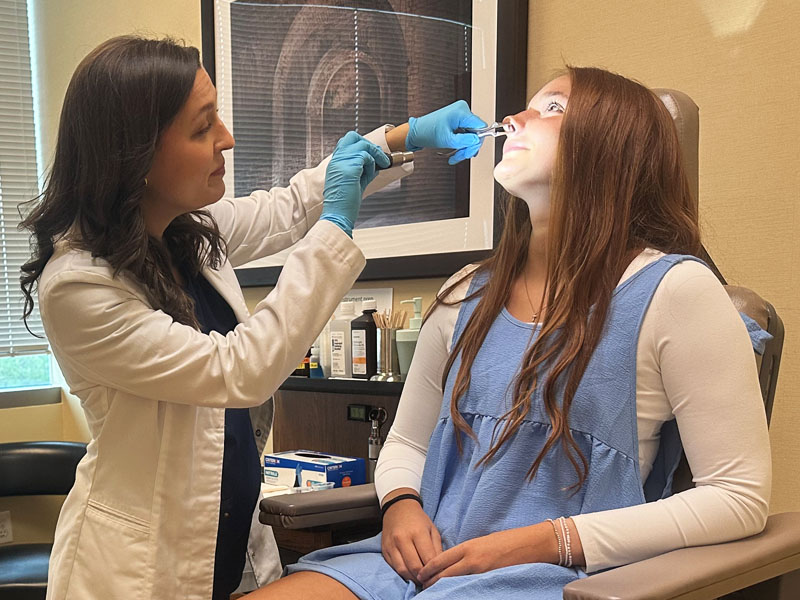
Why the Cause of Your Symptoms Determines the Procedure
Nasal obstruction and sinus symptoms can be frustrating because very different conditions often produce similar complaints. Two patients may both describe constant congestion and difficulty breathing through the nose, yet one may have a significantly deviated septum while the other has enlarged turbinates or chronic inflammation. Another patient may primarily have disease affecting the sinuses and their natural drainage pathways. The symptoms may overlap, but the underlying problems, and therefore the appropriate treatments are different.
This is why I do not choose a procedure based on symptoms alone. I first need to determine where the problem is occurring and what is responsible for it. A deviated septum creates a structural narrowing within the nasal airway. Enlarged turbinates can occupy too much space within that same airway. Chronic sinusitis involves persistent inflammation within the sinuses, while narrowing or blockage of the sinus openings can interfere with normal drainage. Some patients have more than one of these conditions at the same time.
These distinctions become especially important when discussing sinus surgery in Jacksonville because one procedure cannot be expected to correct every source of nasal or sinus symptoms. Septoplasty can straighten an obstructing septum, but it does not eliminate chronic inflammatory sinus disease. Sinus surgery can improve ventilation and drainage of appropriately selected diseased sinuses, but it does not straighten a deviated septum. Likewise, reducing enlarged turbinates addresses a different anatomical source of nasal obstruction.
Why the Cause of Your Symptoms Determines the Procedure
Nasal obstruction and sinus symptoms can be frustrating because very different conditions often produce similar complaints. Two patients may both describe constant congestion and difficulty breathing through the nose, yet one may have a significantly deviated septum while the other has enlarged turbinates or chronic inflammation. Another patient may primarily have disease affecting the sinuses and their natural drainage pathways. The symptoms may overlap, but the underlying problems, and therefore the appropriate treatments are different.
This is why I do not choose a procedure based on symptoms alone. I first need to determine where the problem is occurring and what is responsible for it. A deviated septum creates a structural narrowing within the nasal airway. Enlarged turbinates can occupy too much space within that same airway. Chronic sinusitis involves persistent inflammation within the sinuses, while narrowing or blockage of the sinus openings can interfere with normal drainage. Some patients have more than one of these conditions at the same time.
These distinctions become especially important when discussing sinus surgery in Jacksonville because one procedure cannot be expected to correct every source of nasal or sinus symptoms. Septoplasty can straighten an obstructing septum, but it does not eliminate chronic inflammatory sinus disease. Sinus surgery can improve ventilation and drainage of appropriately selected diseased sinuses, but it does not straighten a deviated septum. Likewise, reducing enlarged turbinates addresses a different anatomical source of nasal obstruction.
Septoplasty: Correcting a Structural Problem Inside the Nose
Septoplasty is designed to correct a structural obstruction caused by a deviated nasal septum. The septum is the wall of cartilage and bone separating the right and left nasal passages. When it is significantly displaced, curved, or irregular, it can narrow one or both sides of the nasal airway and make breathing through the nose difficult. During septoplasty, I reshape, reposition, or remove the portions of cartilage and bone responsible for the obstruction while preserving the support the nose needs.
The purpose of septoplasty is primarily functional. It is intended to create a more open pathway for nasal airflow when the septum itself is an important source of obstruction. It does not treat every reason a patient may experience congestion, facial pressure, drainage, or recurring sinus symptoms. Allergies, enlarged turbinates, chronic inflammation, nasal polyps, and sinus disease can exist independently of a septal deviation or occur along with it.
This distinction is particularly important for patients comparing septoplasty with sinus surgery in Jacksonville. A patient can have a severely deviated septum without having chronic sinus disease, just as someone can have chronic sinusitis with a relatively straight septum. Septoplasty addresses the septum; sinus surgery addresses appropriately diagnosed disease or obstruction involving the sinuses and their drainage pathways.
In some patients, both conditions are present and may need to be considered together. In others, correcting the septum alone may be appropriate because the primary problem is structural nasal obstruction rather than sinus disease. Understanding exactly what septoplasty is intended to correct helps set realistic expectations and prevents us from asking one procedure to solve symptoms that originate somewhere else.
Septoplasty: Correcting a Structural Problem Inside the Nose
Septoplasty is designed to correct a structural obstruction caused by a deviated nasal septum. The septum is the wall of cartilage and bone separating the right and left nasal passages. When it is significantly displaced, curved, or irregular, it can narrow one or both sides of the nasal airway and make breathing through the nose difficult. During septoplasty, I reshape, reposition, or remove the portions of cartilage and bone responsible for the obstruction while preserving the support the nose needs.
The purpose of septoplasty is primarily functional. It is intended to create a more open pathway for nasal airflow when the septum itself is an important source of obstruction. It does not treat every reason a patient may experience congestion, facial pressure, drainage, or recurring sinus symptoms. Allergies, enlarged turbinates, chronic inflammation, nasal polyps, and sinus disease can exist independently of a septal deviation or occur along with it.
This distinction is particularly important for patients comparing septoplasty with sinus surgery in Jacksonville. A patient can have a severely deviated septum without having chronic sinus disease, just as someone can have chronic sinusitis with a relatively straight septum. Septoplasty addresses the septum; sinus surgery addresses appropriately diagnosed disease or obstruction involving the sinuses and their drainage pathways.
In some patients, both conditions are present and may need to be considered together. In others, correcting the septum alone may be appropriate because the primary problem is structural nasal obstruction rather than sinus disease. Understanding exactly what septoplasty is intended to correct helps set realistic expectations and prevents us from asking one procedure to solve symptoms that originate somewhere else.
Septoplasty vs Rhinoplasty
Septoplasty and rhinoplasty both involve the nose, but they are performed for different reasons. Septoplasty is primarily a functional procedure that addresses obstruction caused by a deviated nasal septum. Rhinoplasty involves changing the external framework of the nose and is commonly associated with altering its shape, size, proportions, or appearance. Having septoplasty does not automatically mean that the outside of your nose will be changed.
This distinction can become less straightforward when a patient’s breathing problem involves more than the internal septum. Previous trauma, for example, may leave both the septum and the external nasal framework crooked or structurally compromised. In those situations, correcting only the internal deviation may not address every anatomical factor affecting airflow. Functional and external structural concerns sometimes need to be considered together, depending on the individual anatomy.
Patients researching septoplasty or sinus surgery in Jacksonville also occasionally assume that rhinoplasty treats chronic sinus disease. It does not. Rhinoplasty, septoplasty, and sinus surgery address different areas of the nose and sinuses. A patient could potentially need treatment involving more than one of these areas, but the presence of nasal obstruction or sinus symptoms by itself does not establish which procedure is appropriate.
When appearance is the patient’s primary concern, that is fundamentally different from treating a deviated septum that interferes with breathing. When function is the concern, I focus on identifying the anatomical structures responsible for restricting airflow. Keeping the purpose of each procedure clear helps patients understand why septoplasty should not be viewed simply as an internal rhinoplasty, or rhinoplasty as an alternative to septoplasty.
Septoplasty vs Rhinoplasty
Septoplasty and rhinoplasty both involve the nose, but they are performed for different reasons. Septoplasty is primarily a functional procedure that addresses obstruction caused by a deviated nasal septum. Rhinoplasty involves changing the external framework of the nose and is commonly associated with altering its shape, size, proportions, or appearance. Having septoplasty does not automatically mean that the outside of your nose will be changed.
This distinction can become less straightforward when a patient’s breathing problem involves more than the internal septum. Previous trauma, for example, may leave both the septum and the external nasal framework crooked or structurally compromised. In those situations, correcting only the internal deviation may not address every anatomical factor affecting airflow. Functional and external structural concerns sometimes need to be considered together, depending on the individual anatomy.
Patients researching septoplasty or sinus surgery in Jacksonville also occasionally assume that rhinoplasty treats chronic sinus disease. It does not. Rhinoplasty, septoplasty, and sinus surgery address different areas of the nose and sinuses. A patient could potentially need treatment involving more than one of these areas, but the presence of nasal obstruction or sinus symptoms by itself does not establish which procedure is appropriate.
When appearance is the patient’s primary concern, that is fundamentally different from treating a deviated septum that interferes with breathing. When function is the concern, I focus on identifying the anatomical structures responsible for restricting airflow. Keeping the purpose of each procedure clear helps patients understand why septoplasty should not be viewed simply as an internal rhinoplasty, or rhinoplasty as an alternative to septoplasty.
Septoplasty vs Turbinate Reduction
The septum is only one structure that determines how much room air has to move through the nose. Along the outer walls of the nasal passages are structures called turbinates. They are covered with vascular tissue and mucous membrane and perform important functions by helping warm, humidify, and filter the air you breathe. When the turbinates become persistently enlarged, they can occupy enough space to contribute to nasal obstruction.
Septoplasty and turbinate reduction address these two different sources of narrowing. With septoplasty, I correct portions of a deviated septum that are restricting the nasal airway. Turbinate reduction is intended to decrease excessive turbinate tissue while preserving as much normal function as possible. Straightening the septum does not necessarily reduce enlarged turbinates, and reducing the turbinates does not correct a structurally deviated septum.
Turbinate size can also change in response to allergies, inflammation, environmental irritants, and the normal nasal cycle. For that reason, enlarged turbinates do not automatically require a procedure. Depending on what is causing the swelling, medical treatment may improve the obstruction. Persistent structural enlargement that continues to interfere with breathing despite appropriate treatment is a different situation.
This distinction also matters for patients researching sinus surgery in Jacksonville. Turbinate reduction is not the same as sinus surgery simply because both are performed through the nose. The turbinates are part of the nasal airway, while sinus procedures address problems involving the sinuses and their drainage pathways. Understanding which anatomical structure is creating the obstruction allows us to treat the source of the problem while avoiding procedures that are unlikely to improve the patient’s symptoms.
Septoplasty vs Turbinate Reduction
The septum is only one structure that determines how much room air has to move through the nose. Along the outer walls of the nasal passages are structures called turbinates. They are covered with vascular tissue and mucous membrane and perform important functions by helping warm, humidify, and filter the air you breathe. When the turbinates become persistently enlarged, they can occupy enough space to contribute to nasal obstruction.
Septoplasty and turbinate reduction address these two different sources of narrowing. With septoplasty, I correct portions of a deviated septum that are restricting the nasal airway. Turbinate reduction is intended to decrease excessive turbinate tissue while preserving as much normal function as possible. Straightening the septum does not necessarily reduce enlarged turbinates, and reducing the turbinates does not correct a structurally deviated septum.
Turbinate size can also change in response to allergies, inflammation, environmental irritants, and the normal nasal cycle. For that reason, enlarged turbinates do not automatically require a procedure. Depending on what is causing the swelling, medical treatment may improve the obstruction. Persistent structural enlargement that continues to interfere with breathing despite appropriate treatment is a different situation.
This distinction also matters for patients researching sinus surgery in Jacksonville. Turbinate reduction is not the same as sinus surgery simply because both are performed through the nose. The turbinates are part of the nasal airway, while sinus procedures address problems involving the sinuses and their drainage pathways. Understanding which anatomical structure is creating the obstruction allows us to treat the source of the problem while avoiding procedures that are unlikely to improve the patient’s symptoms.
Why Septoplasty and Turbinate Reduction Are Sometimes Performed Together
A patient can have more than one source of narrowing within the nasal airway. A deviated septum may reduce the available breathing space on one side, while enlarged turbinates further restrict airflow. In fact, when the septum has been displaced for a long time, the turbinate on the more open side may become larger, creating obstruction that would not necessarily be resolved by straightening the septum alone.
When both structures are contributing significantly to the breathing problem, septoplasty and turbinate reduction may be performed during the same procedure. Septoplasty creates additional space by correcting the obstructing portions of the septum, while turbinate reduction decreases excessive turbinate volume. The objective is not to remove the turbinates, they serve important functions, but to improve the airway while preserving the tissue needed to warm, humidify, and filter inhaled air.
I do not consider turbinate reduction an automatic addition to septoplasty. If turbinate swelling is primarily related to allergies or inflammation and responds well to medical treatment, a procedure may not be necessary. Conversely, if persistent turbinate enlargement remains an important source of obstruction, correcting only the septum may leave the patient with continued breathing difficulty.
This combined approach is also different from sinus surgery in Jacksonville. Septoplasty and turbinate reduction primarily address the nasal airway, whereas sinus surgery is directed at appropriately diagnosed disease or obstruction involving the sinuses. A patient may occasionally have conditions involving all of these areas, but each component of treatment should have a specific reason for being performed rather than simply combining procedures because they can be done at the same time.
Why Septoplasty and Turbinate Reduction Are Sometimes Performed Together
A patient can have more than one source of narrowing within the nasal airway. A deviated septum may reduce the available breathing space on one side, while enlarged turbinates further restrict airflow. In fact, when the septum has been displaced for a long time, the turbinate on the more open side may become larger, creating obstruction that would not necessarily be resolved by straightening the septum alone.
When both structures are contributing significantly to the breathing problem, septoplasty and turbinate reduction may be performed during the same procedure. Septoplasty creates additional space by correcting the obstructing portions of the septum, while turbinate reduction decreases excessive turbinate volume. The objective is not to remove the turbinates, they serve important functions, but to improve the airway while preserving the tissue needed to warm, humidify, and filter inhaled air.
I do not consider turbinate reduction an automatic addition to septoplasty. If turbinate swelling is primarily related to allergies or inflammation and responds well to medical treatment, a procedure may not be necessary. Conversely, if persistent turbinate enlargement remains an important source of obstruction, correcting only the septum may leave the patient with continued breathing difficulty.
This combined approach is also different from sinus surgery in Jacksonville. Septoplasty and turbinate reduction primarily address the nasal airway, whereas sinus surgery is directed at appropriately diagnosed disease or obstruction involving the sinuses. A patient may occasionally have conditions involving all of these areas, but each component of treatment should have a specific reason for being performed rather than simply combining procedures because they can be done at the same time.
Septoplasty vs Endoscopic Sinus Surgery
Although septoplasty and endoscopic sinus surgery are both performed through the nose, they treat different anatomical problems. Septoplasty focuses on the nasal septum and is intended to improve airflow when a significant deviation is narrowing the nasal passage. Endoscopic sinus surgery is directed beyond the nasal airway toward the sinuses and their natural drainage pathways. Its purpose is to address appropriately diagnosed sinus disease that has not been adequately controlled with medical treatment.
During endoscopic sinus surgery in Jacksonville, I use a small endoscope to see inside the nasal and sinus passages without making external facial incisions. Depending on the patient’s condition, surgery may involve enlarging obstructed sinus openings, removing diseased tissue or polyps, or addressing other anatomical problems that interfere with normal sinus ventilation and drainage. The extent of surgery depends on which sinuses are affected and what the patient’s examination and imaging demonstrate.
The symptoms leading to these procedures can overlap, which is one reason patients sometimes confuse them. A deviated septum can produce persistent nasal obstruction, while chronic sinus disease may cause congestion along with facial pressure, drainage, reduced sense of smell, or recurring infections. Symptoms alone, however, do not always identify where the problem originates.
Septoplasty should therefore not be viewed as a substitute for endoscopic sinus surgery, nor should sinus surgery be expected to correct obstruction caused by a deviated septum. If the septum is the problem, I treat the septum. If chronic sinus disease is responsible for the patient’s symptoms and surgery is appropriate, treatment needs to address the affected sinuses. When both conditions are present, we can consider whether each needs to be treated as part of the same surgical plan.
Septoplasty vs Endoscopic Sinus Surgery
Although septoplasty and endoscopic sinus surgery are both performed through the nose, they treat different anatomical problems. Septoplasty focuses on the nasal septum and is intended to improve airflow when a significant deviation is narrowing the nasal passage. Endoscopic sinus surgery is directed beyond the nasal airway toward the sinuses and their natural drainage pathways. Its purpose is to address appropriately diagnosed sinus disease that has not been adequately controlled with medical treatment.
During endoscopic sinus surgery in Jacksonville, I use a small endoscope to see inside the nasal and sinus passages without making external facial incisions. Depending on the patient’s condition, surgery may involve enlarging obstructed sinus openings, removing diseased tissue or polyps, or addressing other anatomical problems that interfere with normal sinus ventilation and drainage. The extent of surgery depends on which sinuses are affected and what the patient’s examination and imaging demonstrate.
The symptoms leading to these procedures can overlap, which is one reason patients sometimes confuse them. A deviated septum can produce persistent nasal obstruction, while chronic sinus disease may cause congestion along with facial pressure, drainage, reduced sense of smell, or recurring infections. Symptoms alone, however, do not always identify where the problem originates.
Septoplasty should therefore not be viewed as a substitute for endoscopic sinus surgery, nor should sinus surgery be expected to correct obstruction caused by a deviated septum. If the septum is the problem, I treat the septum. If chronic sinus disease is responsible for the patient’s symptoms and surgery is appropriate, treatment needs to address the affected sinuses. When both conditions are present, we can consider whether each needs to be treated as part of the same surgical plan.
How I Determine Whether Sinus Surgery Is Necessary
Not every patient with recurring congestion, facial pressure, drainage, or sinus infections needs an operation. Before recommending sinus surgery in Jacksonville, I want to establish that the symptoms are consistent with sinus disease, determine how long they have been occurring, and understand which treatments have already been tried. I also consider how frequently symptoms recur and how significantly they interfere with the patient’s daily life.
The examination provides another part of that picture. I look inside the nose for inflammation, drainage, polyps, structural narrowing, and other findings that may help explain the symptoms. Nasal endoscopy can provide a more detailed view of areas that are difficult to see during a routine examination and may reveal evidence of disease within or near the sinus drainage pathways.
CT imaging is particularly useful when chronic sinus disease is suspected and surgery is being considered. A CT scan can show which sinuses are affected, the extent of inflammation, and anatomical features that may contribute to impaired drainage. I interpret those findings together with the patient’s history and examination rather than relying on an imaging abnormality by itself. What appears on a scan needs to make sense in the context of the symptoms we are trying to treat.
Previous medical treatment matters as well. Many inflammatory sinus conditions can be managed successfully without surgery, and appropriate medical therapy is often an important part of treatment before an operation is considered. The specific approach depends on the diagnosis and may differ considerably from one patient to another.
I recommend sinus surgery in Jacksonville when there is a reasonable clinical basis to believe that surgery can address an identified problem that has not been adequately controlled through appropriate nonsurgical care. Just as importantly, if the evaluation does not demonstrate a condition that surgery is likely to improve, I believe the better decision is to continue investigating the cause of the symptoms rather than perform a procedure that may not provide the benefit the patient expects.
How I Determine Whether Sinus Surgery Is Necessary
Not every patient with recurring congestion, facial pressure, drainage, or sinus infections needs an operation. Before recommending sinus surgery in Jacksonville, I want to establish that the symptoms are consistent with sinus disease, determine how long they have been occurring, and understand which treatments have already been tried. I also consider how frequently symptoms recur and how significantly they interfere with the patient’s daily life.
The examination provides another part of that picture. I look inside the nose for inflammation, drainage, polyps, structural narrowing, and other findings that may help explain the symptoms. Nasal endoscopy can provide a more detailed view of areas that are difficult to see during a routine examination and may reveal evidence of disease within or near the sinus drainage pathways.
CT imaging is particularly useful when chronic sinus disease is suspected and surgery is being considered. A CT scan can show which sinuses are affected, the extent of inflammation, and anatomical features that may contribute to impaired drainage. I interpret those findings together with the patient’s history and examination rather than relying on an imaging abnormality by itself. What appears on a scan needs to make sense in the context of the symptoms we are trying to treat.
Previous medical treatment matters as well. Many inflammatory sinus conditions can be managed successfully without surgery, and appropriate medical therapy is often an important part of treatment before an operation is considered. The specific approach depends on the diagnosis and may differ considerably from one patient to another.
I recommend sinus surgery in Jacksonville when there is a reasonable clinical basis to believe that surgery can address an identified problem that has not been adequately controlled through appropriate nonsurgical care. Just as importantly, if the evaluation does not demonstrate a condition that surgery is likely to improve, I believe the better decision is to continue investigating the cause of the symptoms rather than perform a procedure that may not provide the benefit the patient expects.
When Medical Treatment May Be a Better First Step
Many nasal and sinus conditions are inflammatory rather than purely structural, which means surgery is not always the most appropriate place to begin. Allergies, viral illnesses, environmental irritation, and chronic inflammation can all cause swelling within the nasal passages and sinuses. Depending on the diagnosis, these problems may respond to medical treatment without requiring a procedure.
Treatment has to match the condition. Saline irrigation, topical nasal medications, allergy management, or other therapies may be appropriate in certain circumstances. Antibiotics have a role when a bacterial infection is reasonably suspected, but they are not a universal treatment for chronic congestion or every episode of sinus symptoms. I prefer to identify what we are treating rather than repeatedly prescribe medication without a clear clinical reason.
Medical treatment also provides useful information when structural and inflammatory problems coexist. For example, reducing inflammation may reveal how much of a patient’s remaining nasal obstruction is actually related to a deviated septum or another anatomical restriction. If breathing improves substantially once the inflammatory component is controlled, the need for surgery may look very different.
When appropriate nonsurgical care does not adequately control chronic sinus disease and objective findings support an operative approach, sinus surgery in Jacksonville may become a reasonable next consideration. Surgery is not simply the next step because medications have been tried; there should be an identifiable problem that the procedure is capable of addressing. My preference is to reserve surgery for situations in which its potential benefit is supported by the patient’s symptoms, examination, treatment history, and other diagnostic findings.
When Medical Treatment May Be a Better First Step
Many nasal and sinus conditions are inflammatory rather than purely structural, which means surgery is not always the most appropriate place to begin. Allergies, viral illnesses, environmental irritation, and chronic inflammation can all cause swelling within the nasal passages and sinuses. Depending on the diagnosis, these problems may respond to medical treatment without requiring a procedure.
Treatment has to match the condition. Saline irrigation, topical nasal medications, allergy management, or other therapies may be appropriate in certain circumstances. Antibiotics have a role when a bacterial infection is reasonably suspected, but they are not a universal treatment for chronic congestion or every episode of sinus symptoms. I prefer to identify what we are treating rather than repeatedly prescribe medication without a clear clinical reason.
Medical treatment also provides useful information when structural and inflammatory problems coexist. For example, reducing inflammation may reveal how much of a patient’s remaining nasal obstruction is actually related to a deviated septum or another anatomical restriction. If breathing improves substantially once the inflammatory component is controlled, the need for surgery may look very different.
When appropriate nonsurgical care does not adequately control chronic sinus disease and objective findings support an operative approach, sinus surgery in Jacksonville may become a reasonable next consideration. Surgery is not simply the next step because medications have been tried; there should be an identifiable problem that the procedure is capable of addressing. My preference is to reserve surgery for situations in which its potential benefit is supported by the patient’s symptoms, examination, treatment history, and other diagnostic findings.
Can Septoplasty Improve Sinus Problems Without Sinus Surgery?
This is an important question because patients often use the terms nasal congestion and sinus problems to describe many of the same symptoms. If a significantly deviated septum is restricting airflow, septoplasty may make nasal breathing easier and relieve the persistent sense of blockage associated with that structural narrowing. A patient may understandably describe that improvement as having “better sinuses,” even though no surgery was performed on the sinuses themselves.
A deviated septum can also contribute to crowding within the nasal cavity and, depending on its location, may affect the area around a sinus drainage pathway. Correcting the septum can improve the available space within the nose. However, that does not mean septoplasty will eliminate chronic sinusitis, nasal polyps, persistent sinus inflammation, or other disease located within the sinuses.
The distinction becomes especially important when deciding whether someone needs sinus surgery in Jacksonville. If the patient’s primary problem is septal obstruction without significant sinus disease, septoplasty may be all that is necessary. Adding a sinus procedure would not be justified simply because the patient has experienced congestion or occasional sinus symptoms.
On the other hand, when chronic sinus disease is independently present and has not responded adequately to appropriate medical management, straightening the septum may not address the underlying disease. In that situation, the sinuses need to be evaluated on their own merits. I want patients to understand what each procedure is expected to accomplish so that improvement in nasal airflow is not confused with treatment of a separate sinus condition.
Can Septoplasty Improve Sinus Problems Without Sinus Surgery?
This is an important question because patients often use the terms nasal congestion and sinus problems to describe many of the same symptoms. If a significantly deviated septum is restricting airflow, septoplasty may make nasal breathing easier and relieve the persistent sense of blockage associated with that structural narrowing. A patient may understandably describe that improvement as having “better sinuses,” even though no surgery was performed on the sinuses themselves.
A deviated septum can also contribute to crowding within the nasal cavity and, depending on its location, may affect the area around a sinus drainage pathway. Correcting the septum can improve the available space within the nose. However, that does not mean septoplasty will eliminate chronic sinusitis, nasal polyps, persistent sinus inflammation, or other disease located within the sinuses.
The distinction becomes especially important when deciding whether someone needs sinus surgery in Jacksonville. If the patient’s primary problem is septal obstruction without significant sinus disease, septoplasty may be all that is necessary. Adding a sinus procedure would not be justified simply because the patient has experienced congestion or occasional sinus symptoms.
On the other hand, when chronic sinus disease is independently present and has not responded adequately to appropriate medical management, straightening the septum may not address the underlying disease. In that situation, the sinuses need to be evaluated on their own merits. I want patients to understand what each procedure is expected to accomplish so that improvement in nasal airflow is not confused with treatment of a separate sinus condition.
When More Than One Problem Is Causing Your Symptoms
Nasal and sinus symptoms do not always fit neatly into a single diagnosis. One patient may have a deviated septum combined with enlarged turbinates. Another may have chronic sinusitis along with a septal deviation that makes nasal breathing difficult. Allergies can add another layer by causing tissues that are already competing for limited space inside the nose to swell. In some patients, several relatively moderate problems together can produce significant symptoms.
Consider a patient whose left nasal passage is narrowed by a deviated septum but who also has enlarged turbinates and chronic nasal inflammation. Straightening the septum may create more breathing space, but persistent turbinate swelling could continue to cause congestion. Treating the inflammation alone might reduce swelling without correcting the underlying structural restriction. Understanding how much each condition contributes helps determine which problems actually need treatment.
The same principle applies when chronic sinus disease is present. A patient considering sinus surgery in Jacksonville may also have a deviated septum, but those findings should not automatically be treated as one condition. Sinus disease and septal obstruction can produce overlapping symptoms while requiring different treatment. Each diagnosis needs to justify its own part of the treatment plan.
This is why I prefer to think in terms of the entire nasal and sinus system rather than searching for one abnormality that explains everything. Sometimes a single treatment addresses the dominant problem. Sometimes medical management and a procedure work together, and selected patients may benefit from more than one procedure. The objective is not to correct every anatomical variation I can identify, but to address the conditions that are meaningfully responsible for the patient’s symptoms.
When More Than One Problem Is Causing Your Symptoms
Nasal and sinus symptoms do not always fit neatly into a single diagnosis. One patient may have a deviated septum combined with enlarged turbinates. Another may have chronic sinusitis along with a septal deviation that makes nasal breathing difficult. Allergies can add another layer by causing tissues that are already competing for limited space inside the nose to swell. In some patients, several relatively moderate problems together can produce significant symptoms.
Consider a patient whose left nasal passage is narrowed by a deviated septum but who also has enlarged turbinates and chronic nasal inflammation. Straightening the septum may create more breathing space, but persistent turbinate swelling could continue to cause congestion. Treating the inflammation alone might reduce swelling without correcting the underlying structural restriction. Understanding how much each condition contributes helps determine which problems actually need treatment.
The same principle applies when chronic sinus disease is present. A patient considering sinus surgery in Jacksonville may also have a deviated septum, but those findings should not automatically be treated as one condition. Sinus disease and septal obstruction can produce overlapping symptoms while requiring different treatment. Each diagnosis needs to justify its own part of the treatment plan.
This is why I prefer to think in terms of the entire nasal and sinus system rather than searching for one abnormality that explains everything. Sometimes a single treatment addresses the dominant problem. Sometimes medical management and a procedure work together, and selected patients may benefit from more than one procedure. The objective is not to correct every anatomical variation I can identify, but to address the conditions that are meaningfully responsible for the patient’s symptoms.
Learn More About Septoplasty at Snowden ENT
Dr. Snowden has prepared additional details about some of the aspects of Septoplasty that his patients are most interested in and often have questions about. Follow the links to the right to learn more about Septoplasty.
Learn More About Septoplasty at Snowden ENT
Dr. Snowden has prepared additional details about some of the aspects of Septoplasty that his patients are most interested in and often have questions about. Follow the links below to learn more about Septoplasty.
Meet Dr. Robert Todd Snowden
Choosing an ENT specialist is an important decision, particularly when surgery may be part of your treatment plan. Robert Todd Snowden, MD, FACS is a board-certified otolaryngologist who has been diagnosing and treating complex disorders of the ears, nose, and throat since 2001. With more than 20 years of experience caring for patients throughout Northeast Florida, Dr. Snowden is known for combining careful diagnostic evaluation with evidence-based treatment recommendations that are tailored to each patient’s individual needs. His commitment is to help every patient achieve the best possible outcome through compassionate, ethical, and patient-centered care.
As a Fellow of the American College of Surgeons (FACS) and the American Academy of Otolaryngology–Head and Neck Surgery, Dr. Snowden maintains the highest professional standards within his specialty. He is also an active member of the Florida Medical Association and the Duval County Medical Society and has previously held memberships in the American Rhinologic Society and the American Association of Otolaryngic Allergy. Throughout his career, he has remained committed to advancing his knowledge and providing patients with care that reflects current evidence and accepted best practices.
In addition to his clinical experience, Dr. Snowden has served in numerous leadership roles within the Jacksonville medical community. During more than 25 years on the Baptist Health medical staff, he served as Chief of Surgery and Chief of Staff at Baptist Medical Center South and was a member of the Baptist Physician Partners Board of Directors. Whether treating chronic nasal obstruction, performing advanced sinus and nasal surgery, or managing complex throat and voice disorders, Dr. Snowden has earned the trust of patients and referring physicians alike through his experience, sound clinical judgment, and dedication to delivering exceptional ENT care.

Meet Dr. Robert Todd Snowden
Choosing an ENT specialist is an important decision, particularly when surgery may be part of your treatment plan. Robert Todd Snowden, MD, FACS is a board-certified otolaryngologist who has been diagnosing and treating complex disorders of the ears, nose, and throat since 2001. With more than 20 years of experience caring for patients throughout Northeast Florida, Dr. Snowden is known for combining careful diagnostic evaluation with evidence-based treatment recommendations that are tailored to each patient’s individual needs. His commitment is to help every patient achieve the best possible outcome through compassionate, ethical, and patient-centered care.
As a Fellow of the American College of Surgeons (FACS) and the American Academy of Otolaryngology–Head and Neck Surgery, Dr. Snowden maintains the highest professional standards within his specialty. He is also an active member of the Florida Medical Association and the Duval County Medical Society and has previously held memberships in the American Rhinologic Society and the American Association of Otolaryngic Allergy. Throughout his career, he has remained committed to advancing his knowledge and providing patients with care that reflects current evidence and accepted best practices.
In addition to his clinical experience, Dr. Snowden has served in numerous leadership roles within the Jacksonville medical community. During more than 25 years on the Baptist Health medical staff, he served as Chief of Surgery and Chief of Staff at Baptist Medical Center South and was a member of the Baptist Physician Partners Board of Directors. Whether treating chronic nasal obstruction, performing advanced sinus and nasal surgery, or managing complex throat and voice disorders, Dr. Snowden has earned the trust of patients and referring physicians alike through his experience, sound clinical judgment, and dedication to delivering exceptional ENT care.
What Our Patients Are Saying




Contact Us!
(904) 268-5366
Or, if it is more convenient, use our contact form and we’ll get back to you as soon as possible.
Contact Us!
(904) 268-5366
Or, if it is more convenient, use our contact form and we’ll get back to you as soon as possible.

Snowden ENT is proud to be a select ENT Provider of the Baptist Physician Partners network. The mission of Baptist Physician Partners is to shape the future of health care in our community through an integrated partnership of providers and Baptist Health hospitals working collaboratively toward common goals for improving quality, safety, efficiency and outcomes for our patients.

12574 Flagler Center Boulevard
Suite 201
Jacksonville, FL 32258
(904) 268-5366
Monday – Thursday 8:30 AM to 4:30 PM
Friday 8:30 AM to 3:45 PM
Snowden ENT is proud to be a select ENT Provider of the Baptist Physician Partners network. The mission of Baptist Physician Partners is to shape the future of health care in our community through an integrated partnership of providers and Baptist Health hospitals working collaboratively toward common goals for improving quality, safety, efficiency and outcomes for our patients.
12574 Flagler Center Blvd
Suite 201
Jacksonville, FL 32258
(904) 268-5366
Monday – Thursday 8:30 AM to 4:30 PM
Friday 8:30 AM to 3:45 PM
Copyright | Snowden ENT | All Rights Reserved | Created and Optimized by BoomClient