Deviated Septum Treatment in Jacksonville
Understanding the Symptoms and Causes of a Deviated Septum
If you frequently struggle to breathe through one side of your nose, experience persistent nasal congestion, breathe through your mouth at night, or feel as though your nose is always partially blocked, a deviated septum may be contributing to the problem. When patients come to me for deviated septum treatment in Jacksonville, my first priority is to determine exactly what is restricting their nasal airflow. A deviated septum is common, but it is not always the only reason a person has difficulty breathing through the nose.
The nasal septum is the wall of cartilage and bone that separates your right and left nasal passages. When it is significantly displaced to one side, it can narrow the available space for airflow and contribute to chronic nasal obstruction. However, enlarged turbinates, allergies, chronic inflammation, nasal polyps, sinus disease, and other structural problems can produce similar symptoms or occur along with a deviated septum. This is why I believe an accurate diagnosis is so important before deciding how your symptoms should be treated.
When I evaluate a patient for deviated septum treatment in Jacksonville, I consider their symptoms, medical history, nasal anatomy, and other conditions that may be affecting their breathing. Some patients can achieve meaningful improvement by treating inflammation or other contributing problems without surgery. When a significant septal deviation is responsible for persistent obstruction, however, septoplasty may be appropriate to correct the structural problem. My goal is to identify the cause of your symptoms and recommend the most appropriate treatment for your individual condition rather than assuming that every patient with a deviated septum needs surgery.
- What Exactly Is a Deviated Septum?
- What Causes a Deviated Septum?
- Symptoms I Commonly See With a Deviated Septum
- Why a Deviated Septum Can Feel Worse at Night
- Deviated Septum, Turbinate Enlargement, or Nasal Inflammation?
- Can a Deviated Septum Cause Chronic Sinus Problems?
- How a Deviated Septum Can Affect Sleep and Snoring
- How I Diagnose a Deviated Septum
- Does Every Deviated Septum Need Treatment?
- Can a Deviated Septum Be Treated Without Surgery?
- When Septoplasty May Be Combined With Other Treatments
- What Results Can I Realistically Expect From Deviated Septum Treatment?
- Frequently Asked Questions About Deviated Septum Treatment in Jacksonville
- Meet Dr. Robert Todd Snowden
- What Our Patients Are Saying
- Contact Us!
Deviated Septum Treatment in Jacksonville
Understanding the Symptoms and Causes of a Deviated Septum
If you frequently struggle to breathe through one side of your nose, experience persistent nasal congestion, breathe through your mouth at night, or feel as though your nose is always partially blocked, a deviated septum may be contributing to the problem. When patients come to me for deviated septum treatment in Jacksonville, my first priority is to determine exactly what is restricting their nasal airflow. A deviated septum is common, but it is not always the only reason a person has difficulty breathing through the nose.
The nasal septum is the wall of cartilage and bone that separates your right and left nasal passages. When it is significantly displaced to one side, it can narrow the available space for airflow and contribute to chronic nasal obstruction. However, enlarged turbinates, allergies, chronic inflammation, nasal polyps, sinus disease, and other structural problems can produce similar symptoms or occur along with a deviated septum. This is why I believe an accurate diagnosis is so important before deciding how your symptoms should be treated.
When I evaluate a patient for deviated septum treatment in Jacksonville, I consider their symptoms, medical history, nasal anatomy, and other conditions that may be affecting their breathing. Some patients can achieve meaningful improvement by treating inflammation or other contributing problems without surgery. When a significant septal deviation is responsible for persistent obstruction, however, septoplasty may be appropriate to correct the structural problem. My goal is to identify the cause of your symptoms and recommend the most appropriate treatment for your individual condition rather than assuming that every patient with a deviated septum needs surgery.
- What Exactly Is a Deviated Septum?
- What Causes a Deviated Septum?
- Symptoms I Commonly See With a Deviated Septum
- Why a Deviated Septum Can Feel Worse at Night
- Deviated Septum, Turbinate Enlargement, or Nasal Inflammation?
- Can a Deviated Septum Cause Chronic Sinus Problems?
- How a Deviated Septum Can Affect Sleep and Snoring
- How I Diagnose a Deviated Septum
- Does Every Deviated Septum Need Treatment?
- Can a Deviated Septum Be Treated Without Surgery?
- When Septoplasty May Be Combined With Other Treatments
- What Results Can I Realistically Expect From Deviated Septum Treatment?
- Frequently Asked Questions About Deviated Septum Treatment in Jacksonville
- Meet Dr. Robert Todd Snowden
- What Our Patients Are Saying
- Contact Us!
What Exactly Is a Deviated Septum?
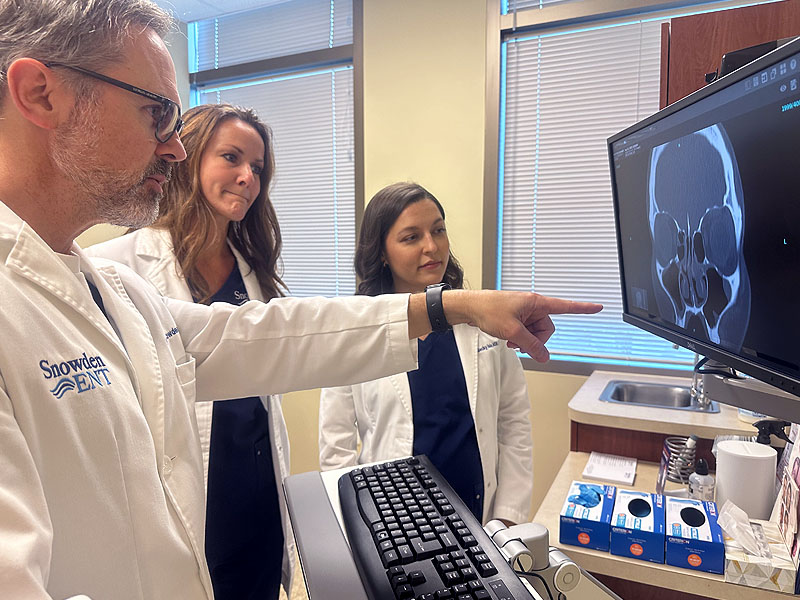
The nasal septum is the thin wall of cartilage and bone that separates the inside of your nose into right and left nasal passages. Ideally, it sits close to the center of the nose and allows air to move freely through both sides. A deviated septum occurs when this wall is displaced, curved, or irregular enough that one nasal passage is narrower than the other. The degree and location of the deviation can vary considerably from one patient to another.
It is important to understand that having some degree of septal deviation does not necessarily mean you have a medical problem. Many people have a septum that is not perfectly straight and experience little or no difficulty breathing. When I evaluate patients for deviated septum treatment in Jacksonville, I am much more concerned with whether the deviation is actually interfering with nasal airflow and contributing to persistent symptoms than whether the septum simply appears uneven during an examination.
A more significant deviation can create a structural restriction that makes breathing through one or both sides of the nose difficult. In some patients, the narrowed passage becomes even more noticeable when surrounding nasal tissues swell because of allergies, irritation, infection, or the normal nasal cycle. This combination of structural narrowing and tissue swelling can help explain why nasal obstruction may fluctuate throughout the day or seem considerably worse at certain times.
For this reason, I do not base a recommendation for deviated septum treatment in Jacksonville on the appearance of the septum alone. I look at the patient’s anatomy together with their symptoms and other factors that may be affecting nasal breathing. Determining whether the septum is truly responsible for the obstruction is an important part of deciding whether treatment is necessary and what type of treatment is most appropriate.
What Exactly Is a Deviated Septum?
The nasal septum is the thin wall of cartilage and bone that separates the inside of your nose into right and left nasal passages. Ideally, it sits close to the center of the nose and allows air to move freely through both sides. A deviated septum occurs when this wall is displaced, curved, or irregular enough that one nasal passage is narrower than the other. The degree and location of the deviation can vary considerably from one patient to another.
It is important to understand that having some degree of septal deviation does not necessarily mean you have a medical problem. Many people have a septum that is not perfectly straight and experience little or no difficulty breathing. When I evaluate patients for deviated septum treatment in Jacksonville, I am much more concerned with whether the deviation is actually interfering with nasal airflow and contributing to persistent symptoms than whether the septum simply appears uneven during an examination.
A more significant deviation can create a structural restriction that makes breathing through one or both sides of the nose difficult. In some patients, the narrowed passage becomes even more noticeable when surrounding nasal tissues swell because of allergies, irritation, infection, or the normal nasal cycle. This combination of structural narrowing and tissue swelling can help explain why nasal obstruction may fluctuate throughout the day or seem considerably worse at certain times.
For this reason, I do not base a recommendation for deviated septum treatment in Jacksonville on the appearance of the septum alone. I look at the patient’s anatomy together with their symptoms and other factors that may be affecting nasal breathing. Determining whether the septum is truly responsible for the obstruction is an important part of deciding whether treatment is necessary and what type of treatment is most appropriate.
What Causes a Deviated Septum?
A deviated septum can develop for several different reasons. Some people are born with a septum that is already displaced or develops unevenly as the nose and facial structures grow. In other patients, the deviation results from an injury that shifts or damages the cartilage and bone within the nose. The amount of deviation does not always correspond with the severity of symptoms, which is why I evaluate how the septum affects airflow rather than focusing only on how crooked it appears.
Nasal trauma is another common cause I consider when evaluating patients for deviated septum treatment in Jacksonville. Sports injuries, falls, automobile accidents, workplace injuries, or a direct blow to the nose can alter the position of the septum. Sometimes the injury occurred many years earlier, even during childhood, and the patient may not remember experiencing a significant nasal injury. A fracture is not always necessary for trauma to contribute to septal deviation.
The structure of the nose can also change gradually as we age, making a preexisting deviation more noticeable later in life. Regardless of when or why a deviated septum developed, I am primarily concerned with what it is doing now. If the deviation is significantly restricting nasal airflow and causing persistent symptoms, I can then determine whether conservative measures may help or whether correcting the structural obstruction should be considered as part of my deviated septum treatment in Jacksonville.
What Causes a Deviated Septum?
A deviated septum can develop for several different reasons. Some people are born with a septum that is already displaced or develops unevenly as the nose and facial structures grow. In other patients, the deviation results from an injury that shifts or damages the cartilage and bone within the nose. The amount of deviation does not always correspond with the severity of symptoms, which is why I evaluate how the septum affects airflow rather than focusing only on how crooked it appears.
Nasal trauma is another common cause I consider when evaluating patients for deviated septum treatment in Jacksonville. Sports injuries, falls, automobile accidents, workplace injuries, or a direct blow to the nose can alter the position of the septum. Sometimes the injury occurred many years earlier, even during childhood, and the patient may not remember experiencing a significant nasal injury. A fracture is not always necessary for trauma to contribute to septal deviation.
The structure of the nose can also change gradually as we age, making a preexisting deviation more noticeable later in life. Regardless of when or why a deviated septum developed, I am primarily concerned with what it is doing now. If the deviation is significantly restricting nasal airflow and causing persistent symptoms, I can then determine whether conservative measures may help or whether correcting the structural obstruction should be considered as part of my deviated septum treatment in Jacksonville.
Symptoms I Commonly See With a Deviated Septum
When patients come to me for deviated septum treatment in Jacksonville, the most common complaint I hear is difficulty breathing comfortably through the nose. Some patients notice that one side consistently feels more blocked than the other, while others describe congestion that seems to alternate between sides. The obstruction may be relatively mild during the day but become much more noticeable during exercise, when lying down, or while sleeping.
A significantly deviated septum can also contribute to mouth breathing, especially at night, because the patient is not getting enough comfortable airflow through the nose. Some patients report waking with a dry mouth, experiencing disrupted sleep, or noticing increased snoring. Recurrent nosebleeds can sometimes occur when turbulent airflow contributes to dryness and irritation of the tissues inside the nose.
Other patients describe facial pressure, a persistent sensation of nasal stuffiness, or difficulty getting enough air through the nose during physical activity. A septal deviation may also coexist with conditions that contribute to recurrent sinus symptoms. However, these complaints are not specific to a deviated septum, and I do not assume that the septum is responsible simply because a patient has nasal congestion or pressure.
Allergies, enlarged turbinates, chronic nasal inflammation, sinus disease, nasal polyps, and other structural problems can produce similar symptoms. That distinction is important when I evaluate someone for deviated septum treatment in Jacksonville. My goal is to determine which symptoms are actually related to structural narrowing and identify any additional conditions that may also need to be addressed before recommending treatment.
Symptoms I Commonly See With a Deviated Septum
When patients come to me for deviated septum treatment in Jacksonville, the most common complaint I hear is difficulty breathing comfortably through the nose. Some patients notice that one side consistently feels more blocked than the other, while others describe congestion that seems to alternate between sides. The obstruction may be relatively mild during the day but become much more noticeable during exercise, when lying down, or while sleeping.
A significantly deviated septum can also contribute to mouth breathing, especially at night, because the patient is not getting enough comfortable airflow through the nose. Some patients report waking with a dry mouth, experiencing disrupted sleep, or noticing increased snoring. Recurrent nosebleeds can sometimes occur when turbulent airflow contributes to dryness and irritation of the tissues inside the nose.
Other patients describe facial pressure, a persistent sensation of nasal stuffiness, or difficulty getting enough air through the nose during physical activity. A septal deviation may also coexist with conditions that contribute to recurrent sinus symptoms. However, these complaints are not specific to a deviated septum, and I do not assume that the septum is responsible simply because a patient has nasal congestion or pressure.
Allergies, enlarged turbinates, chronic nasal inflammation, sinus disease, nasal polyps, and other structural problems can produce similar symptoms. That distinction is important when I evaluate someone for deviated septum treatment in Jacksonville. My goal is to determine which symptoms are actually related to structural narrowing and identify any additional conditions that may also need to be addressed before recommending treatment.
Why a Deviated Septum Can Feel Worse at Night
Patients often tell me that they can breathe reasonably well during the day but become much more congested after lying down at night. When I evaluate someone for deviated septum treatment in Jacksonville, this is an important part of the history because nasal airflow is influenced by more than the position of the septum. Lying down can increase blood flow within the nasal tissues, and the turbinates can become more swollen. If one nasal passage is already narrowed by a deviated septum, even modest additional swelling may make the obstruction much more noticeable.
The normal nasal cycle can contribute as well. Throughout the day and night, the tissues inside each side of the nose naturally alternate between being somewhat more congested and more open. Most people barely notice this process. However, when a significant septal deviation has already reduced the available breathing space, normal congestion on the narrower side may make it feel almost completely blocked. Allergies, respiratory infections, dry air, and chronic nasal inflammation can further intensify nighttime symptoms.
This is one reason I look beyond the septum itself when determining the appropriate deviated septum treatment in Jacksonville. If turbinate enlargement, allergies, or inflammation are contributing substantially to nighttime congestion, treating those conditions may improve nasal breathing even though it does not physically straighten the septum. Identifying both the structural and inflammatory components of nasal obstruction helps me determine what treatment is most likely to provide meaningful improvement for each patient.
Why a Deviated Septum Can Feel Worse at Night
Patients often tell me that they can breathe reasonably well during the day but become much more congested after lying down at night. When I evaluate someone for deviated septum treatment in Jacksonville, this is an important part of the history because nasal airflow is influenced by more than the position of the septum. Lying down can increase blood flow within the nasal tissues, and the turbinates can become more swollen. If one nasal passage is already narrowed by a deviated septum, even modest additional swelling may make the obstruction much more noticeable.
The normal nasal cycle can contribute as well. Throughout the day and night, the tissues inside each side of the nose naturally alternate between being somewhat more congested and more open. Most people barely notice this process. However, when a significant septal deviation has already reduced the available breathing space, normal congestion on the narrower side may make it feel almost completely blocked. Allergies, respiratory infections, dry air, and chronic nasal inflammation can further intensify nighttime symptoms.
This is one reason I look beyond the septum itself when determining the appropriate deviated septum treatment in Jacksonville. If turbinate enlargement, allergies, or inflammation are contributing substantially to nighttime congestion, treating those conditions may improve nasal breathing even though it does not physically straighten the septum. Identifying both the structural and inflammatory components of nasal obstruction helps me determine what treatment is most likely to provide meaningful improvement for each patient.
Deviated Septum, Turbinate Enlargement, or Nasal Inflammation?
One of the most important things I explain to patients is that difficulty breathing through the nose does not automatically mean the septum is the only problem. The nasal passages contain structures called turbinates that help warm, humidify, and filter the air we breathe. When the turbinates become enlarged or swollen, they can reduce the space available for airflow and produce symptoms that feel very similar to those caused by a deviated septum.
Allergies and chronic nasal inflammation can also cause the tissues lining the nose to swell. Unlike a structural septal deviation, this swelling may fluctuate considerably depending on allergen exposure, respiratory infections, environmental irritants, medications, and other factors. Some patients therefore experience periods when they breathe relatively well followed by periods of significant congestion. A deviated septum can exist at the same time, making the overall obstruction more noticeable when surrounding tissues become inflamed.
It is also common for the septum and turbinates to affect each other. When the septum narrows one side of the nose, the turbinate on the opposite side may become larger over time. Simply identifying a crooked septum therefore does not tell me everything I need to know about why a patient is having difficulty breathing.
When I evaluate someone for deviated septum treatment in Jacksonville, I look at the entire nasal airway rather than one anatomical structure in isolation. I want to determine how much of the obstruction is structural, how much may be related to swelling or inflammation, and whether more than one condition is contributing. Making these distinctions allows me to recommend treatment based on the actual source of the patient’s breathing problem rather than assuming that every case of chronic nasal congestion requires septoplasty.
Deviated Septum, Turbinate Enlargement, or Nasal Inflammation?
One of the most important things I explain to patients is that difficulty breathing through the nose does not automatically mean the septum is the only problem. The nasal passages contain structures called turbinates that help warm, humidify, and filter the air we breathe. When the turbinates become enlarged or swollen, they can reduce the space available for airflow and produce symptoms that feel very similar to those caused by a deviated septum.
Allergies and chronic nasal inflammation can also cause the tissues lining the nose to swell. Unlike a structural septal deviation, this swelling may fluctuate considerably depending on allergen exposure, respiratory infections, environmental irritants, medications, and other factors. Some patients therefore experience periods when they breathe relatively well followed by periods of significant congestion. A deviated septum can exist at the same time, making the overall obstruction more noticeable when surrounding tissues become inflamed.
It is also common for the septum and turbinates to affect each other. When the septum narrows one side of the nose, the turbinate on the opposite side may become larger over time. Simply identifying a crooked septum therefore does not tell me everything I need to know about why a patient is having difficulty breathing.
When I evaluate someone for deviated septum treatment in Jacksonville, I look at the entire nasal airway rather than one anatomical structure in isolation. I want to determine how much of the obstruction is structural, how much may be related to swelling or inflammation, and whether more than one condition is contributing. Making these distinctions allows me to recommend treatment based on the actual source of the patient’s breathing problem rather than assuming that every case of chronic nasal congestion requires septoplasty.
Can a Deviated Septum Cause Chronic Sinus Problems?
A deviated septum and chronic sinus problems can occur together, but I am careful not to assume that one is necessarily causing the other. Your sinuses normally produce mucus that drains through small openings into the nasal cavity. In some patients, a significant septal deviation can contribute to narrowing within the nose and may be one factor affecting normal sinus ventilation or drainage. However, chronic or recurrent sinus symptoms can have several causes, including inflammation, allergies, infection, nasal polyps, and anatomical differences involving the sinus drainage pathways.
When patients seeking deviated septum treatment in Jacksonville also describe recurring sinus infections, facial pressure, persistent drainage, or a reduced sense of smell, I evaluate those symptoms separately from their nasal obstruction. Depending on what I find during the examination, nasal endoscopy or a CT scan may sometimes be appropriate to obtain a more complete view of the nasal and sinus anatomy. These findings can help determine whether the patient’s symptoms are primarily related to the septum, underlying sinus disease, or a combination of conditions.
This distinction matters because straightening a deviated septum does not automatically treat every sinus problem. If chronic sinus disease is present, it may require its own medical or surgical treatment. My goal is to identify each condition that is contributing to the patient’s symptoms so we can address the underlying problems appropriately. For some patients, deviated septum treatment in Jacksonville is only one part of a broader approach to improving nasal breathing and managing persistent sinus symptoms.
Can a Deviated Septum Cause Chronic Sinus Problems?
A deviated septum and chronic sinus problems can occur together, but I am careful not to assume that one is necessarily causing the other. Your sinuses normally produce mucus that drains through small openings into the nasal cavity. In some patients, a significant septal deviation can contribute to narrowing within the nose and may be one factor affecting normal sinus ventilation or drainage. However, chronic or recurrent sinus symptoms can have several causes, including inflammation, allergies, infection, nasal polyps, and anatomical differences involving the sinus drainage pathways.
When patients seeking deviated septum treatment in Jacksonville also describe recurring sinus infections, facial pressure, persistent drainage, or a reduced sense of smell, I evaluate those symptoms separately from their nasal obstruction. Depending on what I find during the examination, nasal endoscopy or a CT scan may sometimes be appropriate to obtain a more complete view of the nasal and sinus anatomy. These findings can help determine whether the patient’s symptoms are primarily related to the septum, underlying sinus disease, or a combination of conditions.
This distinction matters because straightening a deviated septum does not automatically treat every sinus problem. If chronic sinus disease is present, it may require its own medical or surgical treatment. My goal is to identify each condition that is contributing to the patient’s symptoms so we can address the underlying problems appropriately. For some patients, deviated septum treatment in Jacksonville is only one part of a broader approach to improving nasal breathing and managing persistent sinus symptoms.
How a Deviated Septum Can Affect Sleep and Snoring
Breathing through the nose becomes particularly important during sleep, which is why some patients notice the effects of nasal obstruction most at night. A significantly deviated septum can make nasal breathing more difficult and encourage mouth breathing while sleeping. When patients come to me for deviated septum treatment in Jacksonville, they sometimes report waking with a dry mouth, restless sleep, or feeling that they simply cannot move enough air through their nose when lying down.
Restricted nasal airflow may also contribute to snoring in some patients, but snoring can originate from several areas of the upper airway. Correcting a deviated septum may improve nasal airflow, but I do not tell patients that septoplasty will necessarily eliminate snoring. If other areas of the airway are contributing to the sound, improving nasal breathing alone may not resolve it.
It is also important to distinguish nasal obstruction from obstructive sleep apnea. Sleep apnea occurs when the upper airway repeatedly becomes partially or completely blocked during sleep, interrupting normal breathing. A deviated septum can make nasal breathing more difficult, but septoplasty is not a stand-alone treatment for every patient with obstructive sleep apnea.
If a patient seeking deviated septum treatment in Jacksonville describes loud persistent snoring, witnessed pauses in breathing, gasping during sleep, significant daytime sleepiness, or other symptoms that raise concern for sleep apnea, I consider whether additional evaluation is appropriate. My objective is not simply to improve the anatomy inside the nose, but to understand the patient’s symptoms well enough to determine which problems nasal treatment can reasonably be expected to improve.
How a Deviated Septum Can Affect Sleep and Snoring
Breathing through the nose becomes particularly important during sleep, which is why some patients notice the effects of nasal obstruction most at night. A significantly deviated septum can make nasal breathing more difficult and encourage mouth breathing while sleeping. When patients come to me for deviated septum treatment in Jacksonville, they sometimes report waking with a dry mouth, restless sleep, or feeling that they simply cannot move enough air through their nose when lying down.
Restricted nasal airflow may also contribute to snoring in some patients, but snoring can originate from several areas of the upper airway. Correcting a deviated septum may improve nasal airflow, but I do not tell patients that septoplasty will necessarily eliminate snoring. If other areas of the airway are contributing to the sound, improving nasal breathing alone may not resolve it.
It is also important to distinguish nasal obstruction from obstructive sleep apnea. Sleep apnea occurs when the upper airway repeatedly becomes partially or completely blocked during sleep, interrupting normal breathing. A deviated septum can make nasal breathing more difficult, but septoplasty is not a stand-alone treatment for every patient with obstructive sleep apnea.
If a patient seeking deviated septum treatment in Jacksonville describes loud persistent snoring, witnessed pauses in breathing, gasping during sleep, significant daytime sleepiness, or other symptoms that raise concern for sleep apnea, I consider whether additional evaluation is appropriate. My objective is not simply to improve the anatomy inside the nose, but to understand the patient’s symptoms well enough to determine which problems nasal treatment can reasonably be expected to improve.
How I Diagnose a Deviated Septum
When I evaluate a patient for deviated septum treatment in Jacksonville, I begin by listening carefully to what they are experiencing. I want to know whether the obstruction affects one or both sides of the nose, whether it is constant or intermittent, when symptoms are most noticeable, and how long they have been present. I also ask about allergies, recurring sinus problems, previous nasal injuries or surgery, nosebleeds, nighttime breathing, and treatments the patient has already tried.
I then examine the inside of the nose to evaluate the position of the septum and the amount of space available for airflow. Just as importantly, I look for enlarged turbinates, inflammation, nasal polyps, or other abnormalities that could be contributing to the obstruction. The location of a septal deviation can be as important as its severity because different areas of narrowing can affect nasal airflow differently.
In some cases, I may use nasal endoscopy to examine areas deeper within the nasal cavity that cannot be adequately evaluated during a routine examination. This allows me to assess the nasal passages more thoroughly and look for additional sources of obstruction or inflammation. If a patient’s symptoms suggest chronic sinus disease or another condition involving the sinuses, CT imaging may sometimes provide useful additional information. A CT scan is not necessary simply to confirm every deviated septum.
Ultimately, diagnosing a deviated septum involves more than determining whether the septum looks crooked. Before recommending deviated septum treatment in Jacksonville, I want to establish whether the structural deviation corresponds with the patient’s symptoms and identify other conditions that may be contributing. That gives us a much better foundation for deciding whether medical treatment, septoplasty, another form of treatment, or a combination of approaches is most appropriate.
How I Diagnose a Deviated Septum
When I evaluate a patient for deviated septum treatment in Jacksonville, I begin by listening carefully to what they are experiencing. I want to know whether the obstruction affects one or both sides of the nose, whether it is constant or intermittent, when symptoms are most noticeable, and how long they have been present. I also ask about allergies, recurring sinus problems, previous nasal injuries or surgery, nosebleeds, nighttime breathing, and treatments the patient has already tried.
I then examine the inside of the nose to evaluate the position of the septum and the amount of space available for airflow. Just as importantly, I look for enlarged turbinates, inflammation, nasal polyps, or other abnormalities that could be contributing to the obstruction. The location of a septal deviation can be as important as its severity because different areas of narrowing can affect nasal airflow differently.
In some cases, I may use nasal endoscopy to examine areas deeper within the nasal cavity that cannot be adequately evaluated during a routine examination. This allows me to assess the nasal passages more thoroughly and look for additional sources of obstruction or inflammation. If a patient’s symptoms suggest chronic sinus disease or another condition involving the sinuses, CT imaging may sometimes provide useful additional information. A CT scan is not necessary simply to confirm every deviated septum.
Ultimately, diagnosing a deviated septum involves more than determining whether the septum looks crooked. Before recommending deviated septum treatment in Jacksonville, I want to establish whether the structural deviation corresponds with the patient’s symptoms and identify other conditions that may be contributing. That gives us a much better foundation for deciding whether medical treatment, septoplasty, another form of treatment, or a combination of approaches is most appropriate.
Does Every Deviated Septum Need Treatment?
No. Many people have some degree of septal deviation and never require treatment. The nasal septum does not have to be perfectly straight for you to breathe comfortably, and I do not recommend deviated septum treatment in Jacksonville simply because an examination shows that the septum is off center. If a deviation is not causing meaningful symptoms or interfering with nasal airflow, there may be no medical reason to correct it.
When deciding whether treatment is appropriate, I consider how much the patient’s symptoms affect everyday life. Persistent difficulty breathing through the nose, chronic mouth breathing, significant nighttime obstruction, difficulty exercising comfortably, or other ongoing symptoms may justify further treatment when they correspond with the structural narrowing I see during the examination. I also consider whether allergies, turbinate enlargement, inflammation, sinus disease, or another condition could be responsible for some or all of the patient’s symptoms.
Even when a deviated septum is contributing to nasal obstruction, surgery is not necessarily the first step. If swelling or inflammation is also narrowing the nasal passages, appropriate medical treatment may improve breathing enough that the patient is comfortable without surgery. These treatments cannot physically straighten a deviated septum, but they may reduce other sources of obstruction.
For me, the purpose of deviated septum treatment in Jacksonville is not to create a perfectly straight septum simply because an anatomical deviation exists. The goal is to address a problem that is producing significant symptoms. If a patient is breathing comfortably and the deviation is not causing problems, I generally see no reason to treat an anatomical finding that is not affecting their quality of life.
Does Every Deviated Septum Need Treatment?
No. Many people have some degree of septal deviation and never require treatment. The nasal septum does not have to be perfectly straight for you to breathe comfortably, and I do not recommend deviated septum treatment in Jacksonville simply because an examination shows that the septum is off center. If a deviation is not causing meaningful symptoms or interfering with nasal airflow, there may be no medical reason to correct it.
When deciding whether treatment is appropriate, I consider how much the patient’s symptoms affect everyday life. Persistent difficulty breathing through the nose, chronic mouth breathing, significant nighttime obstruction, difficulty exercising comfortably, or other ongoing symptoms may justify further treatment when they correspond with the structural narrowing I see during the examination. I also consider whether allergies, turbinate enlargement, inflammation, sinus disease, or another condition could be responsible for some or all of the patient’s symptoms.
Even when a deviated septum is contributing to nasal obstruction, surgery is not necessarily the first step. If swelling or inflammation is also narrowing the nasal passages, appropriate medical treatment may improve breathing enough that the patient is comfortable without surgery. These treatments cannot physically straighten a deviated septum, but they may reduce other sources of obstruction.
For me, the purpose of deviated septum treatment in Jacksonville is not to create a perfectly straight septum simply because an anatomical deviation exists. The goal is to address a problem that is producing significant symptoms. If a patient is breathing comfortably and the deviation is not causing problems, I generally see no reason to treat an anatomical finding that is not affecting their quality of life.
Can a Deviated Septum Be Treated Without Surgery?
One of the questions I frequently hear from patients considering deviated septum treatment in Jacksonville is whether the problem can be corrected without surgery. Medications cannot straighten cartilage or bone that is structurally displaced. However, having a deviated septum does not necessarily mean that surgery is the only way to improve your breathing. If allergies, enlarged turbinates, or chronic inflammation are contributing to the obstruction, treating those conditions may significantly reduce your symptoms.
Depending on the cause of the inflammation, conservative treatment may include saline nasal irrigation, appropriate nasal sprays, allergy management, or other medications. These treatments are intended to reduce swelling and improve the amount of open space within the nasal passages. They do not change the position of the septum itself. For some patients with a relatively mild deviation and a significant inflammatory component, that improvement may be enough to make nasal breathing comfortable without surgery.
If symptoms remain significant despite appropriate medical treatment and my examination shows that structural narrowing from the septum is a primary source of the obstruction, we can then discuss whether septoplasty is appropriate. The purpose of septoplasty is to correct the obstructing portions of the septum and improve the nasal airway. Whether surgery is warranted depends on the patient’s anatomy, symptoms, response to conservative treatment, and individual circumstances.
Can a Deviated Septum Be Treated Without Surgery?
One of the questions I frequently hear from patients considering deviated septum treatment in Jacksonville is whether the problem can be corrected without surgery. Medications cannot straighten cartilage or bone that is structurally displaced. However, having a deviated septum does not necessarily mean that surgery is the only way to improve your breathing. If allergies, enlarged turbinates, or chronic inflammation are contributing to the obstruction, treating those conditions may significantly reduce your symptoms.
Depending on the cause of the inflammation, conservative treatment may include saline nasal irrigation, appropriate nasal sprays, allergy management, or other medications. These treatments are intended to reduce swelling and improve the amount of open space within the nasal passages. They do not change the position of the septum itself. For some patients with a relatively mild deviation and a significant inflammatory component, that improvement may be enough to make nasal breathing comfortable without surgery.
If symptoms remain significant despite appropriate medical treatment and my examination shows that structural narrowing from the septum is a primary source of the obstruction, we can then discuss whether septoplasty is appropriate. The purpose of septoplasty is to correct the obstructing portions of the septum and improve the nasal airway. Whether surgery is warranted depends on the patient’s anatomy, symptoms, response to conservative treatment, and individual circumstances.
When Septoplasty May Be Combined With Other Treatments
A deviated septum is not always the only condition restricting nasal airflow. When I evaluate patients for deviated septum treatment in Jacksonville, I sometimes find that enlarged turbinates, chronic sinus disease, nasal polyps, or other problems are contributing to their symptoms along with the septal deviation. In these situations, correcting the septum alone may not address every source of obstruction.
Enlarged turbinates are a particularly common example. These structures perform important functions inside the nose, but when they remain significantly enlarged, they can reduce the space available for airflow. If turbinate enlargement is contributing substantially to a patient’s obstruction and has not responded adequately to appropriate medical treatment, turbinate reduction may sometimes be performed along with septoplasty. The objective is to improve airflow while preserving normal turbinate function.
Patients who also have chronic sinus disease require a different evaluation. If symptoms, nasal examination, endoscopy, or appropriate imaging demonstrate sinus disease that warrants surgical treatment, sinus surgery may sometimes be performed during the same operative setting as septoplasty. That decision depends on the individual diagnosis; I do not recommend sinus surgery simply because someone has a deviated septum.
My approach to deviated septum treatment in Jacksonville is to identify each condition that is meaningfully contributing to the patient’s symptoms and treat only what needs to be treated. For some patients, septoplasty alone is appropriate. For others, addressing an additional source of obstruction at the same time may provide a more complete approach to improving nasal breathing.
When Septoplasty May Be Combined With Other Treatments
A deviated septum is not always the only condition restricting nasal airflow. When I evaluate patients for deviated septum treatment in Jacksonville, I sometimes find that enlarged turbinates, chronic sinus disease, nasal polyps, or other problems are contributing to their symptoms along with the septal deviation. In these situations, correcting the septum alone may not address every source of obstruction.
Enlarged turbinates are a particularly common example. These structures perform important functions inside the nose, but when they remain significantly enlarged, they can reduce the space available for airflow. If turbinate enlargement is contributing substantially to a patient’s obstruction and has not responded adequately to appropriate medical treatment, turbinate reduction may sometimes be performed along with septoplasty. The objective is to improve airflow while preserving normal turbinate function.
Patients who also have chronic sinus disease require a different evaluation. If symptoms, nasal examination, endoscopy, or appropriate imaging demonstrate sinus disease that warrants surgical treatment, sinus surgery may sometimes be performed during the same operative setting as septoplasty. That decision depends on the individual diagnosis; I do not recommend sinus surgery simply because someone has a deviated septum.
My approach to deviated septum treatment in Jacksonville is to identify each condition that is meaningfully contributing to the patient’s symptoms and treat only what needs to be treated. For some patients, septoplasty alone is appropriate. For others, addressing an additional source of obstruction at the same time may provide a more complete approach to improving nasal breathing.
What Results Can I Realistically Expect From Deviated Septum Treatment?
When patients ask me what they can expect from deviated septum treatment in Jacksonville, I explain that the goal is improvement rather than perfection. If a significant septal deviation is restricting the nasal airway, correcting that obstruction can create more space for air to pass through the nose. Many appropriately selected patients experience meaningful improvement in nasal breathing after septoplasty, but the degree of improvement varies according to their anatomy and the other conditions affecting their nasal passages.
Septoplasty also cannot be expected to correct every symptom associated with nasal congestion. Allergies, chronic inflammation, turbinate swelling, sinus disease, nasal valve problems, and other conditions may continue to affect breathing even after the septum has been corrected. Similarly, I do not promise that septoplasty will eliminate snoring, resolve headaches or facial pressure, or correct sleep apnea. Those symptoms can have causes that are independent of a deviated septum and may require separate evaluation and treatment.
An important part of my approach to deviated septum treatment in Jacksonville is helping patients understand what treatment can reasonably accomplish before they make a decision. When the septum is clearly contributing to significant nasal obstruction, my objective is to improve the structural airway and make nasal breathing more comfortable. Careful diagnosis, appropriate patient selection, and realistic expectations are all important parts of achieving a result that provides meaningful functional improvement.
What Results Can I Realistically Expect From Deviated Septum Treatment?
When patients ask me what they can expect from deviated septum treatment in Jacksonville, I explain that the goal is improvement rather than perfection. If a significant septal deviation is restricting the nasal airway, correcting that obstruction can create more space for air to pass through the nose. Many appropriately selected patients experience meaningful improvement in nasal breathing after septoplasty, but the degree of improvement varies according to their anatomy and the other conditions affecting their nasal passages.
Septoplasty also cannot be expected to correct every symptom associated with nasal congestion. Allergies, chronic inflammation, turbinate swelling, sinus disease, nasal valve problems, and other conditions may continue to affect breathing even after the septum has been corrected. Similarly, I do not promise that septoplasty will eliminate snoring, resolve headaches or facial pressure, or correct sleep apnea. Those symptoms can have causes that are independent of a deviated septum and may require separate evaluation and treatment.
An important part of my approach to deviated septum treatment in Jacksonville is helping patients understand what treatment can reasonably accomplish before they make a decision. When the septum is clearly contributing to significant nasal obstruction, my objective is to improve the structural airway and make nasal breathing more comfortable. Careful diagnosis, appropriate patient selection, and realistic expectations are all important parts of achieving a result that provides meaningful functional improvement.
Frequently Asked Questions About Deviated Septum Treatment in Jacksonville
Can I Have a Deviated Septum Without Knowing It? Yes. Many people have some degree of septal deviation without experiencing significant nasal obstruction. I generally become concerned about a deviated septum when the anatomy corresponds with persistent symptoms such as difficulty breathing through the nose. The presence of a deviation alone does not necessarily mean that treatment is needed.
Can a Deviated Septum Get Worse Over Time? A deviated septum does not necessarily continue becoming progressively more crooked, but changes in nasal tissues and anatomy over time can make an existing deviation more noticeable. Allergies, inflammation, turbinate swelling, or additional nasal trauma can also make breathing more difficult. When evaluating patients for deviated septum treatment in Jacksonville, I focus on their current anatomy and symptoms rather than assuming the septum itself has worsened.
Can Nasal Spray Fix a Deviated Septum? No nasal spray can physically straighten displaced cartilage or bone. However, appropriate nasal sprays may reduce inflammation and swelling around a deviated septum when those factors are contributing to obstruction. Some patients therefore breathe considerably better with medical treatment even though the underlying septal deviation remains unchanged.
Can a Deviated Septum Cause Headaches or Facial Pressure? Some patients with nasal obstruction report headaches or facial pressure, but these symptoms have many possible causes. I do not assume that a deviated septum is responsible without evaluating other possibilities, including sinus disease. Correcting a deviated septum therefore cannot be guaranteed to resolve headaches or facial pressure.
Will Septoplasty Change the Appearance of My Nose? Septoplasty is primarily performed to improve function inside the nose and generally is not intended to change its external appearance. However, nasal anatomy varies, and certain structural problems can be more complex. If external nasal changes or additional nasal surgery are relevant to a patient’s situation, I discuss that before treatment.
Can a Deviated Septum Come Back After Septoplasty? Septoplasty is intended to create a lasting structural correction, but healing is not identical in every patient. Cartilage can sometimes shift or change during healing, scar tissue may contribute to obstruction, and future nasal trauma can affect the septum. Persistent or recurrent breathing difficulty should be evaluated rather than assuming the original deviation has simply returned.
How Do I Know Whether My Congestion Is From Allergies or a Deviated Septum? Symptoms alone do not always make the distinction clear. Allergy-related congestion often fluctuates with exposure and inflammation, while structural obstruction may be more consistently noticeable on one side. Many patients have both conditions. A nasal examination allows me to determine whether septal deviation, turbinate enlargement, inflammation, or another problem is contributing to the obstruction.
When Should I See an ENT About a Deviated Septum? If persistent nasal obstruction is affecting your breathing, sleep, exercise, or everyday comfort, an ENT evaluation can help determine the cause. Seeking deviated septum treatment in Jacksonville does not necessarily mean that you will need surgery. My first objective is to identify why you are having difficulty breathing and then discuss the treatment options that are appropriate for what I find.
Frequently Asked Questions About Deviated Septum Treatment in Jacksonville
Can I Have a Deviated Septum Without Knowing It? Yes. Many people have some degree of septal deviation without experiencing significant nasal obstruction. I generally become concerned about a deviated septum when the anatomy corresponds with persistent symptoms such as difficulty breathing through the nose. The presence of a deviation alone does not necessarily mean that treatment is needed.
Can a Deviated Septum Get Worse Over Time? A deviated septum does not necessarily continue becoming progressively more crooked, but changes in nasal tissues and anatomy over time can make an existing deviation more noticeable. Allergies, inflammation, turbinate swelling, or additional nasal trauma can also make breathing more difficult. When evaluating patients for deviated septum treatment in Jacksonville, I focus on their current anatomy and symptoms rather than assuming the septum itself has worsened.
Can Nasal Spray Fix a Deviated Septum? No nasal spray can physically straighten displaced cartilage or bone. However, appropriate nasal sprays may reduce inflammation and swelling around a deviated septum when those factors are contributing to obstruction. Some patients therefore breathe considerably better with medical treatment even though the underlying septal deviation remains unchanged.
Can a Deviated Septum Cause Headaches or Facial Pressure? Some patients with nasal obstruction report headaches or facial pressure, but these symptoms have many possible causes. I do not assume that a deviated septum is responsible without evaluating other possibilities, including sinus disease. Correcting a deviated septum therefore cannot be guaranteed to resolve headaches or facial pressure.
Will Septoplasty Change the Appearance of My Nose? Septoplasty is primarily performed to improve function inside the nose and generally is not intended to change its external appearance. However, nasal anatomy varies, and certain structural problems can be more complex. If external nasal changes or additional nasal surgery are relevant to a patient’s situation, I discuss that before treatment.
Can a Deviated Septum Come Back After Septoplasty? Septoplasty is intended to create a lasting structural correction, but healing is not identical in every patient. Cartilage can sometimes shift or change during healing, scar tissue may contribute to obstruction, and future nasal trauma can affect the septum. Persistent or recurrent breathing difficulty should be evaluated rather than assuming the original deviation has simply returned.
How Do I Know Whether My Congestion Is From Allergies or a Deviated Septum? Symptoms alone do not always make the distinction clear. Allergy-related congestion often fluctuates with exposure and inflammation, while structural obstruction may be more consistently noticeable on one side. Many patients have both conditions. A nasal examination allows me to determine whether septal deviation, turbinate enlargement, inflammation, or another problem is contributing to the obstruction.
When Should I See an ENT About a Deviated Septum? If persistent nasal obstruction is affecting your breathing, sleep, exercise, or everyday comfort, an ENT evaluation can help determine the cause. Seeking deviated septum treatment in Jacksonville does not necessarily mean that you will need surgery. My first objective is to identify why you are having difficulty breathing and then discuss the treatment options that are appropriate for what I find.
Learn More About Septoplasty at Snowden ENT
Dr. Snowden has prepared additional details about some of the aspects of Septoplasty that his patients are most interested in and often have questions about. Follow the links to the right to learn more about Septoplasty.
Learn More About Septoplasty at Snowden ENT
Dr. Snowden has prepared additional details about some of the aspects of Septoplasty that his patients are most interested in and often have questions about. Follow the links below to learn more about Septoplasty.
Meet Dr. Robert Todd Snowden
Choosing an ENT specialist is an important decision, particularly when surgery may be part of your treatment plan. Robert Todd Snowden, MD, FACS is a board-certified otolaryngologist who has been diagnosing and treating complex disorders of the ears, nose, and throat since 2001. With more than 20 years of experience caring for patients throughout Northeast Florida, Dr. Snowden is known for combining careful diagnostic evaluation with evidence-based treatment recommendations that are tailored to each patient’s individual needs. His commitment is to help every patient achieve the best possible outcome through compassionate, ethical, and patient-centered care.
As a Fellow of the American College of Surgeons (FACS) and the American Academy of Otolaryngology–Head and Neck Surgery, Dr. Snowden maintains the highest professional standards within his specialty. He is also an active member of the Florida Medical Association and the Duval County Medical Society and has previously held memberships in the American Rhinologic Society and the American Association of Otolaryngic Allergy. Throughout his career, he has remained committed to advancing his knowledge and providing patients with care that reflects current evidence and accepted best practices.
In addition to his clinical experience, Dr. Snowden has served in numerous leadership roles within the Jacksonville medical community. During more than 25 years on the Baptist Health medical staff, he served as Chief of Surgery and Chief of Staff at Baptist Medical Center South and was a member of the Baptist Physician Partners Board of Directors. Whether treating chronic nasal obstruction, performing advanced sinus and nasal surgery, or managing complex throat and voice disorders, Dr. Snowden has earned the trust of patients and referring physicians alike through his experience, sound clinical judgment, and dedication to delivering exceptional ENT care.
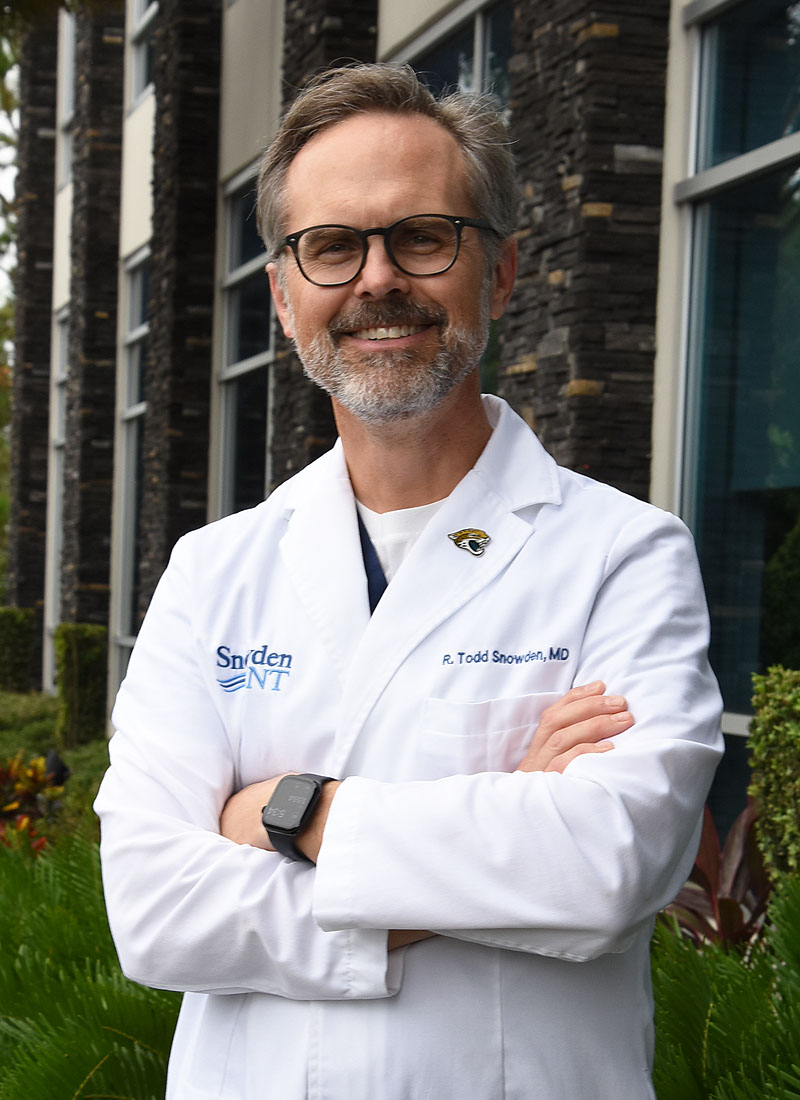
Meet Dr. Robert Todd Snowden
Choosing an ENT specialist is an important decision, particularly when surgery may be part of your treatment plan. Robert Todd Snowden, MD, FACS is a board-certified otolaryngologist who has been diagnosing and treating complex disorders of the ears, nose, and throat since 2001. With more than 20 years of experience caring for patients throughout Northeast Florida, Dr. Snowden is known for combining careful diagnostic evaluation with evidence-based treatment recommendations that are tailored to each patient’s individual needs. His commitment is to help every patient achieve the best possible outcome through compassionate, ethical, and patient-centered care.
As a Fellow of the American College of Surgeons (FACS) and the American Academy of Otolaryngology–Head and Neck Surgery, Dr. Snowden maintains the highest professional standards within his specialty. He is also an active member of the Florida Medical Association and the Duval County Medical Society and has previously held memberships in the American Rhinologic Society and the American Association of Otolaryngic Allergy. Throughout his career, he has remained committed to advancing his knowledge and providing patients with care that reflects current evidence and accepted best practices.
In addition to his clinical experience, Dr. Snowden has served in numerous leadership roles within the Jacksonville medical community. During more than 25 years on the Baptist Health medical staff, he served as Chief of Surgery and Chief of Staff at Baptist Medical Center South and was a member of the Baptist Physician Partners Board of Directors. Whether treating chronic nasal obstruction, performing advanced sinus and nasal surgery, or managing complex throat and voice disorders, Dr. Snowden has earned the trust of patients and referring physicians alike through his experience, sound clinical judgment, and dedication to delivering exceptional ENT care.
What Our Patients Are Saying




Contact Us!
(904) 268-5366
Or, if it is more convenient, use our contact form and we’ll get back to you as soon as possible.
Contact Us!
(904) 268-5366
Or, if it is more convenient, use our contact form and we’ll get back to you as soon as possible.

Snowden ENT is proud to be a select ENT Provider of the Baptist Physician Partners network. The mission of Baptist Physician Partners is to shape the future of health care in our community through an integrated partnership of providers and Baptist Health hospitals working collaboratively toward common goals for improving quality, safety, efficiency and outcomes for our patients.

12574 Flagler Center Boulevard
Suite 201
Jacksonville, FL 32258
(904) 268-5366
Monday – Thursday 8:30 AM to 4:30 PM
Friday 8:30 AM to 3:45 PM
Snowden ENT is proud to be a select ENT Provider of the Baptist Physician Partners network. The mission of Baptist Physician Partners is to shape the future of health care in our community through an integrated partnership of providers and Baptist Health hospitals working collaboratively toward common goals for improving quality, safety, efficiency and outcomes for our patients.
12574 Flagler Center Blvd
Suite 201
Jacksonville, FL 32258
(904) 268-5366
Monday – Thursday 8:30 AM to 4:30 PM
Friday 8:30 AM to 3:45 PM
Copyright | Snowden ENT | All Rights Reserved | Created and Optimized by BoomClient