Turbinate Reduction vs Septoplasty
One of the most common questions I hear from patients with chronic nasal obstruction is whether they need turbinate reduction or septoplasty. Understanding turbinate reduction vs septoplasty begins with recognizing that these procedures treat different causes of nasal blockage. Although they are frequently performed together, each surgery addresses a separate anatomical problem within the nose.
My recommendation is always based on a comprehensive examination rather than symptoms alone. Because enlarged turbinates and a deviated nasal septum often occur together, determining the true source of nasal obstruction is an important part of developing an effective treatment plan. In many cases, understanding turbinate reduction vs septoplasty requires nasal endoscopy and a detailed evaluation of the entire nasal airway.
- What Does Septoplasty Correct?
- What Does Turbinate Reduction Treat?
- When Is Septoplasty Alone Appropriate?
- When Is Turbinate Reduction Alone Appropriate?
- Benefits of Combining Septoplasty and Turbinate Reduction
- How Do Recovery Expectations Compare?
- Meet Dr. Robert Todd Snowden
- Frequently Asked Questions
- What Our Patients Are Saying
- Contact Us!
Turbinate Reduction vs Septoplasty
One of the most common questions I hear from patients with chronic nasal obstruction is whether they need turbinate reduction or septoplasty. Understanding turbinate reduction vs septoplasty begins with recognizing that these procedures treat different causes of nasal blockage. Although they are frequently performed together, each surgery addresses a separate anatomical problem within the nose.
My recommendation is always based on a comprehensive examination rather than symptoms alone. Because enlarged turbinates and a deviated nasal septum often occur together, determining the true source of nasal obstruction is an important part of developing an effective treatment plan. In many cases, understanding turbinate reduction vs septoplasty requires nasal endoscopy and a detailed evaluation of the entire nasal airway.
- What Does Septoplasty Correct?
- What Does Turbinate Reduction Treat?
- When Is Septoplasty Alone Appropriate?
- When Is Turbinate Reduction Alone Appropriate?
- Benefits of Combining Septoplasty and Turbinate Reduction
- How Do Recovery Expectations Compare?
- Meet Dr. Robert Todd Snowden
- Frequently Asked Questions
- What Our Patients Are Saying
- Contact Us!
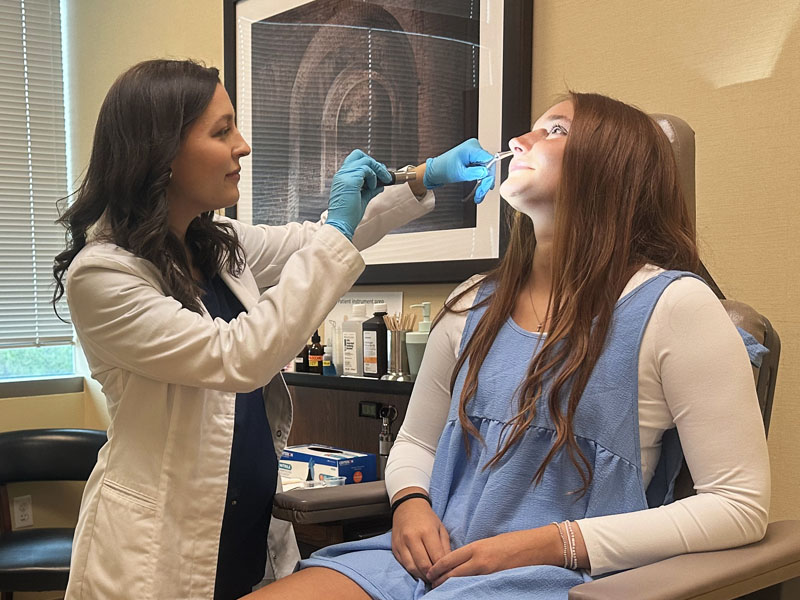
What Does Septoplasty Correct?
Septoplasty is performed to straighten a deviated nasal septum. The septum is the wall of cartilage and bone that separates the right and left nasal passages. When it is significantly displaced, it may reduce airflow through one or both sides of the nose and contribute to chronic nasal obstruction.
A septoplasty procedure repositions the septum to improve airflow while preserving the structural support of the nose. Because the surgery corrects a structural problem rather than swollen tissue, septoplasty alone does not treat enlarged turbinates. This distinction is one of the most important aspects of understanding turbinate reduction vs septoplasty.
What Does Septoplasty Correct?
Septoplasty is performed to straighten a deviated nasal septum. The septum is the wall of cartilage and bone that separates the right and left nasal passages. When it is significantly displaced, it may reduce airflow through one or both sides of the nose and contribute to chronic nasal obstruction.
A septoplasty procedure repositions the septum to improve airflow while preserving the structural support of the nose. Because the surgery corrects a structural problem rather than swollen tissue, septoplasty alone does not treat enlarged turbinates. This distinction is one of the most important aspects of understanding turbinate reduction vs septoplasty.
What Does Turbinate Reduction Treat?
Turbinate reduction is a procedure designed to decrease the size of chronically enlarged inferior turbinates while preserving their important role in warming, humidifying, and filtering inspired air. Enlarged turbinates commonly result from allergies, chronic inflammation, environmental irritants, or long-standing nasal congestion.
Unlike septoplasty, turbinate reduction does not reposition the nasal septum or correct structural deviation. Instead, it creates additional space for airflow by reducing excessive turbinate tissue. When comparing turbinate reduction vs septoplasty, it is helpful to remember that one procedure treats swollen tissue while the other corrects an anatomical deformity.
What Does Turbinate Reduction Treat?
Turbinate reduction is a procedure designed to decrease the size of chronically enlarged inferior turbinates while preserving their important role in warming, humidifying, and filtering inspired air. Enlarged turbinates commonly result from allergies, chronic inflammation, environmental irritants, or long-standing nasal congestion.
Unlike septoplasty, turbinate reduction does not reposition the nasal septum or correct structural deviation. Instead, it creates additional space for airflow by reducing excessive turbinate tissue. When comparing turbinate reduction vs septoplasty, it is helpful to remember that one procedure treats swollen tissue while the other corrects an anatomical deformity.
When Is Septoplasty Alone Appropriate?
Some patients have a significantly deviated septum but normal-sized turbinates. In these cases, straightening the septum may provide adequate improvement in nasal breathing without reducing turbinate tissue.
Determining whether septoplasty alone is appropriate requires a careful examination because symptoms alone cannot reliably distinguish a deviated septum from enlarged turbinates. My treatment recommendations are based on the physical findings identified during your evaluation rather than assuming one procedure is appropriate for every patient considering turbinate reduction vs septoplasty.
When Is Septoplasty Alone Appropriate?
Some patients have a significantly deviated septum but normal-sized turbinates. In these cases, straightening the septum may provide adequate improvement in nasal breathing without reducing turbinate tissue.
Determining whether septoplasty alone is appropriate requires a careful examination because symptoms alone cannot reliably distinguish a deviated septum from enlarged turbinates. My treatment recommendations are based on the physical findings identified during your evaluation rather than assuming one procedure is appropriate for every patient considering turbinate reduction vs septoplasty.
When Is Turbinate Reduction Alone Appropriate?
Patients whose nasal obstruction is primarily caused by chronically enlarged inferior turbinates may benefit from turbinate reduction without septoplasty. This situation is commonly seen in patients with persistent nasal congestion related to allergies or chronic inflammation when the nasal septum remains relatively straight.
Before recommending surgery, I typically ensure that appropriate medical treatment has been attempted whenever possible. If symptoms persist despite conservative management, turbinate reduction may improve nasal airflow without requiring correction of the septum. Understanding the underlying cause is essential when evaluating turbinate reduction vs septoplasty.
When Is Turbinate Reduction Alone Appropriate?
Patients whose nasal obstruction is primarily caused by chronically enlarged inferior turbinates may benefit from turbinate reduction without septoplasty. This situation is commonly seen in patients with persistent nasal congestion related to allergies or chronic inflammation when the nasal septum remains relatively straight.
Before recommending surgery, I typically ensure that appropriate medical treatment has been attempted whenever possible. If symptoms persist despite conservative management, turbinate reduction may improve nasal airflow without requiring correction of the septum. Understanding the underlying cause is essential when evaluating turbinate reduction vs septoplasty.
Benefits of Combining Septoplasty and Turbinate Reduction
When both conditions are present, combining procedures allows multiple causes of nasal obstruction to be addressed during a single operation. This avoids the need for separate surgeries while providing one recovery period and one postoperative healing process.
Treating both the septum and the turbinates may improve nasal airflow more effectively than correcting only one source of obstruction when both contribute significantly to breathing difficulty. During your consultation, I explain how your anatomy influences the decision regarding turbinate reduction vs septoplasty and whether combining procedures is medically appropriate.
Benefits of Combining Septoplasty and Turbinate Reduction
When both conditions are present, combining procedures allows multiple causes of nasal obstruction to be addressed during a single operation. This avoids the need for separate surgeries while providing one recovery period and one postoperative healing process.
Treating both the septum and the turbinates may improve nasal airflow more effectively than correcting only one source of obstruction when both contribute significantly to breathing difficulty. During your consultation, I explain how your anatomy influences the decision regarding turbinate reduction vs septoplasty and whether combining procedures is medically appropriate.
How Do Recovery Expectations Compare?
Recovery following either procedure varies depending on the surgical technique used and the patient’s individual healing response. Both surgeries commonly involve temporary congestion, mild swelling, and gradual improvement in breathing as the nasal tissues heal.
Patients undergoing both procedures simultaneously often experience a recovery timeline similar to either procedure alone, although healing may involve slightly more swelling because multiple areas within the nose are treated. I provide detailed postoperative instructions and monitor healing closely regardless of the treatment selected during your evaluation.
How Do Recovery Expectations Compare?
Recovery following either procedure varies depending on the surgical technique used and the patient’s individual healing response. Both surgeries commonly involve temporary congestion, mild swelling, and gradual improvement in breathing as the nasal tissues heal.
Patients undergoing both procedures simultaneously often experience a recovery timeline similar to either procedure alone, although healing may involve slightly more swelling because multiple areas within the nose are treated. I provide detailed postoperative instructions and monitor healing closely regardless of the treatment selected during your evaluation.
Frequently Asked Questions
Is turbinate reduction the same as septoplasty? No. Turbinate reduction decreases the size of enlarged turbinates, while septoplasty straightens a deviated nasal septum. They treat different causes of nasal obstruction.
Can I have both procedures at the same time? Yes. Many patients benefit from having turbinate reduction and septoplasty performed during the same operation when both conditions contribute to nasal blockage.
Which procedure has a longer recovery? Recovery is similar for many patients because both procedures are performed inside the nose and involve gradual healing over several weeks. Recovery varies depending on the individual and the extent of surgery.
Does septoplasty fix enlarged turbinates? No. Septoplasty corrects a deviated septum but does not reduce enlarged turbinate tissue.
Can turbinate reduction correct a deviated septum? No. Turbinate reduction improves airflow by reducing enlarged turbinates but does not straighten the nasal septum.
How do I know which procedure I need? I will perform a comprehensive examination to determine whether your symptoms are caused by a deviated septum, enlarged turbinates, or both.
Are both procedures performed through the nostrils? Yes. Septoplasty and turbinate reduction are typically performed entirely through the nostrils without external facial incisions.
Will correcting both conditions improve breathing more? When both a deviated septum and enlarged turbinates contribute to nasal obstruction, addressing each condition may provide better functional improvement than treating only one. Treatment recommendations should always be individualized based on your anatomy and examination findings.
Frequently Asked Questions
Is turbinate reduction the same as septoplasty? No. Turbinate reduction decreases the size of enlarged turbinates, while septoplasty straightens a deviated nasal septum. They treat different causes of nasal obstruction.
Can I have both procedures at the same time? Yes. Many patients benefit from having turbinate reduction and septoplasty performed during the same operation when both conditions contribute to nasal blockage.
Which procedure has a longer recovery? Recovery is similar for many patients because both procedures are performed inside the nose and involve gradual healing over several weeks. Recovery varies depending on the individual and the extent of surgery.
Does septoplasty fix enlarged turbinates? No. Septoplasty corrects a deviated septum but does not reduce enlarged turbinate tissue.
Can turbinate reduction correct a deviated septum? No. Turbinate reduction improves airflow by reducing enlarged turbinates but does not straighten the nasal septum.
How do I know which procedure I need? I will perform a comprehensive examination to determine whether your symptoms are caused by a deviated septum, enlarged turbinates, or both.
Are both procedures performed through the nostrils? Yes. Septoplasty and turbinate reduction are typically performed entirely through the nostrils without external facial incisions.
Will correcting both conditions improve breathing more? When both a deviated septum and enlarged turbinates contribute to nasal obstruction, addressing each condition may provide better functional improvement than treating only one. Treatment recommendations should always be individualized based on your anatomy and examination findings.
Learn More About Turbinate Reduction at Snowden ENT
If you would like to learn more about the steps we take to properly address enlarged turbinates, these pages answer some of the more common questions I receive in detail.
Learn More About Turbinate Reduction at Snowden ENT
If you would like to learn more about the steps we take to properly address enlarged turbinates, these pages answer some of the more common questions I receive in detail.
Enlarged Turbinate Symptoms
Meet Dr. Robert Todd Snowden
Robert Todd Snowden, MD, FACS is a board-certified otolaryngologist who has been caring for patients throughout Northeast Florida since 2001. With more than two decades of experience diagnosing and treating disorders of the ears, nose, and throat, he provides comprehensive care for patients with chronic sinus disease, nasal obstruction, allergy-related conditions, voice disorders, and other complex ENT concerns. His approach emphasizes careful evaluation, accurate diagnosis, and individualized treatment recommendations based on each patient’s specific needs.
Dr. Snowden is a Fellow of the American College of Surgeons (FACS) and the American Academy of Otolaryngology–Head and Neck Surgery. He is also an active member of the Florida Medical Association and the Duval County Medical Society and has previously held memberships in the American Rhinologic Society and the American Association of Otolaryngic Allergy.
In addition to caring for patients, he has served as Chief of Surgery, Chief of Staff at Baptist Medical Center South, and on the Baptist Physician Partners Board of Directors during his more than 25 years on the Baptist Health medical staff. His extensive clinical experience, commitment to evidence-based medicine, and longstanding leadership within the Jacksonville medical community provide patients with confidence that they are receiving care from an experienced and trusted ENT specialist.

Meet Dr. Robert Todd Snowden
Robert Todd Snowden, MD, FACS is a board-certified otolaryngologist who has been caring for patients throughout Northeast Florida since 2001. With more than two decades of experience diagnosing and treating disorders of the ears, nose, and throat, he provides comprehensive care for patients with chronic sinus disease, nasal obstruction, allergy-related conditions, voice disorders, and other complex ENT concerns. His approach emphasizes careful evaluation, accurate diagnosis, and individualized treatment recommendations based on each patient’s specific needs.
Dr. Snowden is a Fellow of the American College of Surgeons (FACS) and the American Academy of Otolaryngology–Head and Neck Surgery. He is also an active member of the Florida Medical Association and the Duval County Medical Society and has previously held memberships in the American Rhinologic Society and the American Association of Otolaryngic Allergy.
In addition to caring for patients, he has served as Chief of Surgery, Chief of Staff at Baptist Medical Center South, and on the Baptist Physician Partners Board of Directors during his more than 25 years on the Baptist Health medical staff. His extensive clinical experience, commitment to evidence-based medicine, and longstanding leadership within the Jacksonville medical community provide patients with confidence that they are receiving care from an experienced and trusted ENT specialist.
What Our Patients Are Saying




Contact Us!
(904) 268-5366
Or, if it is more convenient, use our contact form and we’ll get back to you as soon as possible.
Contact Us!
(904) 268-5366
Or, if it is more convenient, use our contact form and we’ll get back to you as soon as possible.

Snowden ENT is proud to be a select ENT Provider of the Baptist Physician Partners network. The mission of Baptist Physician Partners is to shape the future of health care in our community through an integrated partnership of providers and Baptist Health hospitals working collaboratively toward common goals for improving quality, safety, efficiency and outcomes for our patients.

12574 Flagler Center Boulevard
Suite 201
Jacksonville, FL 32258
(904) 268-5366
Monday – Thursday 8:30 AM to 4:30 PM
Friday 8:30 AM to 3:45 PM
Snowden ENT is proud to be a select ENT Provider of the Baptist Physician Partners network. The mission of Baptist Physician Partners is to shape the future of health care in our community through an integrated partnership of providers and Baptist Health hospitals working collaboratively toward common goals for improving quality, safety, efficiency and outcomes for our patients.
12574 Flagler Center Blvd
Suite 201
Jacksonville, FL 32258
(904) 268-5366
Monday – Thursday 8:30 AM to 4:30 PM
Friday 8:30 AM to 3:45 PM
Copyright | Snowden ENT | All Rights Reserved | Created and Optimized by BoomClient