Is Coffee Making Your Throat Symptoms Worse?
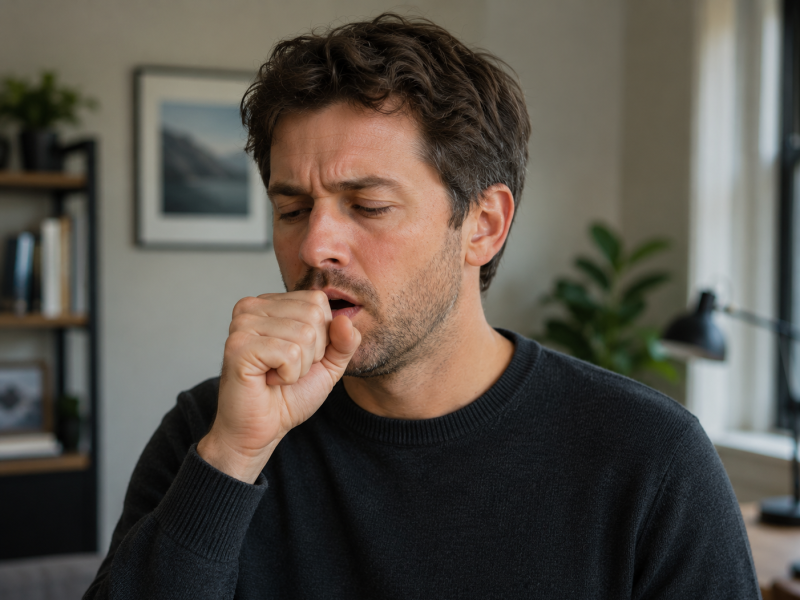
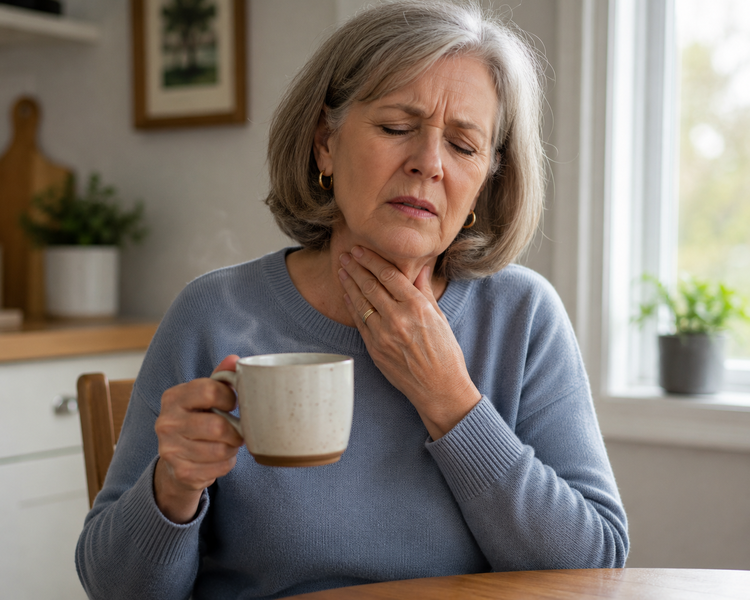
If you’re wondering, “Is coffee making your throat symptoms worse?” you’re not alone. If you have chronic throat clearing, a nagging cough, hoarseness, or the feeling that something is stuck in your throat, your favorite beverage may be playing a role. Coffee doesn’t directly injure your throat, but it can worsen acid reflux, including laryngopharyngeal reflux (LPR), often called “silent reflux.”
With LPR, small amounts of stomach contents travel high enough to irritate the throat and voice box. Because many people with LPR do not have typical heartburn, they may not realize reflux is contributing to their symptoms.
How Can Coffee Affect Your Throat?
Coffee may make reflux more likely in several ways. It may affect the lower esophageal sphincter, the muscular valve that normally helps keep stomach contents where they belong. When that valve does not work effectively, stomach contents are more likely to travel backward into the esophagus and sometimes as high as the throat.
Coffee may also stimulate stomach acid production and increase stomach activity, making reflux more likely in susceptible people. Its acidity often gets the blame, but that may not be the main issue. How your digestive system responds to coffee—and how much you drink—may be more important.
When reflux reaches the throat, it can contribute to symptoms such as:
- Frequent throat clearing
- Excess mucus or a postnasal-drip sensation
- Hoarseness or voice fatigue
- A dry, nagging cough
- A lump or tight sensation in the throat
These symptoms are not always caused by reflux. Allergies, sinus inflammation, dryness, medications, and voice strain can produce similar complaints. Our article on postnasal drip and chronic throat mucus explains several of these other possibilities.
Is Caffeine the Problem?
Not entirely. Caffeine may contribute to reflux, but decaffeinated coffee can still bother some people. This suggests that other compounds in coffee may also play a role.
Regular coffee is generally more likely to cause trouble than decaf, but simply switching to decaf does not always solve the problem. Some patients also find that they tolerate dark roast, Americano-style coffee, or cold brew better than lighter or more acidic coffee. That may be worth trying, but the response is highly individual.
Do You Need to Stop Drinking Coffee?
Not necessarily.
One of the most common misconceptions I hear is that everyone with reflux or throat symptoms needs to give up coffee. I’ll admit that early in my career, I often gave that advice. Since then, the evidence has evolved, and so has my approach. Many people can enjoy coffee without any noticeable worsening of their throat symptoms.
In fact, moderate coffee consumption has been associated with several health benefits, including lower rates of cardiovascular disease, type 2 diabetes, and some neurodegenerative disorders. That doesn’t mean everyone should drink coffee, but it does remind us that there’s little reason to eliminate it unless it’s actually causing a problem.
The key is to look for a consistent pattern. If your throat clearing, hoarseness, cough, or throat irritation reliably becomes worse after coffee, it’s worth paying attention. If you don’t notice any relationship, coffee may not be one of your major triggers.
One of the simplest ways to find out is to take a two- to four-week break from coffee—a “coffee holiday,” if you will. If your symptoms improve, gradually add coffee back and see where your threshold is. You may discover that one cup is perfectly fine, while several cups, coffee on an empty stomach, or coffee later in the day causes problems.
You don’t necessarily have to quit coffee altogether. Many patients do well by switching to half-caf or decaf, drinking coffee with breakfast instead of on an empty stomach, limiting the amount they drink, or avoiding coffee late in the evening. Small adjustments are often enough to improve symptoms while still letting you enjoy your morning routine.
Remember that reflux isn’t just about what you eat or drink. Eating large meals late in the evening, lying down soon after eating, excess weight, and certain medications can all contribute. Coffee is just one piece of the puzzle.
For more information about evaluating persistent throat symptoms, visit our Throat & Voice Care page.
When Should Your Throat Be Evaluated?
Don’t assume that it is coffee making your throat symptoms worse. While coffee can aggravate reflux, hoarseness, chronic cough, throat pain, or difficulty swallowing that doesn’t improve deserves a proper evaluation.
An ENT examination can help distinguish reflux irritation from sinus drainage, allergy problems, vocal cord disorders, medication effects, and other causes. In many cases, a simple office examination with a flexible camera allows us to look directly at the voice box and identify inflammation or another explanation for your symptoms.
The Bottom Line
Coffee can make reflux worse, and reflux can make your throat symptoms worse—but coffee is not a universal trigger. The most useful approach is to look for a consistent pattern rather than assuming that everyone with reflux must stop drinking it.
If you think coffee may be making your throat symptoms worse, don’t assume you have to give it up forever. A short trial without coffee followed by a gradual reintroduction is often the easiest way to determine whether it’s truly a trigger for you.
Additional Resources
Contact Us | Request Appointment
(904) 268-5366
Use this form to contact us about Scheduling an appointment or if you need our assistance and we’ll get back to you as soon as possible.
Medical Disclaimer
This content is for general educational purposes only and is not medical advice. It is not intended to diagnose or treat any condition or replace care from your physician. Reading this site does not establish a doctor–patient relationship. If you have symptoms or concerns, you should be evaluated by a qualified healthcare professional. Do not ignore or delay medical care based on information you read here. If you believe you may have a medical emergency, seek immediate care or call 911.