Jacksonville Nasal Polyp Surgery: When Is Surgery Necessary?
If nasal polyps are making it difficult to breathe through your nose, affecting your sense of smell, or contributing to persistent sinus symptoms, surgery may eventually become an appropriate treatment option. However, I don’t recommend surgery simply because nasal polyps are present. When I evaluate a patient for Jacksonville Nasal Polyp Surgery, I consider the severity of the symptoms, the extent of the disease, previous treatments, and how significantly the condition is affecting the patient’s daily life.
Many patients can manage nasal polyps with medications and other nonsurgical treatments, particularly when the polyps are smaller or symptoms are relatively mild. When appropriate medical treatment doesn’t provide sufficient relief, polyps repeatedly return, or significant obstruction and chronic sinus disease remain, I may recommend endoscopic surgery. The goal is not simply to remove visible polyps, but to improve nasal and sinus function while developing a long-term strategy for controlling the inflammation that contributed to their development.
Every patient is different, which is why the decision to proceed with Jacksonville Nasal Polyp Surgery should be based on an individual ENT evaluation rather than symptoms alone. My first priority is determining what is causing your symptoms and whether surgery is likely to provide meaningful benefit. If surgery is appropriate, I’ll explain what I recommend, why I recommend it, what you can realistically expect afterward, and how we can continue managing your nasal and sinus health over the long term.
- What Are Nasal Polyps and Why Do They Develop?
- Symptoms That May Lead Patients to Consider Surgery
- When Medications Are No Longer Enough
- How I Determine Whether You Need Nasal Polyp Surgery
- How Nasal Polyp Surgery Is Performed
- Nasal Polyp Removal and Endoscopic Sinus Surgery
- What to Expect on the Day of Surgery
- Medical Treatment for Nasal Polyps
- Will Nasal Polyp Surgery Improve My Breathing?
- Can Your Sense of Smell Return After Surgery?
- Risks and Limitations of Nasal Polyp Surgery
- Why Nasal Polyps Can Return After Surgery
- Preventing and Managing Nasal Polyps After Surgery
- Is Jacksonville Nasal Polyp Surgery Right for You?
- Meet Dr. Robert Todd Snowden
- What Our Patients Are Saying
- Contact Us!
Jacksonville Nasal Polyp Surgery: When Is Surgery Necessary?
If nasal polyps are making it difficult to breathe through your nose, affecting your sense of smell, or contributing to persistent sinus symptoms, surgery may eventually become an appropriate treatment option. However, I don’t recommend surgery simply because nasal polyps are present. When I evaluate a patient for Jacksonville Nasal Polyp Surgery, I consider the severity of the symptoms, the extent of the disease, previous treatments, and how significantly the condition is affecting the patient’s daily life.
Many patients can manage nasal polyps with medications and other nonsurgical treatments, particularly when the polyps are smaller or symptoms are relatively mild. When appropriate medical treatment doesn’t provide sufficient relief, polyps repeatedly return, or significant obstruction and chronic sinus disease remain, I may recommend endoscopic surgery. The goal is not simply to remove visible polyps, but to improve nasal and sinus function while developing a long-term strategy for controlling the inflammation that contributed to their development.
Every patient is different, which is why the decision to proceed with Jacksonville Nasal Polyp Surgery should be based on an individual ENT evaluation rather than symptoms alone. My first priority is determining what is causing your symptoms and whether surgery is likely to provide meaningful benefit. If surgery is appropriate, I’ll explain what I recommend, why I recommend it, what you can realistically expect afterward, and how we can continue managing your nasal and sinus health over the long term.
- What Are Nasal Polyps and Why Do They Develop?
- Symptoms That May Lead Patients to Consider Surgery
- When Medications Are No Longer Enough
- How I Determine Whether You Need Nasal Polyp Surgery
- How Nasal Polyp Surgery Is Performed
- Nasal Polyp Removal and Endoscopic Sinus Surgery
- What to Expect on the Day of Surgery
- Medical Treatment for Nasal Polyps
- Will Nasal Polyp Surgery Improve My Breathing?
- Can Your Sense of Smell Return After Surgery?
- Risks and Limitations of Nasal Polyp Surgery
- Why Nasal Polyps Can Return After Surgery
- Preventing and Managing Nasal Polyps After Surgery
- Is Jacksonville Nasal Polyp Surgery Right for You?
- Meet Dr. Robert Todd Snowden
- What Our Patients Are Saying
- Contact Us!

What Are Nasal Polyps and Why Do They Develop?
Nasal polyps are soft, noncancerous growths that develop from the lining of the nasal passages or sinuses as a result of ongoing inflammation. They can occur individually, but patients with chronic rhinosinusitis with nasal polyps often develop multiple growths. As polyps become larger or more numerous, they can obstruct normal airflow and sinus drainage, contributing to congestion, facial pressure, drainage, and a reduced sense of smell.
One of the points I emphasize to patients considering Jacksonville Nasal Polyp Surgery is that removing the polyps does not necessarily eliminate the inflammatory process that caused them. Nasal polyps are commonly associated with chronic sinus inflammation and may also occur in patients with asthma, aspirin-exacerbated respiratory disease (AERD), allergies, or other inflammatory conditions. This is one reason I look beyond the polyps themselves when evaluating a patient. Understanding the underlying disease helps me determine whether surgery is appropriate and what ongoing treatment may be needed to help control symptoms and reduce the likelihood of recurrence.
What Are Nasal Polyps and Why Do They Develop?
Nasal polyps are soft, noncancerous growths that develop from the lining of the nasal passages or sinuses as a result of ongoing inflammation. They can occur individually, but patients with chronic rhinosinusitis with nasal polyps often develop multiple growths. As polyps become larger or more numerous, they can obstruct normal airflow and sinus drainage, contributing to congestion, facial pressure, drainage, and a reduced sense of smell.
One of the points I emphasize to patients considering Jacksonville Nasal Polyp Surgery is that removing the polyps does not necessarily eliminate the inflammatory process that caused them. Nasal polyps are commonly associated with chronic sinus inflammation and may also occur in patients with asthma, aspirin-exacerbated respiratory disease (AERD), allergies, or other inflammatory conditions. This is one reason I look beyond the polyps themselves when evaluating a patient. Understanding the underlying disease helps me determine whether surgery is appropriate and what ongoing treatment may be needed to help control symptoms and reduce the likelihood of recurrence.
Symptoms That May Lead Patients to Consider Surgery
Nasal polyps can cause symptoms ranging from persistent stuffiness to significant nasal and sinus obstruction. Patients I evaluate commonly describe difficulty breathing through the nose, ongoing congestion, drainage, facial pressure, or a diminished sense of smell. Some also experience recurring sinus infections, mouth breathing, snoring, or sleep disruption. When these problems persist despite appropriate medical treatment, Jacksonville Nasal Polyp Surgery may become one of the options we discuss.
The presence of symptoms alone does not automatically mean surgery is necessary. I pay particular attention to how severe the symptoms are, how long they have persisted, whether medications have provided meaningful relief, and how much the condition is affecting the patient’s quality of life. A patient who cannot breathe comfortably through the nose or has experienced a substantial loss of smell may have very different treatment needs from someone whose polyps are small and causing few symptoms.
My goal is to determine whether the symptoms are actually being caused by nasal polyps and whether another nasal or sinus condition is contributing to the problem. Once I understand the extent of the disease and the patient’s response to previous treatment, I can make a more informed recommendation about whether continued medical management or surgery is the more appropriate next step.
I also encourage patients not to assume that every persistent nasal symptom is caused by polyps. Structural obstruction, chronic sinusitis, allergies, and other conditions can produce similar complaints. A careful evaluation helps us identify what we are treating before making a decision about surgery.
Symptoms That May Lead Patients to Consider Surgery
Nasal polyps can cause symptoms ranging from persistent stuffiness to significant nasal and sinus obstruction. Patients I evaluate commonly describe difficulty breathing through the nose, ongoing congestion, drainage, facial pressure, or a diminished sense of smell. Some also experience recurring sinus infections, mouth breathing, snoring, or sleep disruption. When these problems persist despite appropriate medical treatment, Jacksonville Nasal Polyp Surgery may become one of the options we discuss.
The presence of symptoms alone does not automatically mean surgery is necessary. I pay particular attention to how severe the symptoms are, how long they have persisted, whether medications have provided meaningful relief, and how much the condition is affecting the patient’s quality of life. A patient who cannot breathe comfortably through the nose or has experienced a substantial loss of smell may have very different treatment needs from someone whose polyps are small and causing few symptoms.
My goal is to determine whether the symptoms are actually being caused by nasal polyps and whether another nasal or sinus condition is contributing to the problem. Once I understand the extent of the disease and the patient’s response to previous treatment, I can make a more informed recommendation about whether continued medical management or surgery is the more appropriate next step.
I also encourage patients not to assume that every persistent nasal symptom is caused by polyps. Structural obstruction, chronic sinusitis, allergies, and other conditions can produce similar complaints. A careful evaluation helps us identify what we are treating before making a decision about surgery.
When Medications Are No Longer Enough
For many patients with nasal polyps, I begin treatment with medication rather than surgery. Depending on the individual situation, treatment may include a corticosteroid nasal spray, saline irrigation, or other medications intended to reduce inflammation and control associated sinus disease. In selected cases, a short course of an oral corticosteroid may be appropriate. These treatments can sometimes shrink polyps and provide substantial relief, but they do not work equally well for every patient.
I may begin discussing Jacksonville Nasal Polyp Surgery when appropriate medical treatment has not adequately controlled nasal obstruction, loss of smell, chronic sinus symptoms, or other problems caused by the polyps. Surgery may also become more reasonable when polyps are extensive, repeatedly return, or contribute to significant blockage of the nasal passages and sinus drainage pathways. The decision is based on the complete clinical picture rather than simply how large the polyps appear.
Even when surgery becomes appropriate, medical management often remains an important part of long-term treatment. Surgery can remove obstructing polyps and improve access to the sinuses, but it does not eliminate the underlying inflammatory tendency that allowed the polyps to develop. For that reason, I discuss both the potential benefits of surgery and the ongoing care that may be necessary afterward to help maintain the improvement we achieve.
When Medications Are No Longer Enough
For many patients with nasal polyps, I begin treatment with medication rather than surgery. Depending on the individual situation, treatment may include a corticosteroid nasal spray, saline irrigation, or other medications intended to reduce inflammation and control associated sinus disease. In selected cases, a short course of an oral corticosteroid may be appropriate. These treatments can sometimes shrink polyps and provide substantial relief, but they do not work equally well for every patient.
I may begin discussing Jacksonville Nasal Polyp Surgery when appropriate medical treatment has not adequately controlled nasal obstruction, loss of smell, chronic sinus symptoms, or other problems caused by the polyps. Surgery may also become more reasonable when polyps are extensive, repeatedly return, or contribute to significant blockage of the nasal passages and sinus drainage pathways. The decision is based on the complete clinical picture rather than simply how large the polyps appear.
Even when surgery becomes appropriate, medical management often remains an important part of long-term treatment. Surgery can remove obstructing polyps and improve access to the sinuses, but it does not eliminate the underlying inflammatory tendency that allowed the polyps to develop. For that reason, I discuss both the potential benefits of surgery and the ongoing care that may be necessary afterward to help maintain the improvement we achieve.
How I Determine Whether You Need Nasal Polyp Surgery
When I evaluate someone for Jacksonville Nasal Polyp Surgery, I don’t base my recommendation on a single symptom or test. I want to understand how long the patient has been experiencing problems, which symptoms are most troublesome, what treatments have already been tried, and whether those treatments provided meaningful improvement. I also consider related conditions such as chronic sinusitis, asthma, allergies, and aspirin-exacerbated respiratory disease because they can influence both treatment decisions and the likelihood that polyps will recur.
A nasal examination and nasal endoscopy can allow me to directly evaluate the nasal passages and determine the location and extent of visible polyps. When appropriate, a CT scan of the sinuses can provide additional information about areas I cannot fully assess during an office examination. Imaging can show the extent of sinus inflammation and obstruction and help me understand the patient’s anatomy if surgery is being considered.
Just as importantly, I consider how much the condition is affecting the patient’s daily life. Significant difficulty breathing through the nose, persistent sinus symptoms, or loss of smell despite appropriate medical treatment can weigh heavily in the decision. My recommendation for Jacksonville Nasal Polyp Surgery is ultimately based on whether I believe surgery offers a reasonable opportunity to improve the patient’s symptoms and sinus function, balanced against the risks, alternatives, and need for continued treatment after surgery.
How I Determine Whether You Need Nasal Polyp Surgery
When I evaluate someone for Jacksonville Nasal Polyp Surgery, I don’t base my recommendation on a single symptom or test. I want to understand how long the patient has been experiencing problems, which symptoms are most troublesome, what treatments have already been tried, and whether those treatments provided meaningful improvement. I also consider related conditions such as chronic sinusitis, asthma, allergies, and aspirin-exacerbated respiratory disease because they can influence both treatment decisions and the likelihood that polyps will recur.
A nasal examination and nasal endoscopy can allow me to directly evaluate the nasal passages and determine the location and extent of visible polyps. When appropriate, a CT scan of the sinuses can provide additional information about areas I cannot fully assess during an office examination. Imaging can show the extent of sinus inflammation and obstruction and help me understand the patient’s anatomy if surgery is being considered.
Just as importantly, I consider how much the condition is affecting the patient’s daily life. Significant difficulty breathing through the nose, persistent sinus symptoms, or loss of smell despite appropriate medical treatment can weigh heavily in the decision. My recommendation for Jacksonville Nasal Polyp Surgery is ultimately based on whether I believe surgery offers a reasonable opportunity to improve the patient’s symptoms and sinus function, balanced against the risks, alternatives, and need for continued treatment after surgery.
How Nasal Polyp Surgery Is Performed
When I perform Jacksonville Nasal Polyp Surgery, the procedure is typically done endoscopically through the nostrils. A small endoscope provides a detailed view inside the nasal passages and sinuses, allowing me to identify polyps and other areas of disease without making external facial incisions. Specialized instruments are then used to carefully remove obstructing polyps and, when necessary, address affected sinus drainage pathways.
The extent of surgery depends on what I find during the patient’s evaluation and on the underlying sinus disease. Some patients primarily need removal of obstructing polyps, while others have more extensive chronic sinus inflammation that requires treatment of the involved sinuses as well. My objective is to remove diseased tissue where appropriate, improve ventilation and drainage, and preserve as much healthy tissue and normal function as possible.
An important benefit of endoscopic surgery is that improving access to the sinus cavities may also make postoperative treatments such as saline irrigations and prescribed topical medications more effective at reaching the areas where inflammation occurs. This is particularly important with nasal polyps because surgery is usually one part of an ongoing treatment strategy rather than a permanent cure for the inflammatory condition that caused them.
How Nasal Polyp Surgery Is Performed
When I perform Jacksonville Nasal Polyp Surgery, the procedure is typically done endoscopically through the nostrils. A small endoscope provides a detailed view inside the nasal passages and sinuses, allowing me to identify polyps and other areas of disease without making external facial incisions. Specialized instruments are then used to carefully remove obstructing polyps and, when necessary, address affected sinus drainage pathways.
The extent of surgery depends on what I find during the patient’s evaluation and on the underlying sinus disease. Some patients primarily need removal of obstructing polyps, while others have more extensive chronic sinus inflammation that requires treatment of the involved sinuses as well. My objective is to remove diseased tissue where appropriate, improve ventilation and drainage, and preserve as much healthy tissue and normal function as possible.
An important benefit of endoscopic surgery is that improving access to the sinus cavities may also make postoperative treatments such as saline irrigations and prescribed topical medications more effective at reaching the areas where inflammation occurs. This is particularly important with nasal polyps because surgery is usually one part of an ongoing treatment strategy rather than a permanent cure for the inflammatory condition that caused them.
Nasal Polyp Removal and Endoscopic Sinus Surgery
Removing nasal polyps and treating the underlying sinus disease are closely related, but they are not always the same thing. Simply removing the polyps that are visible in the nasal passages may relieve obstruction, but some patients also have significant inflammation and disease within their sinuses. When I plan Jacksonville Nasal Polyp Surgery, I evaluate the entire nasal and sinus system so I can determine the appropriate extent of treatment for that individual patient.
When chronic sinus disease is present, endoscopic sinus surgery may be performed along with removal of the polyps. Using an endoscope and specialized instruments, I can open obstructed sinus pathways and remove appropriate diseased tissue while preserving healthy structures whenever possible. Improving these natural drainage pathways can help the sinuses ventilate and drain more effectively and can improve access for postoperative saline irrigation and prescribed topical medications.
This distinction is important because my goal is not simply to make the polyps disappear. I want to address the areas contributing to the patient’s symptoms while avoiding surgery that isn’t necessary. The extent of Jacksonville Nasal Polyp Surgery should therefore be individualized according to the patient’s examination, imaging when indicated, symptoms, previous treatment, and extent of chronic sinus disease.
Nasal Polyp Removal and Endoscopic Sinus Surgery
Removing nasal polyps and treating the underlying sinus disease are closely related, but they are not always the same thing. Simply removing the polyps that are visible in the nasal passages may relieve obstruction, but some patients also have significant inflammation and disease within their sinuses. When I plan Jacksonville Nasal Polyp Surgery, I evaluate the entire nasal and sinus system so I can determine the appropriate extent of treatment for that individual patient.
When chronic sinus disease is present, endoscopic sinus surgery may be performed along with removal of the polyps. Using an endoscope and specialized instruments, I can open obstructed sinus pathways and remove appropriate diseased tissue while preserving healthy structures whenever possible. Improving these natural drainage pathways can help the sinuses ventilate and drain more effectively and can improve access for postoperative saline irrigation and prescribed topical medications.
This distinction is important because my goal is not simply to make the polyps disappear. I want to address the areas contributing to the patient’s symptoms while avoiding surgery that isn’t necessary. The extent of Jacksonville Nasal Polyp Surgery should therefore be individualized according to the patient’s examination, imaging when indicated, symptoms, previous treatment, and extent of chronic sinus disease.
What to Expect on the Day of Surgery
Before Jacksonville Nasal Polyp Surgery, my staff and I will provide instructions specific to your procedure, including when to stop eating and drinking and whether any medications need to be temporarily adjusted. It is important that I know about all prescription medications, over-the-counter medications, vitamins, and supplements you take so we can plan for surgery as safely as possible. Because nasal polyp surgery is generally performed under anesthesia, you will also need to arrange for someone to drive you home afterward.
During the procedure, I use an endoscope to visualize the nasal passages and sinuses and carefully remove the polyps and other diseased tissue that we determined should be addressed. If chronic sinus disease is also present, I may open affected sinus pathways as part of the procedure. Exactly what I perform depends on the surgical plan we discussed beforehand and the extent of each patient’s disease.
After surgery, you will spend time in recovery while the anesthesia wears off and your condition is monitored. Most nasal polyp procedures are performed on an outpatient basis, allowing patients to return home the same day when medically appropriate. Before you leave, you will receive instructions for nasal care, medications, activity restrictions, and follow-up appointments. I want my patients to understand these instructions because proper postoperative care is an important part of achieving the best possible result from Jacksonville Nasal Polyp Surgery.
What to Expect on the Day of Surgery
Before Jacksonville Nasal Polyp Surgery, my staff and I will provide instructions specific to your procedure, including when to stop eating and drinking and whether any medications need to be temporarily adjusted. It is important that I know about all prescription medications, over-the-counter medications, vitamins, and supplements you take so we can plan for surgery as safely as possible. Because nasal polyp surgery is generally performed under anesthesia, you will also need to arrange for someone to drive you home afterward.
During the procedure, I use an endoscope to visualize the nasal passages and sinuses and carefully remove the polyps and other diseased tissue that we determined should be addressed. If chronic sinus disease is also present, I may open affected sinus pathways as part of the procedure. Exactly what I perform depends on the surgical plan we discussed beforehand and the extent of each patient’s disease.
After surgery, you will spend time in recovery while the anesthesia wears off and your condition is monitored. Most nasal polyp procedures are performed on an outpatient basis, allowing patients to return home the same day when medically appropriate. Before you leave, you will receive instructions for nasal care, medications, activity restrictions, and follow-up appointments. I want my patients to understand these instructions because proper postoperative care is an important part of achieving the best possible result from Jacksonville Nasal Polyp Surgery.
Medical Treatment for Nasal Polyps
Recovery after Jacksonville Nasal Polyp Surgery varies depending on the extent of the procedure and the individual patient. During the first several days, it is common to experience nasal congestion, mild bloody drainage, pressure, and fatigue. Your nose may initially feel more blocked rather than immediately more open because of normal postoperative swelling and crusting. I explain what symptoms are expected and which changes should prompt a call to my office.
Following my postoperative instructions is an important part of recovery. I may recommend saline irrigation and other nasal care to keep the surgical area clean and support healing. Patients also receive individualized guidance about medications, exercise, lifting, nose blowing, and when they can return to work and normal activities. Follow-up visits allow me to monitor healing, examine the surgical area, and adjust treatment when necessary.
I also remind patients that recovery is a process rather than a single milestone. Breathing and sinus symptoms can improve as swelling subsides and the nasal passages heal, but the timing varies. The objective of Jacksonville Nasal Polyp Surgery is to provide meaningful long-term improvement while continuing to manage the underlying inflammation that contributed to the polyps in the first place.
Medical Treatment for Nasal Polyps
Recovery after Jacksonville Nasal Polyp Surgery varies depending on the extent of the procedure and the individual patient. During the first several days, it is common to experience nasal congestion, mild bloody drainage, pressure, and fatigue. Your nose may initially feel more blocked rather than immediately more open because of normal postoperative swelling and crusting. I explain what symptoms are expected and which changes should prompt a call to my office.
Following my postoperative instructions is an important part of recovery. I may recommend saline irrigation and other nasal care to keep the surgical area clean and support healing. Patients also receive individualized guidance about medications, exercise, lifting, nose blowing, and when they can return to work and normal activities. Follow-up visits allow me to monitor healing, examine the surgical area, and adjust treatment when necessary.
I also remind patients that recovery is a process rather than a single milestone. Breathing and sinus symptoms can improve as swelling subsides and the nasal passages heal, but the timing varies. The objective of Jacksonville Nasal Polyp Surgery is to provide meaningful long-term improvement while continuing to manage the underlying inflammation that contributed to the polyps in the first place.
Will Nasal Polyp Surgery Improve My Breathing?
Improving nasal airflow is one of the primary reasons patients consider Jacksonville Nasal Polyp Surgery. When polyps become large enough to obstruct the nasal passages, breathing through the nose can become difficult throughout the day and especially troublesome at night. Removing obstructing polyps and, when necessary, treating affected sinus pathways can create more room for air to pass through the nose.
How much improvement a patient experiences depends on several factors, including the extent of the polyps, the amount of underlying inflammation, nasal anatomy, and whether another condition is contributing to the obstruction. For this reason, I avoid promising a specific result before surgery. My evaluation is intended to determine how much of a patient’s breathing difficulty is actually attributable to nasal polyps and sinus disease.
It is also important to understand that breathing may not feel dramatically better immediately after surgery. Temporary swelling, congestion, and crusting are part of the healing process. As these gradually improve, patients may begin to notice the benefit of removing the obstruction.
My goal with Jacksonville Nasal Polyp Surgery is not simply to create a temporary improvement in airflow. I want to combine appropriate surgical treatment with ongoing management of the underlying inflammatory disease so we have the best opportunity to maintain better nasal and sinus function over time.
Will Nasal Polyp Surgery Improve My Breathing?
Improving nasal airflow is one of the primary reasons patients consider Jacksonville Nasal Polyp Surgery. When polyps become large enough to obstruct the nasal passages, breathing through the nose can become difficult throughout the day and especially troublesome at night. Removing obstructing polyps and, when necessary, treating affected sinus pathways can create more room for air to pass through the nose.
How much improvement a patient experiences depends on several factors, including the extent of the polyps, the amount of underlying inflammation, nasal anatomy, and whether another condition is contributing to the obstruction. For this reason, I avoid promising a specific result before surgery. My evaluation is intended to determine how much of a patient’s breathing difficulty is actually attributable to nasal polyps and sinus disease.
It is also important to understand that breathing may not feel dramatically better immediately after surgery. Temporary swelling, congestion, and crusting are part of the healing process. As these gradually improve, patients may begin to notice the benefit of removing the obstruction.
My goal with Jacksonville Nasal Polyp Surgery is not simply to create a temporary improvement in airflow. I want to combine appropriate surgical treatment with ongoing management of the underlying inflammatory disease so we have the best opportunity to maintain better nasal and sinus function over time.
Can Your Sense of Smell Return After Surgery?
Loss or reduction of smell is one of the more frustrating symptoms I see in patients with nasal polyps. Large polyps and surrounding inflammation can prevent odors from adequately reaching the olfactory region of the nose. Chronic inflammation itself can also interfere with the sense of smell. When obstruction from polyps is an important part of the problem, Jacksonville Nasal Polyp Surgery may help restore access to this area and improve a patient’s ability to smell.
However, I am careful not to promise that surgery will completely restore a patient’s sense of smell. The outcome can depend on how long the problem has been present, the severity of the underlying inflammation, the extent of the polyps, and other individual factors. Some patients experience significant improvement, while others may have partial improvement or persistent difficulty with smell even after the nasal passages have been successfully opened.
This is another reason I view surgery as one component of treating chronic inflammatory nasal and sinus disease. After Jacksonville Nasal Polyp Surgery, controlling inflammation with appropriate ongoing treatment can be important for maintaining the improvements we achieve. During follow-up, I can evaluate how the nasal passages are healing, monitor for recurrent inflammation or polyps, and determine whether additional medical treatment may help support both sinus health and the patient’s sense of smell.
Can Your Sense of Smell Return After Surgery?
Loss or reduction of smell is one of the more frustrating symptoms I see in patients with nasal polyps. Large polyps and surrounding inflammation can prevent odors from adequately reaching the olfactory region of the nose. Chronic inflammation itself can also interfere with the sense of smell. When obstruction from polyps is an important part of the problem, Jacksonville Nasal Polyp Surgery may help restore access to this area and improve a patient’s ability to smell.
However, I am careful not to promise that surgery will completely restore a patient’s sense of smell. The outcome can depend on how long the problem has been present, the severity of the underlying inflammation, the extent of the polyps, and other individual factors. Some patients experience significant improvement, while others may have partial improvement or persistent difficulty with smell even after the nasal passages have been successfully opened.
This is another reason I view surgery as one component of treating chronic inflammatory nasal and sinus disease. After Jacksonville Nasal Polyp Surgery, controlling inflammation with appropriate ongoing treatment can be important for maintaining the improvements we achieve. During follow-up, I can evaluate how the nasal passages are healing, monitor for recurrent inflammation or polyps, and determine whether additional medical treatment may help support both sinus health and the patient’s sense of smell.
Risks and Limitations of Nasal Polyp Surgery
As with any surgical procedure, Jacksonville Nasal Polyp Surgery has potential risks that I discuss with patients before we decide to proceed. These can include bleeding, infection, postoperative discomfort, scarring, and persistent or recurrent symptoms. Endoscopic sinus procedures also involve structures located near the eyes and the base of the skull, so uncommon but potentially serious complications can occur. Anesthesia has its own risks as well, which are evaluated as part of the surgical process.
It is equally important to understand the limitations of surgery. Removing nasal polyps can relieve obstruction and improve sinus function, but surgery does not eliminate the underlying inflammatory tendency that caused the polyps to develop. Some patients can experience recurrent inflammation or new polyps over time and may require continued medical treatment, additional evaluation, or occasionally another procedure.
When I recommend Jacksonville Nasal Polyp Surgery, I do so only after considering the expected benefits, reasonable alternatives, and risks for that individual patient. My goal is to make sure you understand why I am recommending a procedure and what surgery can and cannot reasonably be expected to accomplish. An informed decision is an important part of good medical care.
Risks and Limitations of Nasal Polyp Surgery
As with any surgical procedure, Jacksonville Nasal Polyp Surgery has potential risks that I discuss with patients before we decide to proceed. These can include bleeding, infection, postoperative discomfort, scarring, and persistent or recurrent symptoms. Endoscopic sinus procedures also involve structures located near the eyes and the base of the skull, so uncommon but potentially serious complications can occur. Anesthesia has its own risks as well, which are evaluated as part of the surgical process.
It is equally important to understand the limitations of surgery. Removing nasal polyps can relieve obstruction and improve sinus function, but surgery does not eliminate the underlying inflammatory tendency that caused the polyps to develop. Some patients can experience recurrent inflammation or new polyps over time and may require continued medical treatment, additional evaluation, or occasionally another procedure.
When I recommend Jacksonville Nasal Polyp Surgery, I do so only after considering the expected benefits, reasonable alternatives, and risks for that individual patient. My goal is to make sure you understand why I am recommending a procedure and what surgery can and cannot reasonably be expected to accomplish. An informed decision is an important part of good medical care.
Why Nasal Polyps Can Return After Surgery
One of the most important things I explain to patients considering Jacksonville Nasal Polyp Surgery is that nasal polyps can return. Surgery removes existing polyps and treats areas of obstructed or diseased sinus tissue when appropriate, but it does not necessarily eliminate the chronic inflammation responsible for their development. If that inflammation continues, new polyps may gradually form.
The likelihood of recurrence varies considerably from one patient to another. Patients with more extensive chronic rhinosinusitis with nasal polyps or associated inflammatory conditions such as asthma or aspirin-exacerbated respiratory disease may have a greater tendency toward recurrent disease. A history of previous polyps or sinus surgery can also be important when I evaluate a patient’s long-term treatment needs.
This possibility does not mean surgery has been unsuccessful. Jacksonville Nasal Polyp Surgery can provide meaningful improvement in nasal obstruction and sinus function while also creating better access for topical medications and saline irrigations after surgery. For patients with chronic inflammatory disease, those benefits can become part of a broader strategy for keeping symptoms controlled.
For this reason, I continue to monitor patients after surgery rather than considering treatment complete when the polyps have been removed. Follow-up examinations allow me to evaluate healing and look for early signs of renewed inflammation or polyp growth. When necessary, we can adjust medical treatment before recurrent disease becomes severe. This combination of appropriate surgery and ongoing management gives us the best opportunity to maintain the improvement achieved through treatment.
Why Nasal Polyps Can Return After Surgery
One of the most important things I explain to patients considering Jacksonville Nasal Polyp Surgery is that nasal polyps can return. Surgery removes existing polyps and treats areas of obstructed or diseased sinus tissue when appropriate, but it does not necessarily eliminate the chronic inflammation responsible for their development. If that inflammation continues, new polyps may gradually form.
The likelihood of recurrence varies considerably from one patient to another. Patients with more extensive chronic rhinosinusitis with nasal polyps or associated inflammatory conditions such as asthma or aspirin-exacerbated respiratory disease may have a greater tendency toward recurrent disease. A history of previous polyps or sinus surgery can also be important when I evaluate a patient’s long-term treatment needs.
This possibility does not mean surgery has been unsuccessful. Jacksonville Nasal Polyp Surgery can provide meaningful improvement in nasal obstruction and sinus function while also creating better access for topical medications and saline irrigations after surgery. For patients with chronic inflammatory disease, those benefits can become part of a broader strategy for keeping symptoms controlled.
For this reason, I continue to monitor patients after surgery rather than considering treatment complete when the polyps have been removed. Follow-up examinations allow me to evaluate healing and look for early signs of renewed inflammation or polyp growth. When necessary, we can adjust medical treatment before recurrent disease becomes severe. This combination of appropriate surgery and ongoing management gives us the best opportunity to maintain the improvement achieved through treatment.
Preventing and Managing Nasal Polyps After Surgery
Long-term care is an important part of treatment after Jacksonville Nasal Polyp Surgery because surgery does not eliminate the underlying inflammatory condition that allowed the polyps to develop. Depending on the individual patient, I may recommend saline irrigation, a prescribed corticosteroid nasal spray or other topical therapy, and regular follow-up examinations. Keeping inflammation under control can help preserve the improvements achieved with surgery and allow me to identify recurrent disease earlier.
For patients with more persistent or recurrent nasal polyps, additional treatment may sometimes be appropriate. This can include evaluating contributing conditions such as asthma or aspirin-exacerbated respiratory disease and, for selected patients, considering biologic medications that target specific inflammatory pathways involved in chronic rhinosinusitis with nasal polyps. These medications are not necessary for every patient, and whether they are appropriate depends on the severity and characteristics of the disease, previous treatments, and other health considerations.
I view Jacksonville Nasal Polyp Surgery as one part of a long-term treatment plan rather than the end of treatment. By combining appropriate postoperative care with continued monitoring and individualized medical management, my goal is to help patients maintain better nasal breathing and sinus function while reducing the impact of recurrent inflammation and polyps.
Preventing and Managing Nasal Polyps After Surgery
Long-term care is an important part of treatment after Jacksonville Nasal Polyp Surgery because surgery does not eliminate the underlying inflammatory condition that allowed the polyps to develop. Depending on the individual patient, I may recommend saline irrigation, a prescribed corticosteroid nasal spray or other topical therapy, and regular follow-up examinations. Keeping inflammation under control can help preserve the improvements achieved with surgery and allow me to identify recurrent disease earlier.
For patients with more persistent or recurrent nasal polyps, additional treatment may sometimes be appropriate. This can include evaluating contributing conditions such as asthma or aspirin-exacerbated respiratory disease and, for selected patients, considering biologic medications that target specific inflammatory pathways involved in chronic rhinosinusitis with nasal polyps. These medications are not necessary for every patient, and whether they are appropriate depends on the severity and characteristics of the disease, previous treatments, and other health considerations.
I view Jacksonville Nasal Polyp Surgery as one part of a long-term treatment plan rather than the end of treatment. By combining appropriate postoperative care with continued monitoring and individualized medical management, my goal is to help patients maintain better nasal breathing and sinus function while reducing the impact of recurrent inflammation and polyps.
Is Jacksonville Nasal Polyp Surgery Right for You?
Deciding whether Jacksonville Nasal Polyp Surgery is appropriate requires more than confirming that nasal polyps are present. I consider the severity and duration of your symptoms, how much the polyps are affecting your breathing and sense of smell, the extent of your nasal and sinus disease, and how you have responded to appropriate medical treatment. Nasal endoscopy and, when indicated, CT imaging can also help me determine whether surgery is likely to provide meaningful benefit.
For some patients, continued medical management remains the appropriate approach. For others, persistent obstruction, chronic sinus disease, loss of smell, or symptoms that remain troublesome despite treatment may make surgery a reasonable next step. I also consider underlying inflammatory conditions and the possibility of recurrence when discussing the potential benefits and limitations of surgery.
If I recommend Jacksonville Nasal Polyp Surgery, I want you to understand exactly why I believe it is appropriate for your condition. I will explain what I expect to accomplish, the alternatives available to you, the potential risks, and what your recovery and long-term management may involve. My goal is to help you make an informed decision based on your individual condition rather than taking a one-size-fits-all approach to nasal polyp treatment.
Is Jacksonville Nasal Polyp Surgery Right for You?
Deciding whether Jacksonville Nasal Polyp Surgery is appropriate requires more than confirming that nasal polyps are present. I consider the severity and duration of your symptoms, how much the polyps are affecting your breathing and sense of smell, the extent of your nasal and sinus disease, and how you have responded to appropriate medical treatment. Nasal endoscopy and, when indicated, CT imaging can also help me determine whether surgery is likely to provide meaningful benefit.
For some patients, continued medical management remains the appropriate approach. For others, persistent obstruction, chronic sinus disease, loss of smell, or symptoms that remain troublesome despite treatment may make surgery a reasonable next step. I also consider underlying inflammatory conditions and the possibility of recurrence when discussing the potential benefits and limitations of surgery.
If I recommend Jacksonville Nasal Polyp Surgery, I want you to understand exactly why I believe it is appropriate for your condition. I will explain what I expect to accomplish, the alternatives available to you, the potential risks, and what your recovery and long-term management may involve. My goal is to help you make an informed decision based on your individual condition rather than taking a one-size-fits-all approach to nasal polyp treatment.
Learn More About Nasal Polyps and Treatment Options
No two patients with nasal polyps experience the condition in exactly the same way. The severity of the polyps, underlying inflammation, sinus involvement, response to medication, and likelihood of recurrence can all influence the treatment I recommend. Throughout my years treating patients with chronic nasal and sinus conditions, I have found that understanding these differences can help patients make more informed decisions about their care.
I created the following resources to provide more detailed information about some of the treatment decisions and concerns I commonly discuss with patients who have nasal polyps. Whether you are considering Jacksonville Nasal Polyp Surgery, exploring biologic treatment, or dealing with polyps that have returned after previous treatment, these articles are designed to help you better understand your options and the factors I consider when developing an individualized treatment plan.
Learn More About Nasal Polyps and Treatment Options
No two patients with nasal polyps experience the condition in exactly the same way. The severity of the polyps, underlying inflammation, sinus involvement, response to medication, and likelihood of recurrence can all influence the treatment I recommend. Throughout my years treating patients with chronic nasal and sinus conditions, I have found that understanding these differences can help patients make more informed decisions about their care.
I created the following resources to provide more detailed information about some of the treatment decisions and concerns I commonly discuss with patients who have nasal polyps. Whether you are considering Jacksonville Nasal Polyp Surgery, exploring biologic treatment, or dealing with polyps that have returned after previous treatment, these articles are designed to help you better understand your options and the factors I consider when developing an individualized treatment plan.
Meet Dr. Robert Todd Snowden
Choosing an ENT specialist is an important decision, particularly when surgery may be part of your treatment plan. Robert Todd Snowden, MD, FACS is a board-certified otolaryngologist who has been diagnosing and treating complex disorders of the ears, nose, and throat since 2001. With more than 20 years of experience caring for patients throughout Northeast Florida, Dr. Snowden is known for combining careful diagnostic evaluation with evidence-based treatment recommendations that are tailored to each patient’s individual needs. His commitment is to help every patient achieve the best possible outcome through compassionate, ethical, and patient-centered care.
As a Fellow of the American College of Surgeons (FACS) and the American Academy of Otolaryngology–Head and Neck Surgery, Dr. Snowden maintains the highest professional standards within his specialty. He is also an active member of the Florida Medical Association and the Duval County Medical Society and has previously held memberships in the American Rhinologic Society and the American Association of Otolaryngic Allergy. Throughout his career, he has remained committed to advancing his knowledge and providing patients with care that reflects current evidence and accepted best practices.
In addition to his clinical experience, Dr. Snowden has served in numerous leadership roles within the Jacksonville medical community. During more than 25 years on the Baptist Health medical staff, he served as Chief of Surgery and Chief of Staff at Baptist Medical Center South and was a member of the Baptist Physician Partners Board of Directors. Whether treating chronic nasal obstruction, performing advanced sinus and nasal surgery, or managing complex throat and voice disorders, Dr. Snowden has earned the trust of patients and referring physicians alike through his experience, sound clinical judgment, and dedication to delivering exceptional ENT care.
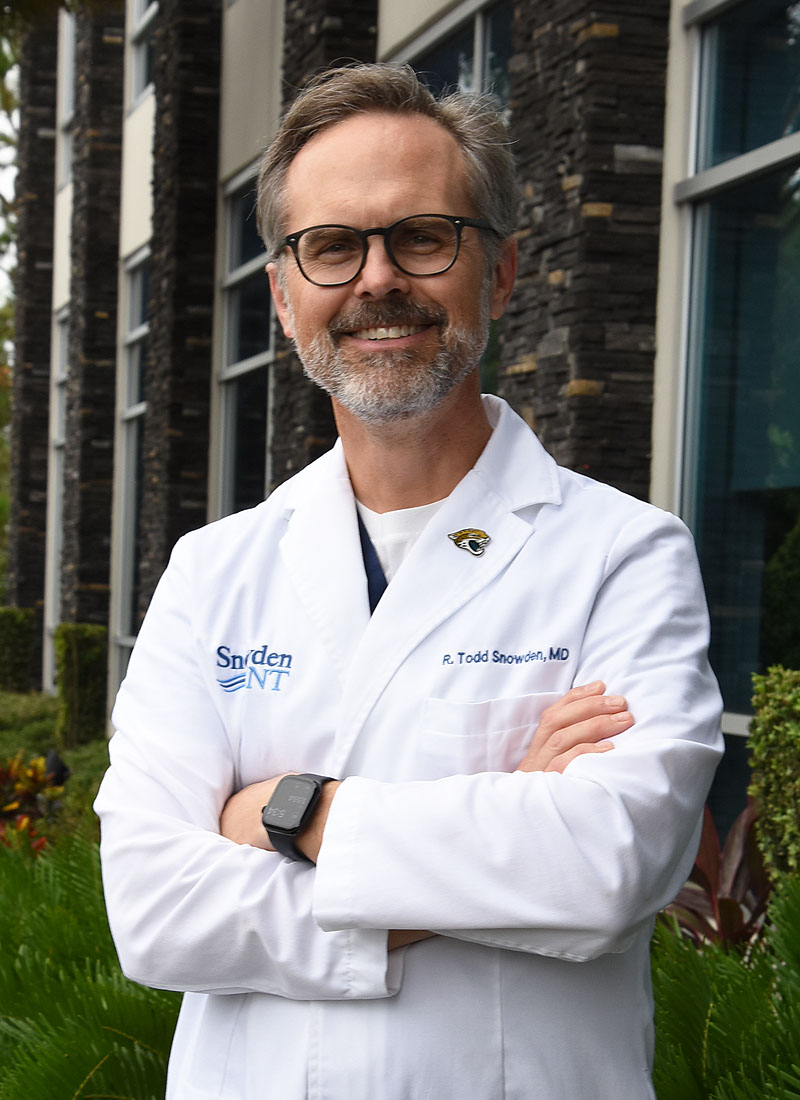
Meet Dr. Robert Todd Snowden
Choosing an ENT specialist is an important decision, particularly when surgery may be part of your treatment plan. Robert Todd Snowden, MD, FACS is a board-certified otolaryngologist who has been diagnosing and treating complex disorders of the ears, nose, and throat since 2001. With more than 20 years of experience caring for patients throughout Northeast Florida, Dr. Snowden is known for combining careful diagnostic evaluation with evidence-based treatment recommendations that are tailored to each patient’s individual needs. His commitment is to help every patient achieve the best possible outcome through compassionate, ethical, and patient-centered care.
As a Fellow of the American College of Surgeons (FACS) and the American Academy of Otolaryngology–Head and Neck Surgery, Dr. Snowden maintains the highest professional standards within his specialty. He is also an active member of the Florida Medical Association and the Duval County Medical Society and has previously held memberships in the American Rhinologic Society and the American Association of Otolaryngic Allergy. Throughout his career, he has remained committed to advancing his knowledge and providing patients with care that reflects current evidence and accepted best practices.
In addition to his clinical experience, Dr. Snowden has served in numerous leadership roles within the Jacksonville medical community. During more than 25 years on the Baptist Health medical staff, he served as Chief of Surgery and Chief of Staff at Baptist Medical Center South and was a member of the Baptist Physician Partners Board of Directors. Whether treating chronic nasal obstruction, performing advanced sinus and nasal surgery, or managing complex throat and voice disorders, Dr. Snowden has earned the trust of patients and referring physicians alike through his experience, sound clinical judgment, and dedication to delivering exceptional ENT care.
What Our Patients Are Saying




Contact Us!
(904) 268-5366
Or, if it is more convenient, use our contact form and we’ll get back to you as soon as possible.
Contact Us!
(904) 268-5366
Or, if it is more convenient, use our contact form and we’ll get back to you as soon as possible.

Snowden ENT is proud to be a select ENT Provider of the Baptist Physician Partners network. The mission of Baptist Physician Partners is to shape the future of health care in our community through an integrated partnership of providers and Baptist Health hospitals working collaboratively toward common goals for improving quality, safety, efficiency and outcomes for our patients.

12574 Flagler Center Boulevard
Suite 201
Jacksonville, FL 32258
(904) 268-5366
Monday – Thursday 8:30 AM to 4:30 PM
Friday 8:30 AM to 3:45 PM
Snowden ENT is proud to be a select ENT Provider of the Baptist Physician Partners network. The mission of Baptist Physician Partners is to shape the future of health care in our community through an integrated partnership of providers and Baptist Health hospitals working collaboratively toward common goals for improving quality, safety, efficiency and outcomes for our patients.
12574 Flagler Center Blvd
Suite 201
Jacksonville, FL 32258
(904) 268-5366
Monday – Thursday 8:30 AM to 4:30 PM
Friday 8:30 AM to 3:45 PM
Copyright | Snowden ENT | All Rights Reserved | Created and Optimized by BoomClient